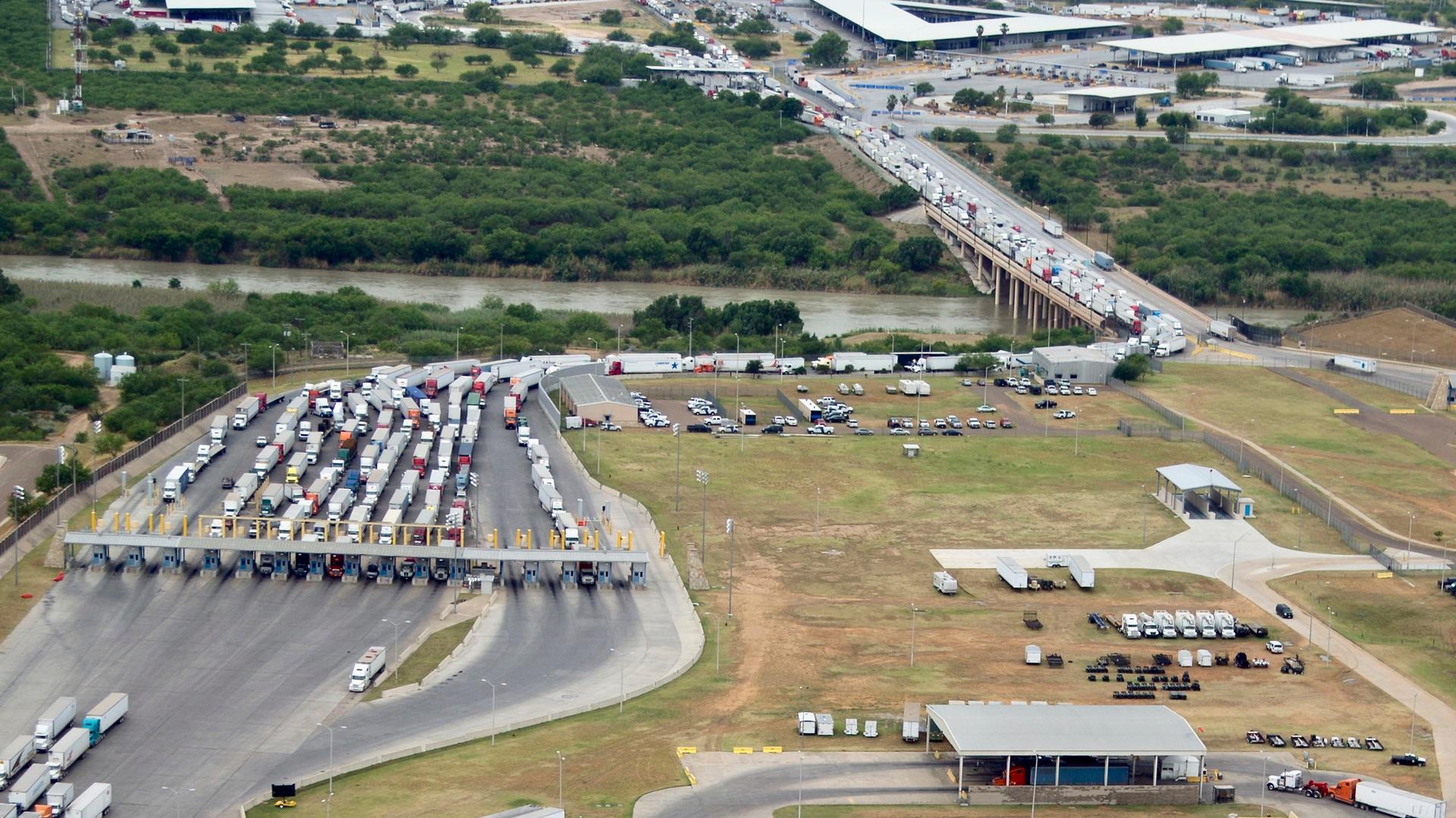
The U.S. – Mexico border is a cargo theft hotspot…
|
|
|
|
|
Freight fraud prevention starts with Truckstop.com. Secure Carriers and Brokers and proceed with confidence. Truckstop.com uses the most advanced security technology to keep fraud out of your business. Learn More!
|
|
|
Proven tactics for vetting and control
|
|
|
Freight fraud has transformed from sporadic cargo thefts into a highly organized, multi-billion-dollar criminal enterprise, posing existential threats to the transportation and logistics industry. According to the National Insurance Crime Bureau (NICB), reported cargo thefts in North America surged 27% last year, resulting in over $455 million in losses. When factoring in broader schemes like double brokering, identity theft, and payment fraud, annual damages escalate to $500–$700 million. These figures underscore a crisis fueled by digital vulnerabilities, economic pressures, and the sheer volume of freight moving through U.S. supply chains—over 70 billion tons annually.
In a recent Inbound Logistics webinar titled “Stop Freight Fraud Before it Starts: Proven Tactics for Vetting and Control,” industry leaders Kevin Clonch, Group Director at Ryder, and Michael Caney, Chief Commercial Officer at Highway, dissected the evolving tactics of fraudsters. What began as opportunistic smash-and-grabs has morphed into sophisticated cyber operations. Fraudsters now leverage stolen carrier identities sold on the dark web, phone spoofing to impersonate legitimate brokers, and AI-driven deepfakes to bypass verification. Double brokering—where intermediaries re-broker loads without authority—remains rampant, often leading to non-payment or cargo diversion. Hotspots like Southern California, Dallas-Fort Worth, Illinois, Florida, and U.S.-Mexico border regions are prime targets due to high freight density, quick resale opportunities for stolen goods, and porous digital borders.
Clonch highlighted how fraud exploits the "urgency" culture in logistics, where shippers prioritize speed over scrutiny. For instance, dormant carrier authorities reactivated overnight signal high risk, as do mismatched vehicle IDs, insurance lapses, or suspiciously low-rate offers. Overseas actors, particularly from Eastern Europe and Asia, amplify the threat by purchasing U.S. Department of Transportation (DOT) numbers to pose as domestic operators.
Caney echoed this, noting that fraud’s ROI for criminals is staggering: a single hijacked load of electronics can yield $100,000 in under 24 hours. To erect "new guardrails," experts advocate a zero-trust framework: assume no one is who they claim until proven otherwise.
Core recommendations include:
Rigorous Vetting: Conduct ongoing carrier audits using tools like FMCSA databases, verifying financial stability, insurance, and contact details. Ryder mandates phone confirmations for all new relationships, rejecting email-only interactions.
Technology Integration: Platforms like Highway’s use bank-level authentication for carriers, cross-referencing data in real-time to flag anomalies. AI can help, but only as a supplement to human oversight, given fraudsters’ rapid adaptation.
Back-Office Controls: Send rate confirmations solely to verified contacts, audit proofs of delivery against payments, and implement multi-factor approvals for high-value loads. Cultural and
Collaborative Shifts: Train teams to spot red flags and foster a "slow down to speed up" ethos. Share intelligence via industry groups like the Cargo Network Services Association (CNSA) and report fraud to authorities promptly; NICB urges documentation of stolen identities or assets for prosecution.
Looking ahead, emerging risks like AI-enhanced scams and blockchain-forged documents demand proactive evolution. Without unified action from shippers and regulators, fraud will erode trust and inflate costs. Clonch and Caney stress that prevention is cheaper than recovery: a single fraud incident can bankrupt small brokers. The webinar, available on-demand, equips viewers with actionable playbooks.
|
|
|
Freight Fraud Video of the Week 🤩
|
|
|
In this FreightCaviar webinar, Tall Paul sits down with CtrlChain and Reed Loustalot to discuss freight fraud, technology, app fatigue, and digital overload.
|
|
|
U.S. – Mexico border is cargo theft hotspot
|
|
|
Cargo theft in Mexico has exploded in the third quarter of 2025, solidifying its status as North America’s premier hotspot and underscoring vulnerabilities in U.S.-Mexico cross-border trucking. According to BSI Consulting’s latest report, Mexico captured 75% of all regional cargo theft incidents during Q3, a stark reminder of how organized crime exploits the $800 billion annual trade corridor. Globally, hijackings accounted for nearly one-third of thefts, with Brazil leading at 30%, followed by Mexico (17%) and India (11%). In North America, truck hijackings dominated, comprising 54% of cases, driven by high-value targets like food, agriculture, and electronics.
Criminals have shifted from brute-force methods to sophisticated, tech-enabled strategies, amplifying risks for shippers and carriers. Traditional tactics—such as staging intentional wrecks, deploying GPS jammers to disorient drivers, and erecting fake police checkpoints—persist, but innovators include disguising stolen fuel shipments as legitimate cargo and infiltrating warehouses with hijacked trucks. Near Mexico City’s Felipe Ángeles International Airport, thieves have used pilfered vehicles to breach secure facilities undetected.
In the U.S., "strategic theft" schemes leverage cybersecurity breaches: fraudsters acquire stolen motor carrier identities via the dark web, then affix temporary fake placards to impersonate legitimate operators. This allows seamless cargo diversion before detection, with experts predicting AI integration for even stealthier operations.
The surge inflicts severe financial and reputational damage. A single hijacking can net criminals tens of thousands, while victims face skyrocketing insurance premiums and supply chain disruptions. Hotspots cluster around Mexico’s industrial heartlands, where porous borders and dense freight flows create ideal conditions. BSI’s Tony Pelli, director of security and resilience, warns, “Thieves are continually evolving their tactics. Companies must match that with rigorous verification, monitoring, and collaboration with cargo theft task forces.” He advocates real-time tracking, multi-layered authentication, and intelligence-sharing via platforms like the CargoNet system to preempt threats.
Yet positive cross-border momentum persists. LG Innotek announced a $189 million investment in a new Querétaro electronics plant, poised to create 630 jobs and bolster nearshoring. Meanwhile, Watco Logistics acquired Colossal Transport Solutions, enhancing multimodal capabilities for oversized cargo. Eric Wolfe, Watco’s president, enthused, “Colossal’s deep industry knowledge… complements our ability to provide innovative, reliable, and flexible logistics services.”
As Q4 looms, industry leaders urge proactive defenses: enhanced vetting of carriers, AI-augmented surveillance, and regulatory pressure on digital safeguards. Without swift adaptation, cargo theft could erode trust in the vital U.S.-Mexico trade artery, inflating costs and stalling growth. BSI’s report signals a call to action—prevention now averts catastrophe later.
|
|
|
|