DHL Deploys Live Autonomous Vehicles for Hub Transfers in Singapore
|
|
|
|
Bendix Selects Aeva to Develop 4D LiDAR Active Safety for Class 8 Production Trucks
|
Bendix Commercial Vehicle Systems LLC selected Aeva to integrate 4D LiDAR sensors and perception software into its next-generation collision mitigation systems for Class 8 mass-production vehicles. The program builds on Bendix’s Fusion ADAS platform, which already operates across most major Class 8 OEMs.
Roughly 300,000 new Class 8 trucks enter the North American market annually. The collaboration targets mass production of one of the first LiDAR-based L2+ driver assistance solutions for commercial vehicles. It is part of a shift toward using advanced perception in active safety systems, not just higher autonomy.
“We’re excited to expand our work with Aeva through this program as we continue advancing safety technologies for commercial vehicle fleets,” said Mike Tober, chief technology officer at Bendix. “Aeva’s 4D LiDAR provides capabilities that can improve system performance in critical driving scenarios, helping support the next generation of collision mitigation solutions that perform more effectively across a wider range of real-world operating conditions.”
“This program represents an important milestone in our collaboration with Bendix and a significant step toward mass production of a first-of-its-kind LiDAR-based L2+ driver assistance solution for commercial vehicles,” said Mina Rezk, co-founder and chief technology officer at Aeva. “By combining Aeva’s 4D LiDAR with Bendix’s industry-leading safety platform, we are positioned to deliver next-generation LiDAR-based solutions that enhance safety and performance for commercial vehicle fleets at scale.”
|
DHL deploys live autonomous vehicles for hub transfers in Singapore
|
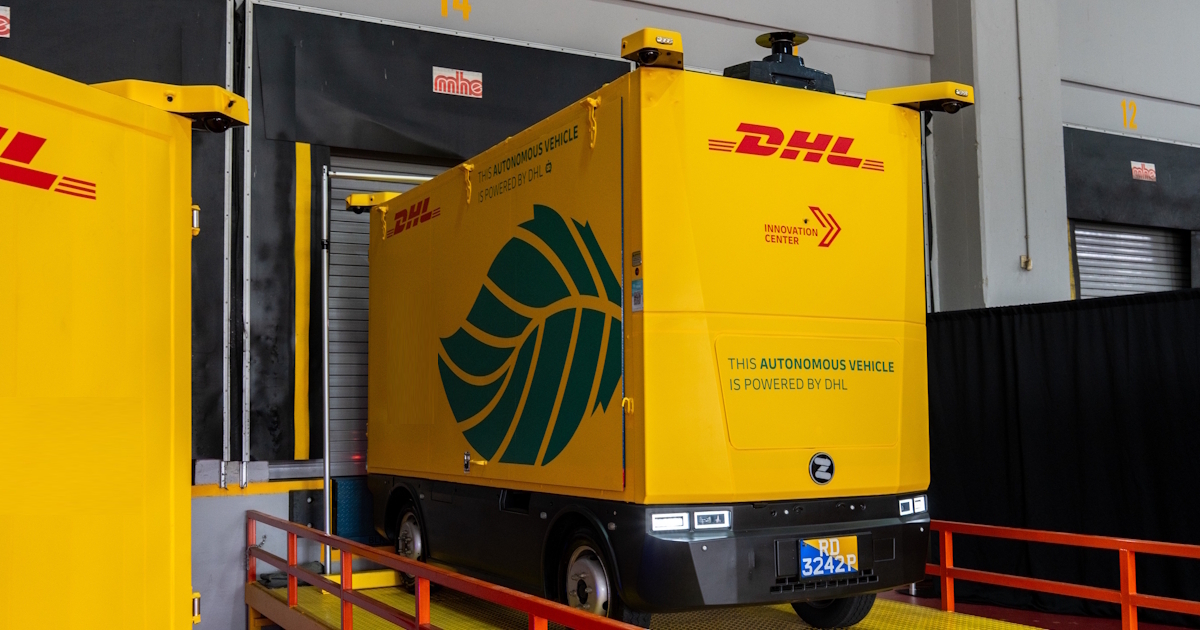
DHL has transitioned autonomous vehicles from its Fast Forward Challenge into daily operations at the Advanced Regional Center in Singapore. In partnership with Zelostech, the company now operates fully electric, driverless vehicles for point-to-point transfers between logistics facilities on campus.
These shuttles handle repetitive hub-to-hub movements that require tight coordination, where delays from congestion or staffing can quickly affect shippers’ timelines.
Employees load up to three pallets or 1.5 tons per vehicle and dispatch it via a mobile app with real-time tracking. The vehicles navigate autonomously using sensors, mapping and artificial intelligence, managing traffic and obstacles on their own. They operate 24/7.
Each vehicle averages 40 trips and covers 28 kilometers daily, with staff handling unloading at the destination. A small fleet moves dozens of pallets each day.
The vehicles deliver consistent performance at roughly half the operating cost of diesel trucks while cutting emissions to support customers’ sustainability goals. Sensors improve safety in busy zones. The deployment allows teams to shift from driver supervision to system and data management.
“We’re excited to see autonomous technology in full-scale operation here in Singapore and explore how it can transform the way we move goods between sites. It’s an important step in strengthening our ability to deliver smarter, greener logistics solutions for our customers,” said Wei Kieng Eunis Hew, managing director of DHL Supply Chain Singapore.
|
Autonomous Volvo trucks start moving high-value cargo for AVI-SPL on Dallas-Houston lane
|
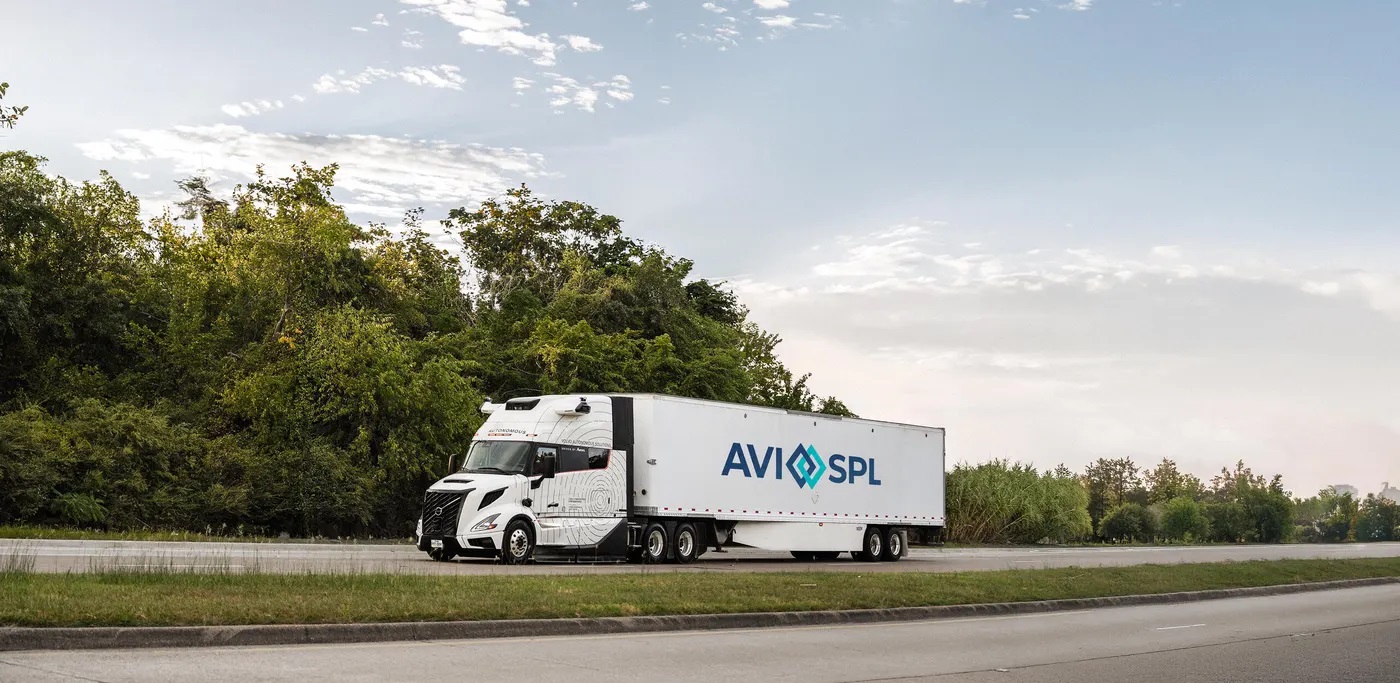
(Photo: Volvo Autonomous Solutions)
|
AVI-SPL has begun commercial autonomous freight operations between Dallas and Houston. The technology solutions provider is running Volvo VNL Autonomous trucks powered by the Aurora Driver on the corridor. It is using the trucks to move various audio-visual electronics, including a mix of new products and end-of-life equipment from which it recovers precious metals as part of its electronic recycling program.
The launch targets time-sensitive, high-value shipments at a time when freight demand is rising and carriers continue to face qualified driver shortages and capacity constraints. Volvo Autonomous Solutions provides the complete end-to-end system, including the purpose-built vehicle, virtual driver, required infrastructure, operations and uptime support, and a fleet management system that orchestrates transport operations and manages logistics flows.
“This collaboration shows how autonomous transport can help reduce transit times, improve service, and meet the demands of time-sensitive, high-value freight,” said Sasko Cuklev, head of on-road solutions at Volvo Autonomous Solutions.
“Autonomous transportation has the potential to significantly reshape the future of logistics,” said Tim Riek, chief strategy officer at AVI-SPL. “This collaboration allows AVI-SPL to explore innovative technologies that can help improve operational resilience, support long-term scalability, and strengthen the overall customer experience.”
The collaboration has the potential to strengthen supply chains through greater uptime, improved asset utilization and enhanced cargo security as operations scale.
|
|
|
|
Boston-based Teradar has landed a paid technical evaluation program with a top German automaker for its terahertz vision technology. The deal tests Teradar’s Summit sensor against edge cases that expose camera, lidar and radar limitations. Teradar’s mass-producible B1 sensor is scheduled for demonstration at CES 2027. (FreightWaves)
Westport Fuel Systems and Volvo Group signed a development agreement through their Cespira joint venture to bring hydrogen-fueled versions of Volvo’s 13-liter engines to market using Cespira’s High Pressure Direct Injection technology. A European launch is targeted before 2030, and on-road testing of Volvo trucks with the system is underway. (Westport Fuel Systems)
Calstart’s June 2026 report shows zero-emission trucks accounted for 4.14 percent of U.S. commercial vehicle deployments in the second half of 2025, up from 1.32 percent in the first half. Cumulative deployments reached 72,309 by year’s end. California led with 12,874, followed by Florida with 6,179 and Texas with 5,953. (Calstart)
Amazon reported more than 50,000 electric delivery vans globally, halfway to its 100,000 goal by 2030. The fleet delivered over 2.4 billion packages last year with zero tailpipe emissions. Europe had more than 10,000 electric vans by the end of 2025, including nearly 5,000 Mercedes-Benz vans in five countries. (Amazon)
|
As always, thanks for watching and reading.
Thomas Wasson
twasson@firecrown.com
|
|
|
|
|