
| The Daily // Fri 09.25.26 | View in browser → |
.png)
The Daily
 |
NEWSLETTER BROUGHT TO YOU BY — QUANTIX
One call covers dry bulk, liquid bulk, packaging, warehousing and managed transportation. Quantix removes the obstacles between your material and your customer. One partner, nationwide. Learn more.
|
Tesla Semi factory opens with 50,000-truck annual capacity
|
50,000
Trucks the new Sparks, Nevada factory is built to produce annually
|
17.5M
Miles logged by the pilot fleet at 98% uptime
|
25%
Efficiency gain over Tesla’s original energy-use target
|
Tesla marked the start of high-volume Semi production this week, and the more interesting story is what’s changed underneath the cab since the truck first rolled off the line.
The company inaugurated a 1.7 million-square-foot dedicated factory in Sparks, Nevada, adjacent to Gigafactory Nevada, on Sept. 24, according to Adam Wingfield’s reporting. The plant is designed to build 50,000 trucks a year. The first production truck came off the line in April, and early deliveries have gone to DHL, PepsiCo and US Foods. A pilot fleet of fewer than 200 trucks has logged 17.5 million miles at 98% uptime.
The bigger change is under the skin. Tesla swapped purchased 2170 battery cells for in-house 4680s and moved to a steel cage rotor that’s cheaper, more torque-dense and more reliable than the carbon fiber design it replaces. A stator shared with the Cybertruck cuts 80 kilograms off the drive axle. On the fluid side, Tesla consolidated three separate oils into one shared lubricant rated for more than 250,000 miles, fully integrated the hub so it needs no oil at all, and replaced hydraulic steering with a fully redundant electric steer-by-wire system that eliminates a common leak point.
The Semi comes in 325-mile standard and 500-mile long-range versions, weighs under 20,000 pounds empty with a 45,000-pound payload capacity, and now runs at 1.6 to 1.7 watt-hours per mile, 25% better than the original target Tesla set for itself. Tesla expects more than 30 charging stations with 200-plus megawatt-capable posts running by year-end. Battery-electric trucks still make up less than 1% of Class 6-8 sales, against a projected 224,800 Class 8 retail sales in 2026, and Tesla is competing against Volvo’s VNR Electric, with more than 750 in operation across 84 certified EV dealerships, and Freightliner’s eCascadia, running with more than 55 fleets.
Tesla built this truck to survive fleets, not just launch events. Dan Priestley said it "has to work for the majority of fleets and drivers rather than one customer," and whether the engineering holds up now depends on charging infrastructure that’s still years behind the trucks themselves.
Amazon boosts driver pay, adds safety tech across delivery fleet
Amazon is putting $1.9 billion behind a 16% average pay increase for delivery service partner drivers, pushing average pay to roughly $24 an hour, while layering in new safety technology across its last-mile network. The company says serious vehicle crashes fell 23% over the past year, aided by Netradyne AI cameras now installed in about half of its more than 40,000 Rivian electric vans, with full coverage targeted by the end of 2026. Delivery service partners have spent $543 million on safety measures, and Amazon plans to put AI-enabled smart glasses on more than 20,000 drivers by the end of 2027 alongside expanded driving simulators and parking, building-entrance and mailroom mapping data it has collected since 2024.
The safety spending and the pay bump aren’t separate initiatives. Amazon is trying to make its delivery contractor network stickier before wage competition from other last-mile carriers pulls drivers away.
Copeland acquires cold chain monitoring firm Dickson
Temperature-control systems provider Copeland is acquiring Dickson, a monitoring and compliance technology firm, extending its reach into pharmaceutical and life sciences cold chain, according to Todd Maiden’s reporting. Financial terms weren’t disclosed. Copeland has more than 200 million HVAC and refrigeration installations across roughly 40 countries, and folding in Dickson’s cloud-based temperature-monitoring platform lets shippers flag potential temperature excursions before products are lost. "The acquisition of Dickson further strengthens our ability to serve customers across every stage of the healthcare and life sciences cold chain, from pharmaceutical manufacturing through distribution and patient care," said Ross Shuster, Copeland’s CEO. Dickson President and CEO Rick Weiler said the deal brings together "complementary technologies and expertise that support the monitoring and protection of temperature-sensitive products across increasingly complex supply chains."
Cold chain compliance keeps consolidating around a handful of platforms. Pharma and life sciences shippers get one less vendor relationship to manage, but also one less alternative if Copeland’s roadmap doesn’t fit their needs.

Asia-US container rates climb toward July highs, still below pandemic peak
Spot rates from the Far East to the U.S. East Coast are running about $9,600 per forty-foot equivalent unit, essentially flat week over week, while Far East-U.S. West Coast rates topped $8,100/FEU, up 4%, according to Stuart Chirls’ reporting. That’s well short of the more than $20,000/FEU seen in September 2021 at the pandemic’s peak. Resilient U.S.-bound demand ahead of China’s Golden Week holiday, Far East port congestion and carrier capacity cuts through blanked sailings are the main drivers. Asia-North Europe rates, by contrast, fell 15% weekly to about $3,700/FEU, and Asia-Mediterranean dropped 7% to about $3,900/FEU, both down from July peaks near $6,000 and above $7,000, respectively.
The trans-Pacific and European trade lanes are moving in opposite directions. European rates are easing as capacity catches up, while trans-Pacific pricing holds near mid-summer highs on holiday-driven demand and blanked sailings.
Qatar Airways, IAG, MASkargo near launch of joint cargo venture
Qatar Airways Cargo, IAG Cargo and MASkargo completed a trial shipment, moving 12.1 tons of copper foil from Kuala Lumpur through Doha and Dublin to Chicago O’Hare, as the three carriers near the launch of their joint cargo business, according to Eric Kulisch’s reporting. The venture was first announced in April 2025 with a late-2025 target that slipped a year; the carriers now expect to launch within coming weeks. Combined, the group serves more than 400 destinations, with Qatar Airways Cargo running 30 Boeing 777 freighters plus belly capacity on 240 passenger aircraft, MASkargo operating three Airbus A330-200 freighters plus belly space, and IAG Cargo covering British Airways, Iberia, Aer Lingus, Vueling and Level. "For our customers, this is about creating a simpler, more connected experience and demonstrates the strength of our collaboration," said Mark Drusch, Qatar Airways’ chief cargo officer.
A successful multi-carrier trial shipment is the proof point regulators and customers were waiting for. Shippers routing freight through any of these three networks should expect more single-booking, multi-leg options once the venture formally launches.

Brought to you by Samsara — built with operators, for operators. Blind spots cause some of fleets’ costliest, most complex collisions. Learn how AI-powered 360-degree visibility helps you spot risks in real time and protect drivers, pedestrians and cyclists.

| Time | Guest | Topic |
|---|---|---|
| 12pm | Will Bewley | Co-Founder & CEO, WoFlow |
| 12:30pm | Andy Kuchar | President, Centerline Insurance |
The Autonomous Freight Blueprint: Unlocking Predictable Capacity and the Early Mover Advantage
The autonomous trucking revolution isn’t coming, it’s already here, and the window to lead it is now.

Shipium Rethinks Freight Audit as Forensics, Not Archaeology
Always On Audit swaps monthly invoice reviews for real-time shipment monitoring.

Why Going Global Isn’t Always the Right Call
A logistics guide to balancing cost, risk, lead time, inventory, and transportation tradeoffs.

One Network for Every Form of Chemical Freight
One partner for dry bulk, liquid bulk and warehousing.

What It Takes to Win in the Next Era of Drayage
Demand volatility, terminal congestion and driver shortages are squeezing drayage margins. FreightWaves and CargoWise Landside surveyed operators on where automation and digital investment are actually paying off.
High-Stakes Freight Brokerage: Risk and Accountability
Shippers moving high-value freight say lower-cost brokerage is starting to carry higher risk. FreightWaves and Werner surveyed where compliance gaps and carrier performance issues are driving accountability higher.
New Research: Tariffs Didn’t Raise Costs. They Raised the Execution Standard.
Infios research shows the 2025 tariff overhaul turned transport mode, tariff exposure and trade-route selection into variables shippers now have to manage actively, not fixed costs they can set and forget.
 ▶ ▶ |
Small Brokerages Should Be Nervous NowFreightWaves looks at why smaller freight brokerages are facing mounting pressure as the market shifts. |
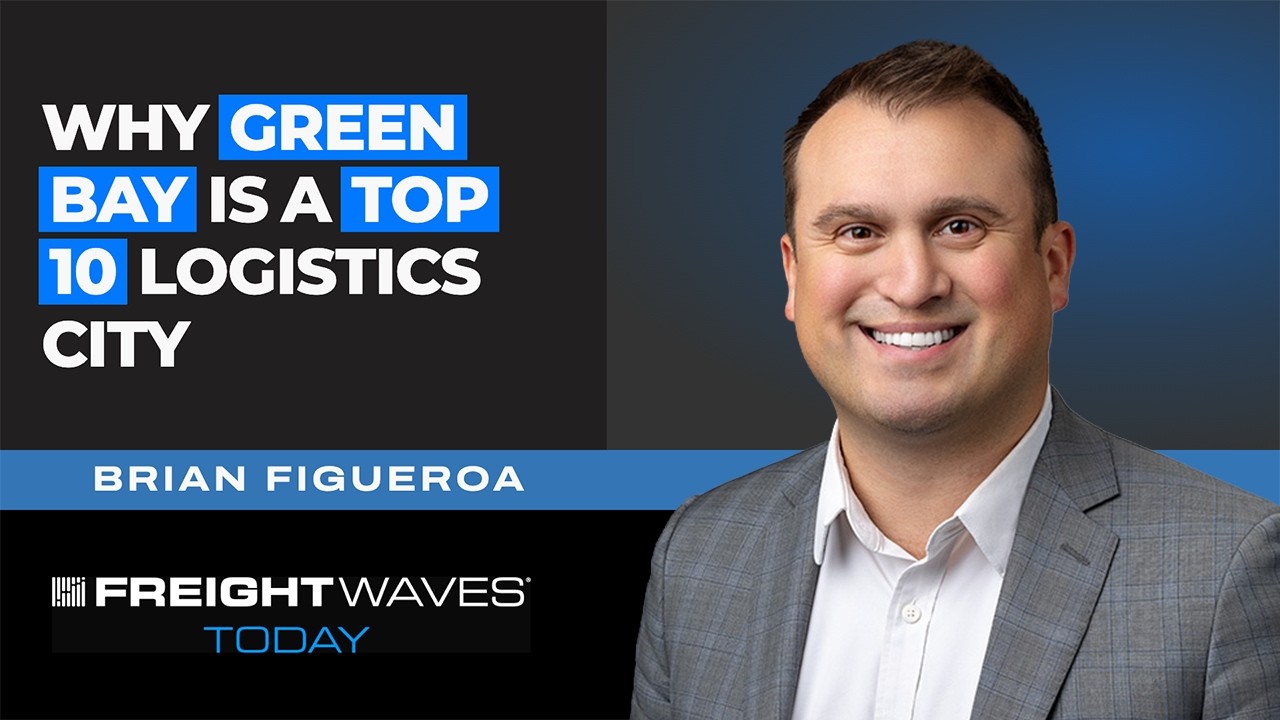 ▶ ▶ |
Why Green Bay IS a Top 10 Logistics CityFreightWaves makes the case for Green Bay’s spot among the country’s top logistics hubs. |
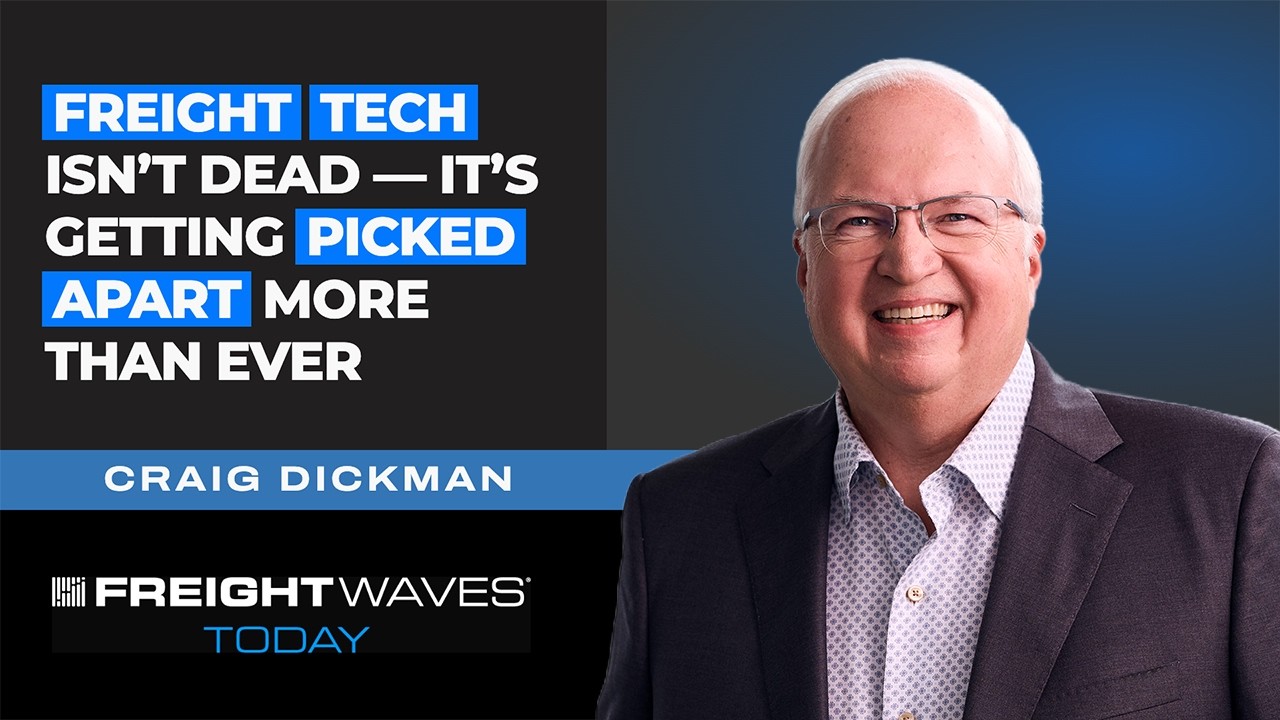 ▶ ▶ |
Freight Tech Isn’t Dead — It’s Getting Picked Apart More Than EverFreightWaves examines how freight tech is consolidating and specializing rather than disappearing. |

|
▸
|
Whether Amazon’s pay bump raises the bar for other last-mile carriersA $1.9B investment and a jump to nearly $24 an hour set a new floor. Watch whether competing delivery networks have to match it to hold onto drivers. |
|
▸
|
Whether Asia-US rates hold past Golden WeekTrans-Pacific pricing is being propped up partly by pre-holiday demand and blanked sailings. Watch whether rates ease once China’s Golden Week passes. |
|
▸
|
Whether the Qatar Airways-IAG-MASkargo venture launches on scheduleThe joint cargo business already slipped its original late-2025 target by a year. Watch whether "coming weeks" holds after a successful trial shipment. |
