Cash-for-CDLs in Florida – A Wake-Up Call for the Whole Industry
|
|
|
|
|
NEWSLETTER BROUGHT TO YOU BY — SIRIUSXM
|
SiriusXM keeps truck drivers informed and entertained with 24/7 music, sports, and more. Hear all your SiriusXM favorites on every haul for $6.06/month. Sign up.
|
|
|
Rates Down, Diesel Up – The Margin Game Just Got Tighter
|
|
|
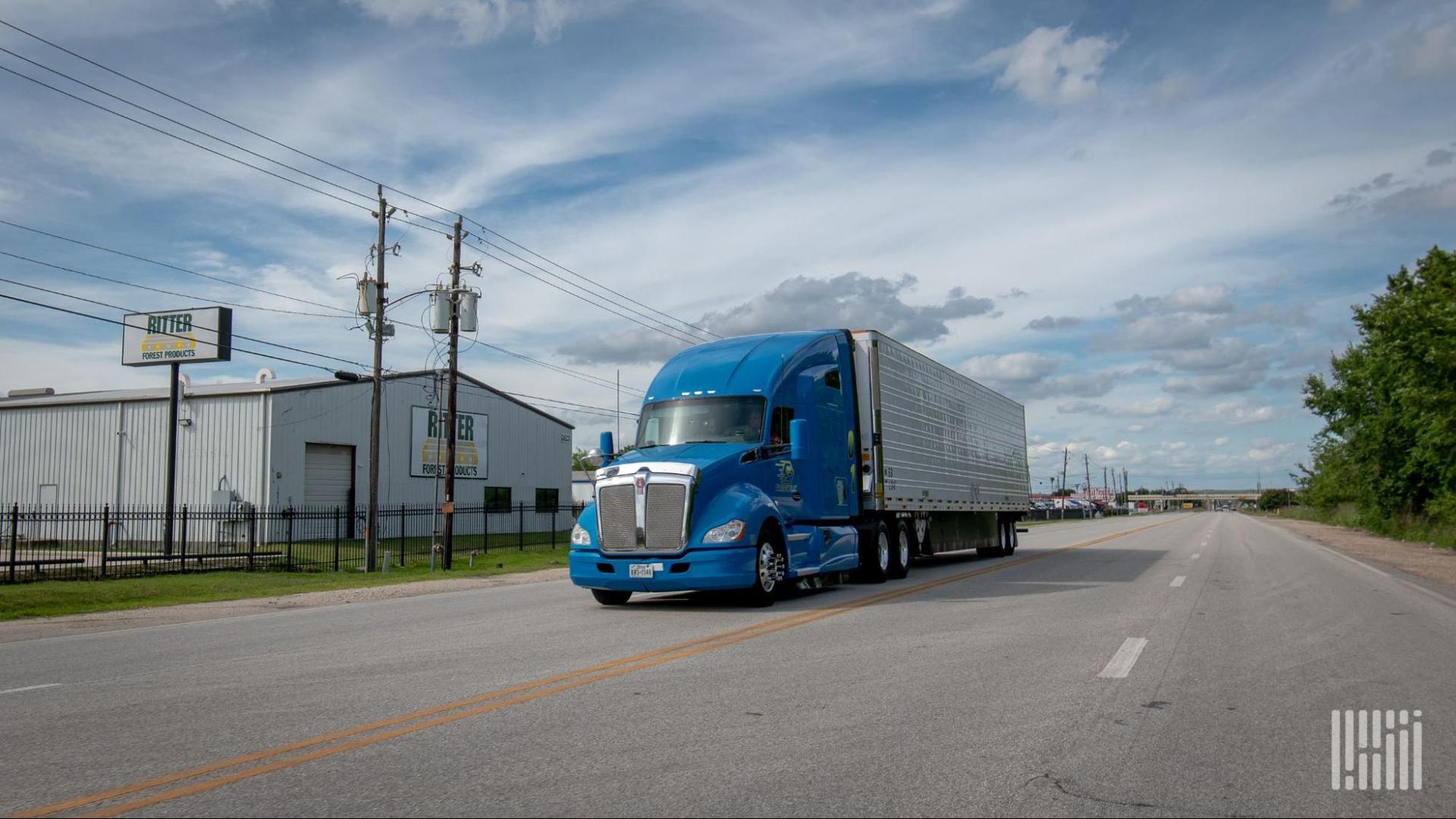
(Photo: Jim Allen/FreightWaves)
|
|
|
Cash-for-CDLs in Florida – A Wake-Up Call for the Whole Industry
|
You read that headline right — and no, this isn’t a recycled story from 2008.
Florida authorities just cracked open one of the largest CDL fraud rings in recent memory. According to the Florida Attorney General and Bay County Sheriff’s Office, hundreds of driver’s licenses, including CDLs, were sold under the table to individuals who didn’t pass the required exams — and in many cases, weren’t even legally eligible to obtain one.
Two DMV employees have been arrested for allegedly collecting cash payments to push licenses through the system, skipping the required testing and paperwork altogether. Investigators say the ring ran deep — complete with brokers funneling people in from as far away as Miami to take advantage of the scam. In total, eight people were arrested and $120,000 in cash seized.
And here’s the kicker: This wasn’t just about paper licenses. These fraudulently issued CDLs put untrained, unvetted drivers on the road — possibly behind the wheel of tractor-trailers — without ever having to demonstrate the basic skills needed to operate one safely.
Let that sink in.
Sheriff Tommy Ford didn’t mince words. He called it “an unacceptable risk to every family in this state,” adding that it’s not a paperwork issue — it’s a direct threat to highway safety. That’s the part that should make every legit carrier and owner-op take notice.
While the full count of CDLs issued fraudulently hasn’t been confirmed yet, the Attorney General’s Office says the investigation is far from over — and that other counties may have similar problems lurking beneath the surface.
What Does This Mean for Small Carriers?
If you’re a fleet owner or dispatcher reading this, it’s time to tighten up your hiring standards. Because here’s what’s likely to happen next:
- FMCSA and state agencies will ramp up CDL verification protocols. Expect tighter background checks and possibly random audits of CDL holders and their training history.
- Insurance carriers will be on alert. If you’re onboarding a new driver, expect underwriters to ask more questions — especially about how that driver was trained and certified.
- Enforcement may get messy. If you hire someone who obtained a license through a fraudulent channel — even unknowingly — the liability could fall back on you if there’s an incident.
This is also a warning to owner-operators and company drivers out there trying to do things the right way. For every unqualified driver on the road, your job just got harder — because enforcement, insurance rates, and public perception will all take the hit.
Meanwhile, the bad actors walk away with envelopes of cash, while legitimate drivers are left shouldering the weight of the system’s failure.
The Bigger Picture
This isn’t just a Florida problem. It’s a national warning shot.
When regulators talk about new training standards or crack down on ELDT compliance, this is part of the reason why. Scams like this erode the trust that keeps freight moving safely — and they put every one of us at risk.
Florida AG James Uthmeier summed it up bluntly: “If it happened here, there’s a good chance it could be happening in a county somewhere else.”
And he’s right. Because once one fraud ring gets exposed, others start to unravel. Expect this story to grow in the weeks ahead — and if you’re a legit carrier or dispatcher, now’s the time to make sure your house is in order.
Don’t wait until your insurance company or a DOT inspector points it out for you.
|
|
|
(Source: SONAR DOE.USA Diesel Price Per Gallon. Diesel is creeping back up — now sitting at $3.57 per gallon after a sharp 10-cent jump. That’s a 2.88% weekly increase and a real hit to small fleet margins. If you’re not baking fuel surcharges into your rates, you’re falling behind.)
|
Diesel Prices Spike — And the Real Danger May Be Just Ahead
|
This week’s diesel jump wasn’t just another fluctuation. There was a flare on the dashboard.
Prices climbed 10 cents nationally, with some regions — like the Lower Atlantic and West Coast (minus California) — seeing spikes near 14 cents per gallon. Seven out of ten regions saw double-digit increases. That’s not just noise. That’s pressure — and if you’re running on thin margins, you’re already feeling it at the pump.
But here’s the thing most folks aren’t talking about: this might just be the beginning.
The Real Threat Is 7,000 Miles Away
Iran has once again threatened to shut down the Strait of Hormuz, the narrow, 21-mile-wide chokepoint that sees 26% of the world’s oil pass through it daily. That includes the same crude oil that ends up in U.S. refineries, eventually turning into the diesel fuel you buy. And right now, tensions between Iran, Israel, and the U.S. are rising fast — with new military posturing, threats of strikes, and the possibility of open conflict pushing closer to reality.
We’ve seen this movie before. Back in the ‘80s during the Iran-Iraq War, Iran didn’t officially “close” the Strait — but it didn’t have to. Speedboats, mines, missile threats, and targeted harassment of tankers were enough to rattle the market, spike insurance premiums, and send fuel costs soaring.
If the Strait gets disrupted even for a few days — not closed, just risky to navigate — it could send a shockwave through the oil supply chain. And that means diesel prices will not just rise — they’ll jump.
Why This Hits Owner-Ops the Hardest
Large carriers can hedge fuel. They can play with volume. They can even lock in rates for 60 to 90 days. But small fleets and independent owner-operators? You’re left exposed. And that’s the danger.
If you’re running on $1.85–$2.10 spot rates with a fuel surcharge that hasn’t caught up to market prices, you’re essentially eating the cost — and for every 10-cent jump, you’re burning profit on every mile. Most carriers can’t raise their rates fast enough to keep up, especially if you’re relying on load boards or chasing short-haul freight with all-in pricing.
What You Can Do Now
- Track your fuel cost per mile daily. Don’t wait until the end of the week to check receipts. If your cost per mile goes from 53¢ to 60¢, that’s your trigger to renegotiate, reroute, or reassess.
- Watch your surcharge structure. If you’re hauling contract freight, make sure your surcharge formula is indexed to the DOE weekly average. If not, you’re leaving money on the table.
- Limit empty miles aggressively. This isn’t the time to deadhead for 150 miles hoping for a $3/mile load. Stay tight, cluster lanes, and pick routes where diesel is cheaper (Midwest and Southeast tend to trail the West in pricing spikes).
- Pay attention to global headlines. A regional conflict 7,000 miles away could change your numbers overnight. If tankers get slowed or rerouted, diesel prices here will climb long before you see it in the headlines.
We’re in a moment where politics, fuel, and freight are crashing into each other. And while the big dogs play on the world stage, it’s the small carriers who feel the pain first.
This diesel spike is your warning shot.
Keep your margins tight. Watch the horizon. And don’t get caught sleeping if the Strait becomes the story of the summer.
|
|
|
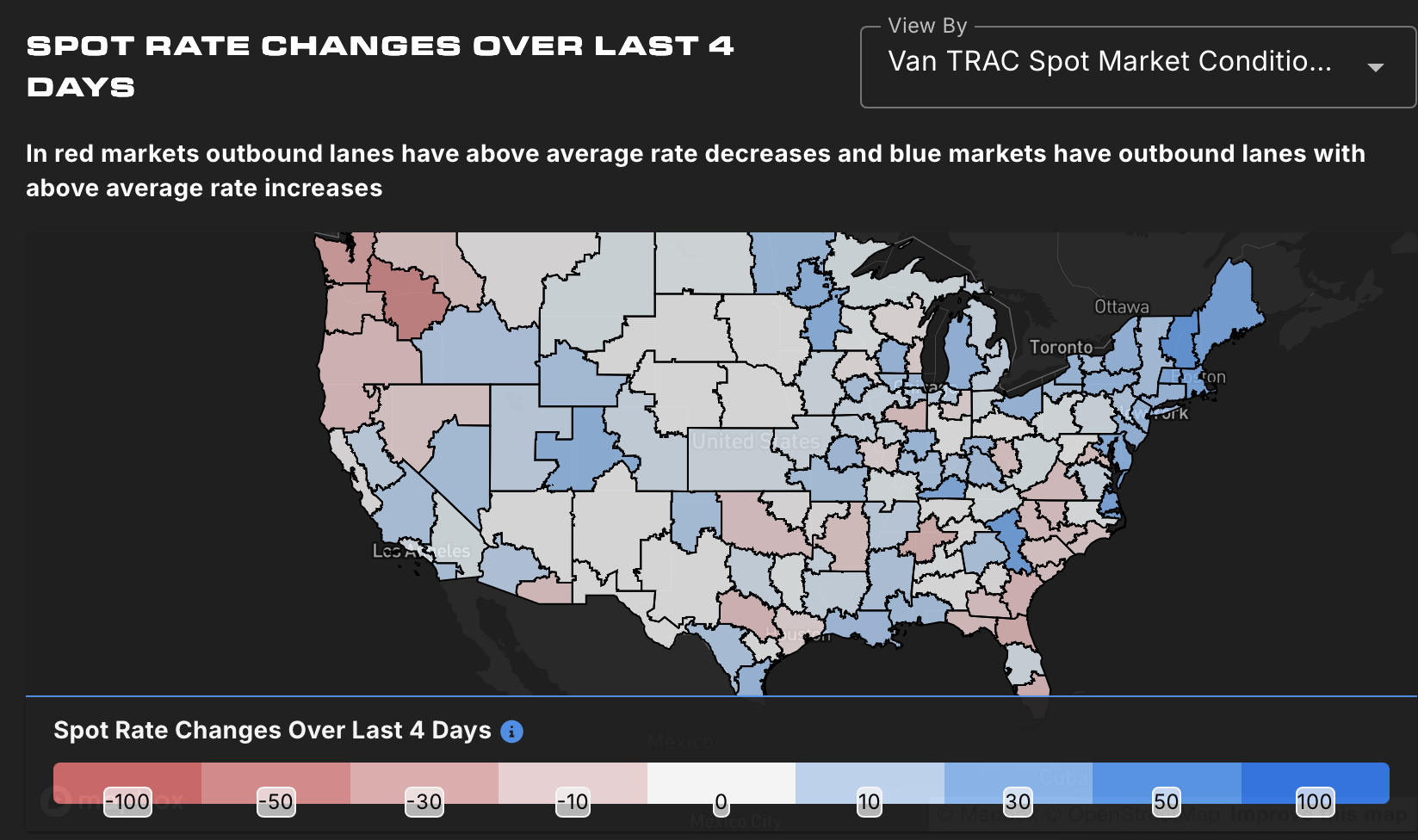
(Source: SONAR Spot Rate Changes Over Last 4 Days (Van TRAC Map). Spot rate changes are still a mixed bag across the country. Blue regions are seeing short-term gains, while red zones continue to slide. Dispatchers need to build regional strategies and avoid dead-end lanes.)
|
Freight Market Conditions – Week of June 21, 2025
If you’re waiting on the market to "go back to normal," you might want to stop holding your breath. According to ACT Research, this freight recession has legs — and they’re walking right into 2026. They’re not calling it a bounce. They’re not predicting a surge. They’re straight up saying that freight volumes and rates will remain under pressure longer than most expected. And honestly? The data we’re seeing right now backs that up.
So let’s break it all down in plain terms — chart by chart — so you can see what’s really happening and what moves you need to make next.
|
|
|
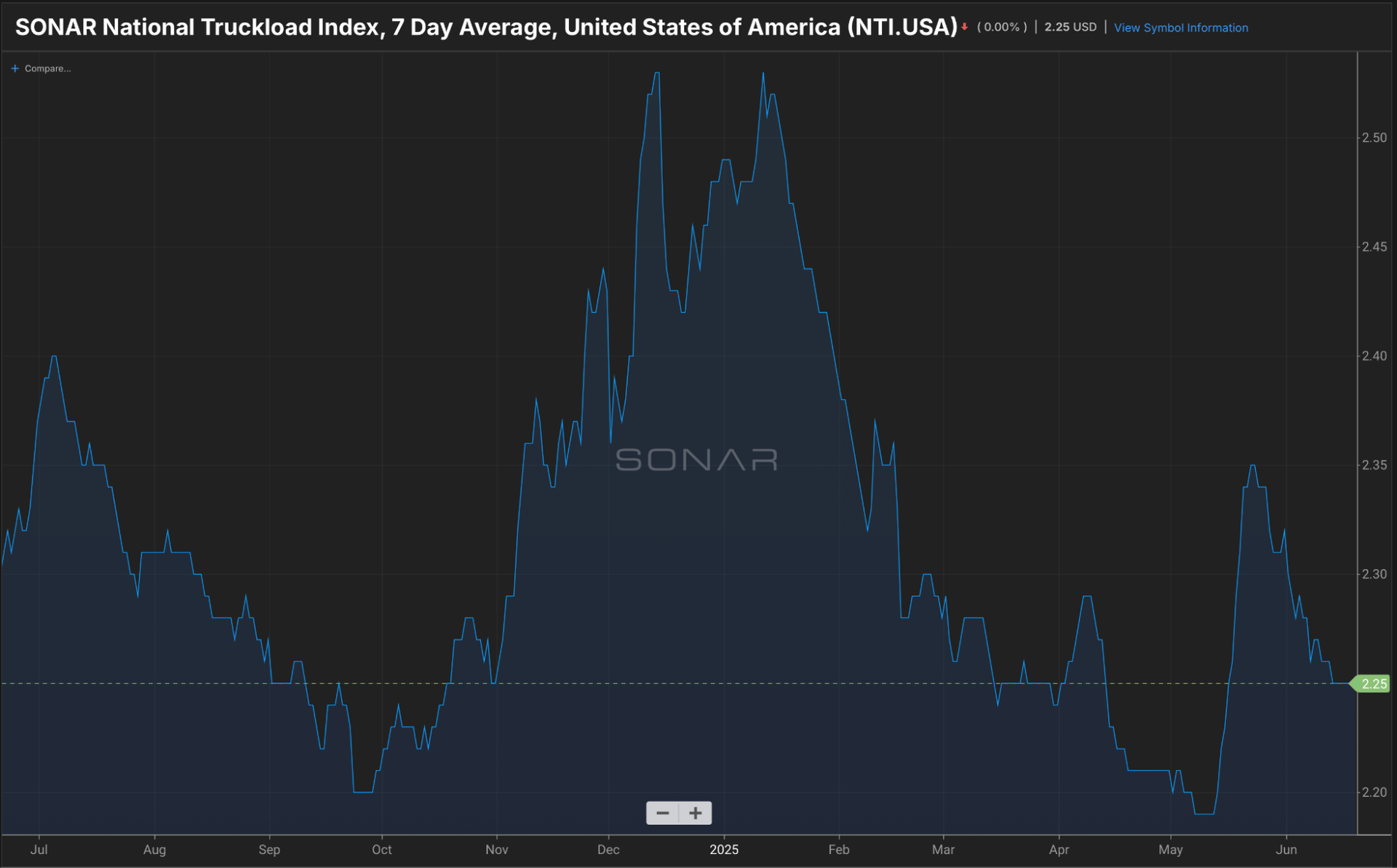
(Chart: SONAR National Truckload Index (NTI.USA). National spot rates are back on the slide, settling at $2.25 per mile. After a brief rally in late May, momentum has cooled. Without a sustained drop in capacity or a surprise demand surge, carriers can’t count on rates climbing anytime soon.)
|
Spot Rates Dip Again – NTI Falls to $2.25
We’ll start with the SONAR National Truckload Index (NTI), now sitting at $2.25 per mile on a 7-day rolling average. That’s a steady drop off the brief early-June bump we saw when load availability increased slightly and a few regions got hot. But that was short-lived. Rates have cooled — and they’re settling back into territory that’s break-even at best for many small carriers.
And here’s the catch: even with diesel up, truck insurance climbing, and repair costs still running high, brokers are holding the line on rates. They know capacity hasn’t tightened enough to force their hand — and that gives them leverage.
If your breakeven is $1.95 or $2.00, you’re skating close to zero profit. This isn’t the time to chase every load. It’s the time to sharpen your margins, double down on targeted lanes, and build relationships with shippers or brokers who move consistent freight.
|
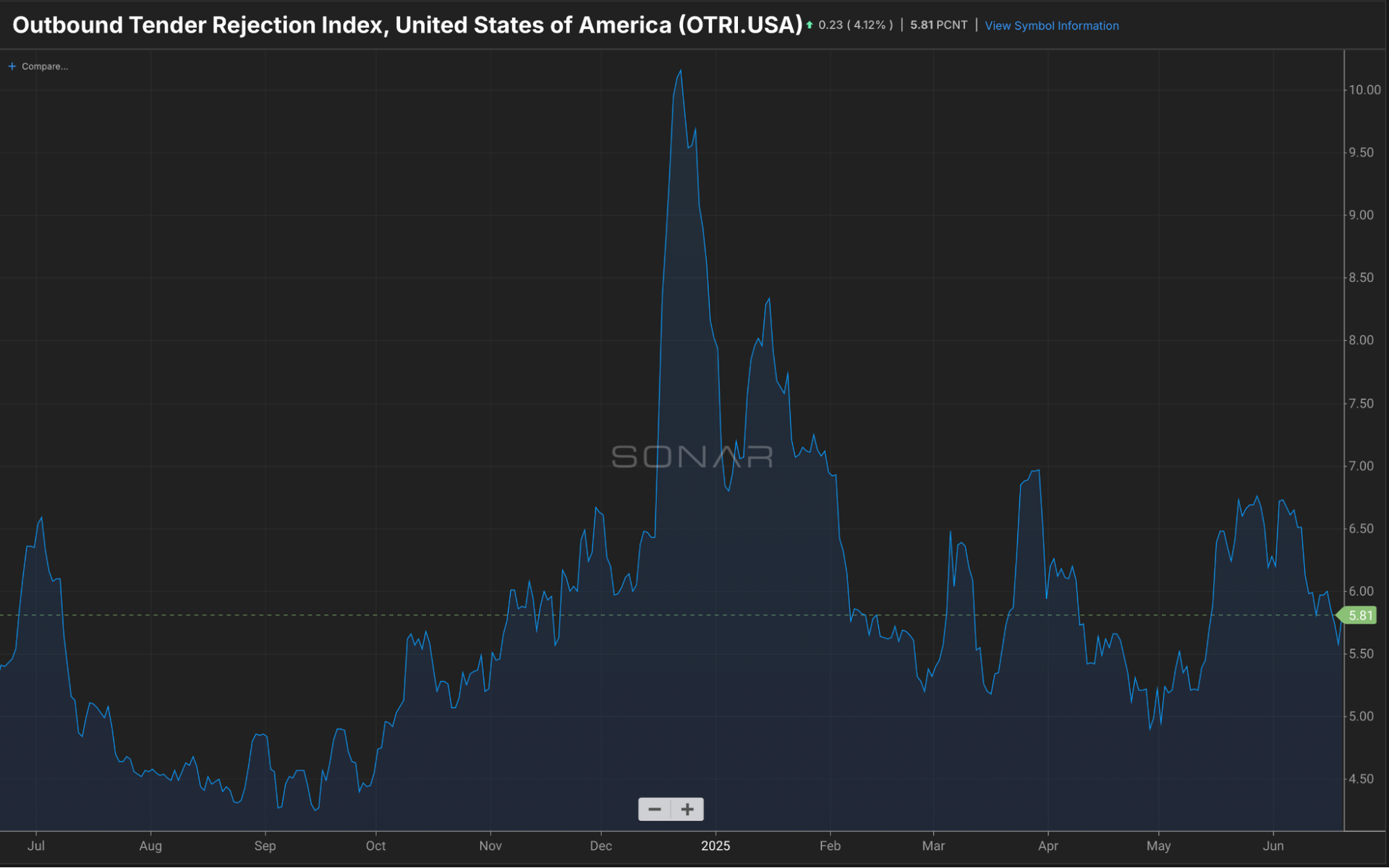
(Chart: SONAR Outbound Tender Rejection Index (OTRI.USA). Rejections dipped again this week to 5.81%, showing that carriers are still accepting most contracted freight. That means capacity remains loose — giving brokers the upper hand and keeping pressure on spot market rates.)
|
Rejections Down to 5.81% – Capacity Still Outpaces Demand
The Outbound Tender Rejection Index (OTRI) dropped to 5.81%, meaning more carriers are saying “yes” to freight — even at less-than-ideal rates. That doesn’t happen in a tight market. That happens when people need the miles more than they need the margin.
A falling OTRI usually signals softness, but it also shows that carriers are chasing volume to survive. This is when brokers test your discipline. They know trucks are available. They know you’re hungry. And they’ll press for lower pricing unless you push back with data and facts about what your truck really costs to operate.
Use this trend to your advantage. Watch which lanes are seeing rejection spikes and target them — those are the lanes where brokers will pay more out of necessity.
|
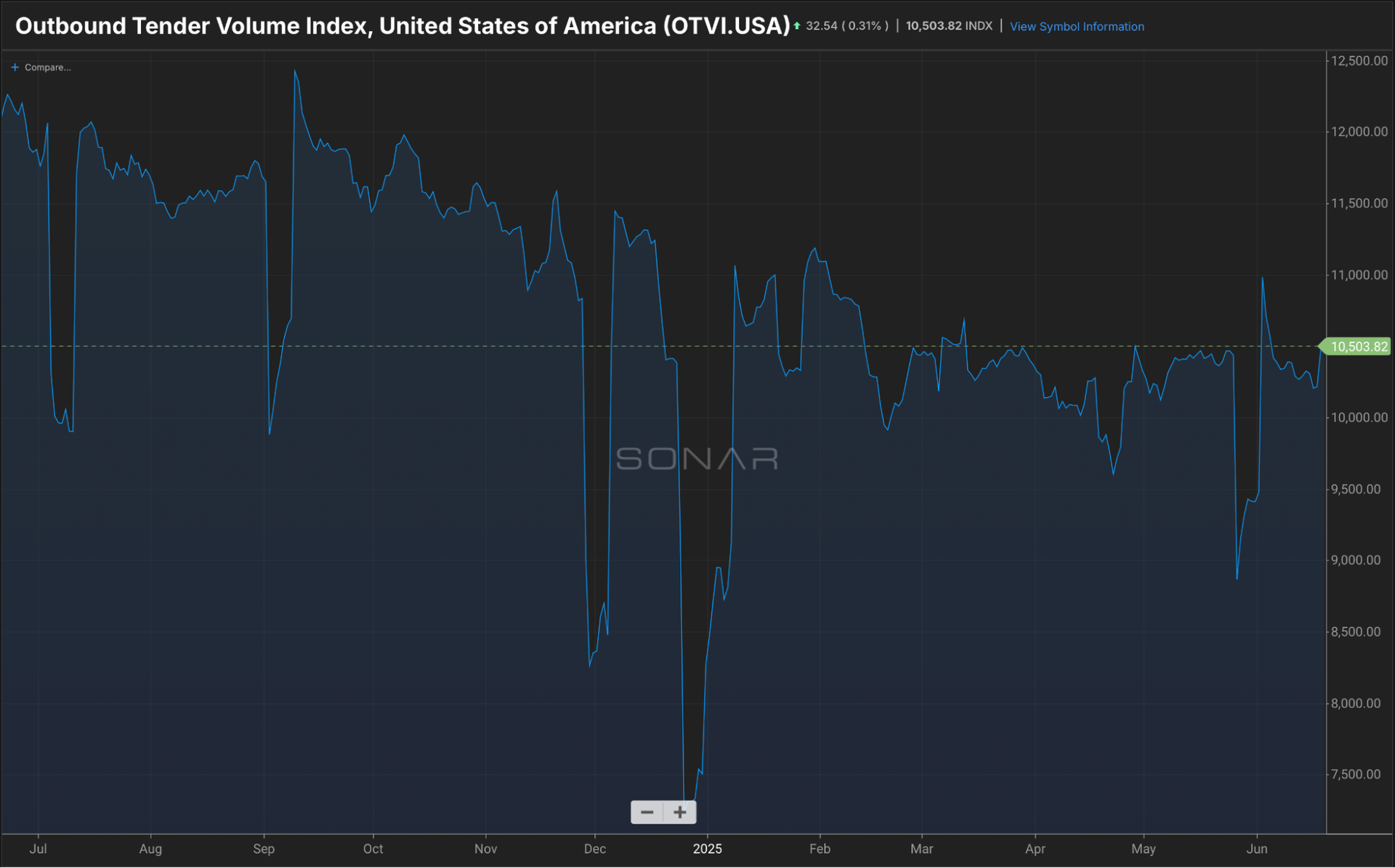
(Chart: SONAR Outbound Tender Volume Index (OTVI.USA). Freight volumes are holding steady near 10,500 but show no upward momentum. For small carriers, that means there’s freight moving — just not enough to tighten capacity or move rates meaningfully higher.)
|
Volume Holding at 10,503 – But Not Improving
The Outbound Tender Volume Index (OTVI) sits at 10,503, which isn’t terrible — but it’s not trending upward either. Volume is stuck in a holding pattern, much like the broader freight economy. This supports ACT’s view that we’re in for a longer stretch of flat demand.
The takeaway? Volume isn’t the problem — access to profitable volume is. If you’re booking freight off load boards, this means more competition per load and thinner margins. If you’re running contract freight or have direct relationships, you’re still exposed to rising costs but at least not subject to rate volatility.
Use your time wisely right now. Instead of playing whack-a-load on the loadboards, start hunting for regional broker or direct shipper partnerships. Find brokers or shippers who value consistency. When the big waves aren’t coming, you’ve got to get good at paddling.
|
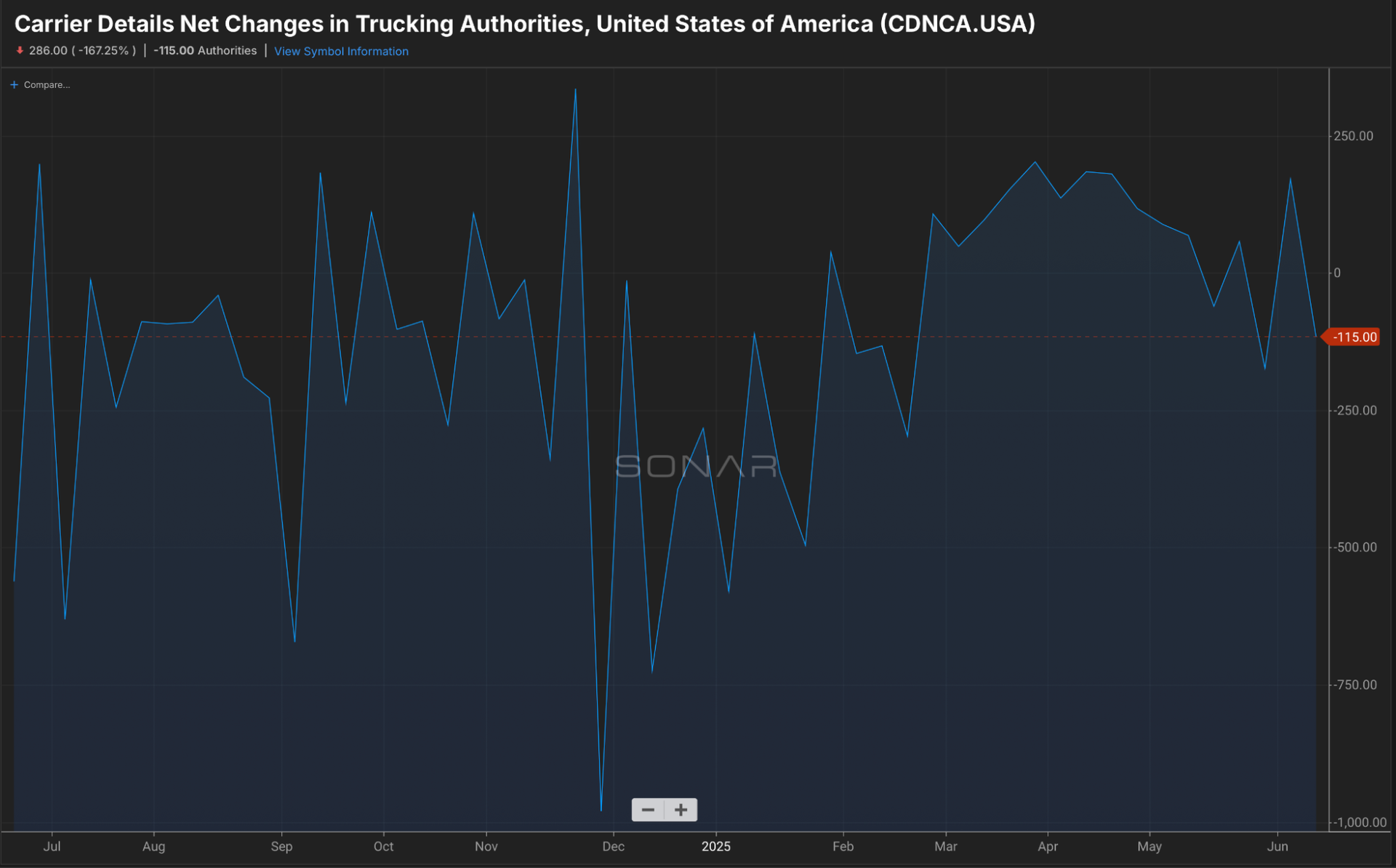
(Chart: SONAR Carrier Details Net Changes In Trucking Authorities (CDNCA.USA). Net carrier losses returned last week with 115 authorities dropping off the map. It’s a sign of pressure — but not yet enough exit volume to force a true rate recovery.)
|
Carrier Authority Losses Back in the Red – Net Loss of 115
Last week saw a net drop of 115 trucking authorities. That’s not a huge number, but it’s another week where more carriers exited than entered. We’re starting to see the slow bleed return — and it might accelerate if rates keep sliding or fuel keeps rising.
For now, though, there’s still too much capacity in the market. We need more consistent exits before spot rates can rise in a meaningful way. ACT is projecting that we won’t see that capacity correction until late 2025 or early 2026. That’s the long haul — and it favors operators with lean cost structures and smart back-office execution.
The Real Talk
The freight economy isn’t collapsing — it’s grinding. ACT Research called it a long recession. SONAR shows declining rates. Rejections are falling. Volume’s flat. This isn’t the time for wishful thinking. It’s the time for business discipline.
You can’t hustle your way out of this market. You’ve got to outthink it.
If you’re dispatching yourself, now is the time to plan tighter lanes, lock in smart fuel strategies, and raise your standards on what you haul.
If you’re running a fleet, it’s time to get serious about performance tracking and reevaluating every dollar you spend per truck, per week.
Margins are slim. Pressure is high. But you’re not alone. We’ll be here every week helping you navigate what’s next — with clarity, strategy, and straight talk that actually helps you stay in the game.
|
(Photo: Jim Allen/FreightWaves)
|
Heads Up Alabama – CDL Testing and Medical Certs Are Changing
|
If you’re a current CDL holder or planning to apply in Alabama, there’s a major shift coming to how you get—and keep—your license. Starting this summer, the Alabama Law Enforcement Agency (ALEA) is rolling out some long-overdue changes aimed at tightening safety and streamlining the red tape around certifications.
First, the medical card process is going digital.
Beginning June 23, you’ll no longer be able to upload your DOT medical certification online or hand in a paper copy. Instead, only authorized medical examiners will be allowed to submit your medical info electronically to the state. If your doctor isn’t set up for that yet—get that conversation started now. And make sure your self-certification status is accurate while you’re at it.
To check or update your CDL medical info, go to alabamadl.alea.gov, hit the “Commercial Drivers” tab, and handle it under the Actions section.
Second, Alabama is upgrading the CDL Skills Test.
Starting July 1, the state will begin using the AAMVA’s (American Association of Motor Vehicle Administrators) updated test. This is a national standard that’s designed to reflect the way trucks are built and driven today—not 30 years ago.
Here’s what’s changing:
- The Vehicle Inspection portion will put more focus on critical safety components and remove the outdated, repetitive stuff. If you’ve been testing on a cheat sheet, it’s time to study smarter.
- The Basic Control Skills part will now feature new maneuvers like Forward Stop and Forward Offset Tracking—both designed to simulate real-world scenarios where collisions happen most: low-speed impacts and blind-side turns.
The Road Test itself isn’t changing, but don’t let that fool you—this new test will separate the real drivers from the ones who just memorized the steps.
Why This Matters
If you’re hiring drivers in Alabama or planning to onboard new talent there, you’ll want to get ahead of this. These updates are about more than paperwork—they’re about making sure the folks behind the wheel can actually handle the job under pressure. That’s good for safety, insurance, and your business reputation.
Let your teams and trainees know: Alabama’s CDL game is changing—and if you want to keep moving freight, you better move with it.
|
|
|
Right after a week full of regulatory tension, carrier fraud alerts, and rising diesel costs, this week’s podcast zooms in on the one thing you can control — your ability to lead, build, and execute.
Adam sat down with Coleman Ruffin — former broker agent trainer at C.H. Robinson, logistics strategist, and Partner/Head of Growth with Talent Solvers — to talk about what it really takes to go from hustle mode to business builder. Coleman’s not new to the game. With over a decade in logistics, training, and recruitment, he’s trained hundreds of agents, coached startup teams, and helped brands stop winging it and start leading with structure.
In this episode, we dig into what small carriers can learn from the brokerage world, how lack of process is killing growth, and why leadership isn’t just about calling shots — it’s about building people, refining systems, and being the glue when the wheels start shaking. Coleman breaks down how to go from reacting to your business to running it, even if you’re just one truck deep right now.
If you’ve ever felt like you’re wearing every hat but still falling behind, this conversation will remind you what real leadership looks like — and how to put it to work in your own operation.
|
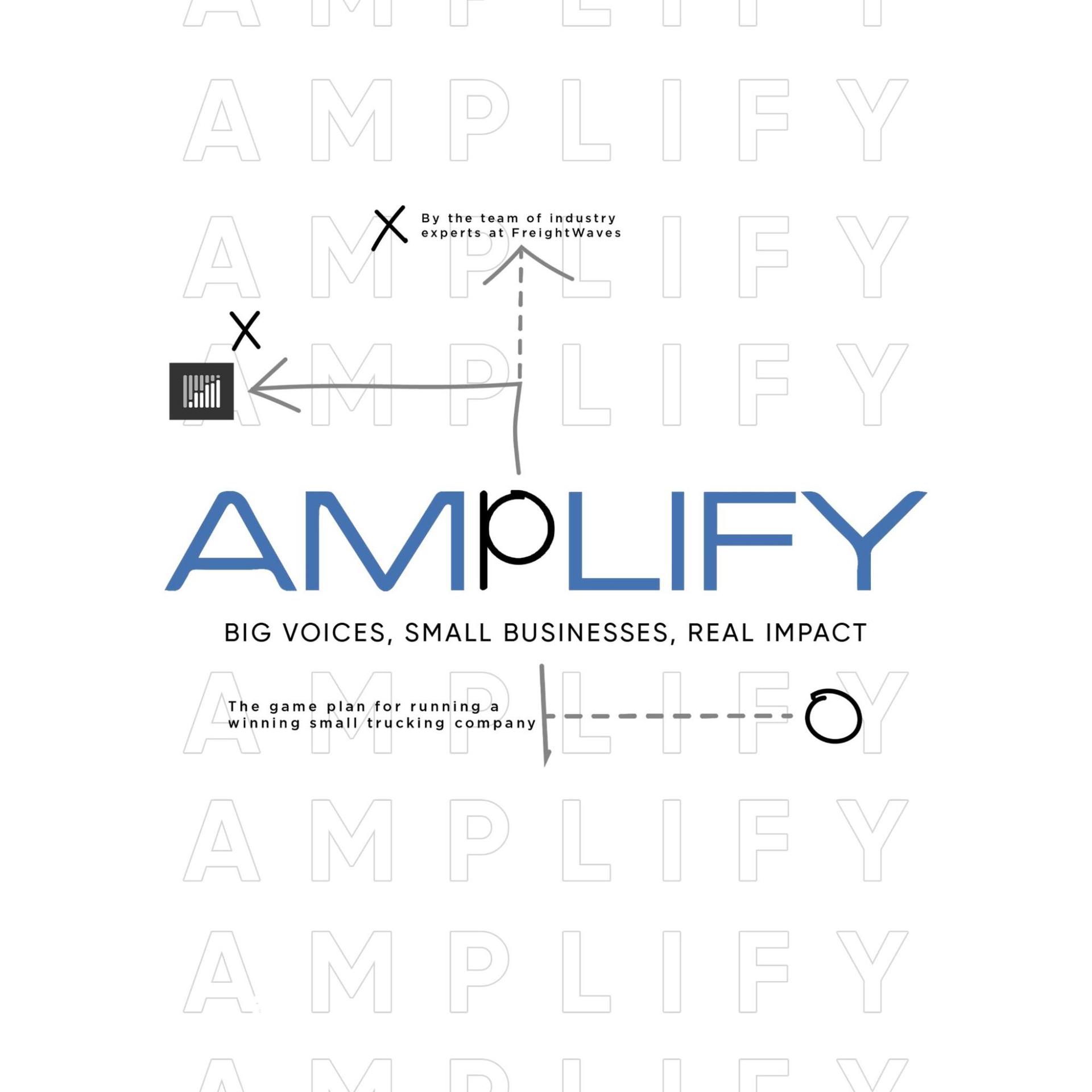
New Feature Premiere – Amplify by Playbook
|
In an industry flooded with big talk and bigger platforms, small businesses rarely get the credit they deserve. But let’s be real — it’s not the megafleets or name-brand vendors that are keeping owner-operators alive out here. It’s the smaller service providers, dispatch firms, consultants, and compliance coaches working behind the scenes to make sure the wheels actually keep turning.
That’s who Amplify is for.
This is our new feature series — a FreightWaves-backed spotlight powered by Playbook — and it’s designed to celebrate the folks in the trenches doing real work for small fleets. Not the ones chasing likes, but the ones building relationships, helping carriers get compliant, get paid, stay profitable, and stay alive in one of the hardest markets we’ve seen in years.
Each month, we’ll feature one of these businesses across our newsletter, FreightWaves.com, and our YouTube channel. Think of it as our version of turning the spotlight around — using the power of our platform to amplify those who genuinely support the small carrier community.
Because let’s face it — small business helping small business is the only way we win.
And here’s the best part — you decide who gets featured.
If you know a business that’s consistently delivering real results for owner-operators or small fleets — not promises, but impact — we want to hear about them.
Submit your nomination for Amplify by Playbook here!
Let’s start lifting up the voices that support small carriers.
|
Final Word – The Squeeze Is On
|
This week painted a clear picture for anyone paying attention: the freight market isn’t out of the woods, and the walls are quietly closing in. Rates dipped. Diesel spiked. Capacity stayed sticky. And while some are still out here pretending we’re on the cusp of recovery, the numbers—and the conversations—say otherwise.
We’re not in freefall, but we’re not growing either. We’re grinding. And in this kind of freight environment, small carriers can’t afford to just coast and hope for a turn. You’ve got to steer.
You’ve got fraud schemes putting unqualified drivers on the road, fake CDLs flying out of DMVs, and new testing rules rolling out without much warning. Meanwhile, brokers are still flexing their power, fuel costs are creeping back toward pain territory, and ACT Research just forecasted this freight recession may stretch into 2026.
That means we can’t wait for conditions to “get better.” We’ve got to get better in these conditions.
Here’s what that looks like:
- Track your margins weekly, not monthly.
- Cut the emotional noise from your pricing decisions.
- Prioritize driver skill and safety over shortcuts.
- Watch the macro—but move local. Operate where you know you can win.
And above all—keep your name clean and your operations tight. In this kind of market, one bad load, one missed payment, or one wrong hire can throw off your whole quarter.
So the message this week?
Don’t just survive the squeeze. Harden your edge. Tighten your circle. And get sharper while the rest of the industry keeps guessing.
You’ve made it this far. That’s no accident.
Let’s keep rolling—on purpose.
|
|
|
|