Welcome to this week’s Supply Chain Radar, where verdicts go nuclear, and the last mile turns out to be whatever chaos you personally own. 💥⚖️🤖📦
ATRI just dropped a litigation gut-check: median nuclear verdicts have blasted to $36 million, reshaping risk models faster than insurers can rewrite exclusions. Meanwhile, 30 Attorneys General are teaming up to argue that brokers shouldn’t get a safety-exception forcefield.
👉 Scroll on for litigation shockwaves, bipartisan plot twists, retail reversals, and Brad Jacobs ringing the NYSE bell with a playbook for the next era.
SCR Number of the Week: $36 million
ATRI’s latest litigation deep dive confirms what every safety director feels in their bones: tractor-trailer lawsuits are climbing, and “nuclear verdicts” are detonating balance sheets. Median mega-awards now sit around $36 million, often turbocharged by pain-and-suffering math that dwarfs actual medical bills. Venue shopping, phantom damages, and TPLF are turning crashes into nine-figure casino spins.
In a plot twist worthy of a Thanksgiving dinner debate, 30 state Attorneys General—from Paxton to Letitia James—have united to argue that brokers aren’t shielded by F4A’s safety exception. Their message to SCOTUS: tort claims stay on the table, and brokers shouldn’t get a regulatory invisibility cloak just because Congress forgot to name them.
Kroger’s big Ocado automation bet keeps shrinking. The grocer just scrapped its planned Charlotte fulfillment center, will pay Ocado $350M for the reversal, and is closing its Nashville spoke—cutting 132 jobs. It’s the latest pullback as Kroger shifts from mega-robot hubs to store-powered picking and gig-delivery partnerships. Ocado insists performance is improving, but the grocer wants profits now, not someday.
AI may write your emails, but it will never close your deals. In the supply chain, billion-dollar businesses are built the old-fashioned way: shaking hands, swapping stories, and showing up. Tech can scale you, but only humans persuade, build trust, and win markets. The shortcut crowd won’t like it—but the future still belongs to people.
In logistics, customer experience rises or falls on the quality of information. This is why Turvo focused on visibility into orders, documents, photos, and messages in one place—meaning updates become something customers use, not chase. Conversations stay tied to the shipment, exceptions surface early, and teams spend less time digging for context. The result isn’t flashy; it’s simply smoother days and fewer “Just checking in…” calls.
Fast delivery expectations and labor crunches are forcing warehouses and transportation teams to stop working in silos. In a recent LinkedIn Live, experts from SnapFulfil and MyCarrier broke down how connecting WMS and TMS cuts manual entry, reduces rebills, and gives every team—from the dock to the C-suite—the version of “visibility” they actually need.
The payoff: fewer surprises, cleaner processes, and scalability without chaos.
At Trimble Insight, OneRail’s Eddie Misicka made a simple point that hit hard: the last mile isn’t one thing—it’s whatever chaotic, high-cost segment you happen to own. With up to 60% of supply chain spend tied to this messy final leg, shippers are leaning on elastic capacity, AI orchestration, and real visibility to tame it. The goal isn’t faster routes—it’s fewer surprises.
Forget the hype cycles—some of the biggest tech shifts are happening far from the headlines. Cruise ships are using AI to cut food waste, railways are installing intelligent security, drones are scaling into million-unit fleets, quantum-safe systems are rolling out before quantum computers even arrive, and AI agents are becoming actual teammates. The future isn’t loud; it’s already here, quietly rewiring everything.
Manifest 2026: Where Your Story Actually Matters ✨
Manifest isn’t just another Vegas conference—it’s the one place where the right conversations can change your entire year. That’s why Pesti shows up early, prepared, and with a plan to help brands turn hallway chats into real momentum. From sharpening your narrative to making sure the right people actually hear it, we focus on impact, not noise.
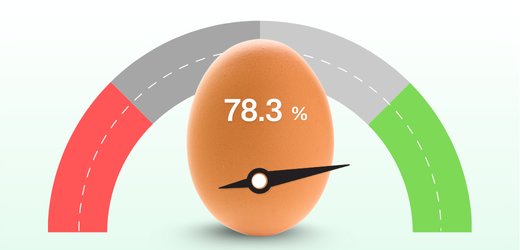
Here’s the scoop on the SCR Egg-O-Meter: It’s a brand-new rating tool that checks out what the media said about business and supply chain execs in the past 30 days and scores them based on the tonality of mentions from a natural language processing algorithm.
The “Egg-o-Meter” is like a quirky kitchen gadget for measuring how well a supply chain leader can cook up success. It cracks open key traits—like adaptability, collaboration, and innovation—and scrambles them into a perfect leadership recipe. The goal? To avoid being a hard-boiled traditionalist or a runny risk-taker. It’s all about being the ideal sunny-side-up mix to lead teams through the ever-changing heat of the supply chain kitchen! 🍳📦
Few people have reshaped modern supply chains as profoundly as Brad Jacobs. Long before “freight tech” became a buzzword, Jacobs was building some of the most influential platforms in transportation and logistics. As founder of XPO—along with earlier ventures like United Waste and United Rentals—he proved that fragmented, operationally inconsistent industries could be consolidated, technologized, and scaled into global powerhouses. His playbook: buy well, integrate fast, and run with rigorous cultural and financial discipline.
Jacobs’ imprint on logistics is hard to overstate. He helped normalize the idea that transportation networks could be built like world-class financial assets—data-driven, performance-obsessed, and aligned under a single operational philosophy. XPO’s rise into a top-tier LTL and brokerage giant didn’t just shift market share; it forced competitors to modernize, adopt better technology, and rethink what “professionalized logistics” should look like.
This week, Jacobs releasedHow to Make a Few More Billion Dollars, the sequel to his first Wall Street-meets-operations manifesto. The new book blends tactical business guidance with a surprisingly personal exploration of mindset. Jacobs goes deep on how to integrate acquisitions into cohesive profit engines, structure compensation for genuine alignment, and partner with global investors who know how to scale. But he also steps into psychological territory—explaining his meditation practice, reframing techniques, and methods for navigating chaos with clarity.
The final chapters jump forward millennia, tracing humanity’s tool-making evolution into a meditation on AI, responsibility, and the future leaders must choose to build. It’s part playbook, part philosophy—and unmistakably Brad Jacobs: bold, analytical, and focused on transformation at scale.

.png?width=1196&upscale=true&name=Header-Image-SCR%20(1).png)