Welcome to this week’s Supply Chain Radar, where speed beats sprawl, tariffs turn warehouses into chess moves, and the industry finally agrees that legacy tech is the real bottleneck. ⚡📦🤖🎭
Home Depot just crossed a quiet milestone while tariff whiplash is reviving interest in bonded warehouses, AI is dragging EDI into the present tense, and Dubai is making a serious play to become retail’s next matchmaking hub.
👉 Scroll on for fast freight, smarter storage, modern EDI, event noise strategies, robots, real estate signals, and this week’s Egg-O-Meter check-in.
SCR Number of the Week: 55%
Home Depot has quietly moved beyond two-day shipping, with 55% of in-stock deliveries now arriving the same or next day, more than triple its 2022 pace. After adding nearly 200 logistics facilities since 2017, the retailer is done building and now focused on squeezing more speed, coverage, and SKU variety from what it has.
Bonded Warehouses: Tariff Hack or Expensive Theater? 🎭
When tariffs on Chinese goods whipsawed from 125% to 47%, shippers with freight in bonded storage quietly saved five figures per container. No wonder bonded warehouses are suddenly back in fashion. But they’re not a silver bullet, and for the wrong operation, they’re just costly delay tactics.
EDI has moved trillions in commerce, but its legacy complexity has long slowed modern supply chains. Orderful’s new Mosaic platform signals a shift, using AI to eliminate manual mapping and translate partner requirements automatically via modern JSON inputs. Early signals suggest onboarding timelines could shrink from months to weeks, reframing EDI as infrastructure, not friction.
Manifest 2026 (Feb. 9–11, Las Vegas) is set to bring thousands of logistics leaders under one roof—and standing out will be harder than ever. As the event’s official media partner, Pesti Group is helping brands cut through the chaos with targeted PR, content, and lead-gen strategies designed for real ROI, not booth selfies.
This week’s Logistics Matters podcast with DC Velocity dives into peak-season last-mile trends with OneRail CEO Bill Catania, early optimism for industrial real estate in 2026 driven by AI data centers, and the rise of robotics-as-a-service to ease warehouse labor pain. It’s a snapshot of how logistics is closing out 2025 and gearing up for what’s next.
DELIVER Middle East is officially launching in Dubai on Jan. 21–22, 2026, backed by DP World as headline sponsor and launch partner. The event is bringing its AI-powered matchmaking model to the region, pairing 200+ senior retail execs with 25+ solution providers, plus a speaker lineup spanning luxury, ecommerce, net-zero logistics, and AI-enabled fulfillment. Expect port tours, awards, and high-level roundtables, too.
Warehouse teams waiting for the right moment to upgrade their WMS may be waiting themselves into deeper inefficiency. As inventory complexity and customer expectations rise, delays only magnify operational strain. A new SnapFulfil guide breaks down what it really takes to move to a cloud-based WMS,costs, timelines, pitfalls, and payoff, without the fluff.
RPM Freight Systems is expanding upmarket with its acquisition of Dealers Choice Auto Transport, a white-glove specialist known for enclosed and driveaway moves of luxury and exotic vehicles. The deal adds a high-margin, high-touch layer to RPM’s finished vehicle platform, bridging OEM-scale logistics with bespoke dealer services.
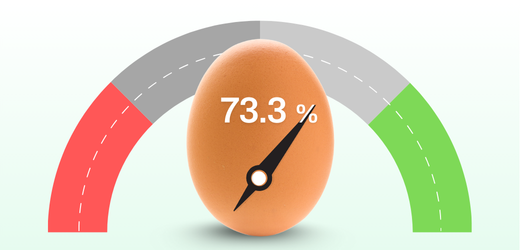
Here’s the scoop on the SCR Egg-O-Meter: It’s a brand-new rating tool that checks out what the media said about business and supply chain execs in the past 30 days and scores them based on the tonality of mentions from a natural language processing algorithm.
The “Egg-o-Meter” is like a quirky kitchen gadget for measuring how well a supply chain leader can cook up success. It cracks open key traits—like adaptability, collaboration, and innovation—and scrambles them into a perfect leadership recipe. The goal? To avoid being a hard-boiled traditionalist or a runny risk-taker. It’s all about being the ideal sunny-side-up mix to lead teams through the ever-changing heat of the supply chain kitchen! 🍳📦
Richard Dickson, CEO and president of Gap Inc. – 73.3%
Richard Dickson’s tenure as CEO and president of Gap Inc. has increasingly been defined by a quiet but consequential reset of the company’s supply chain. At a time when many apparel retailers are still wrestling with volatility, Gap entered the 2025 holiday season with unusual confidence, backed by nearly a 30% increase in supply chain productivity.
That improvement didn’t come from a single bet, but from coordinated changes across technology, inventory discipline, and execution. Under Dickson’s leadership, Gap invested heavily in automation inside its fulfillment centers, deploying robotic unloaders and advanced storage and retrieval systems to move product faster and with greater precision. At the same time, the company expanded its use of AI across design, planning, and operations, pairing internal tools with external partnerships like Google Cloud to modernize decision-making end to end.
Equally important has been Gap’s renewed focus on inventory management. Rather than overbuying ahead of peak season, the company tightened unit purchasing to remain flexible as demand shifted. CFO Katrina O’Connell described the result as “slightly negative” unit inventories, a signal that Gap prioritized responsiveness over excess stock. Even as reported inventory rose modestly year over year, executives attributed much of that increase to tariff-driven cost inflation, not operational bloat.
Dickson has framed these moves as strategic, not defensive. The scale of Gap’s global sourcing, logistics, and fulfillment network now gives the company room to absorb tariff pressure, adapt sourcing, and implement targeted pricing without undermining its value proposition. With tariff mitigation expected to turn into a tailwind in 2026, Gap’s supply chain is no longer just supporting the business, it’s shaping the company’s confidence about what comes next.

.png?width=1196&upscale=true&name=Header-Image-SCR%20(1).png)