Gatik launches fully driverless commercial trucking operations
|
|
|
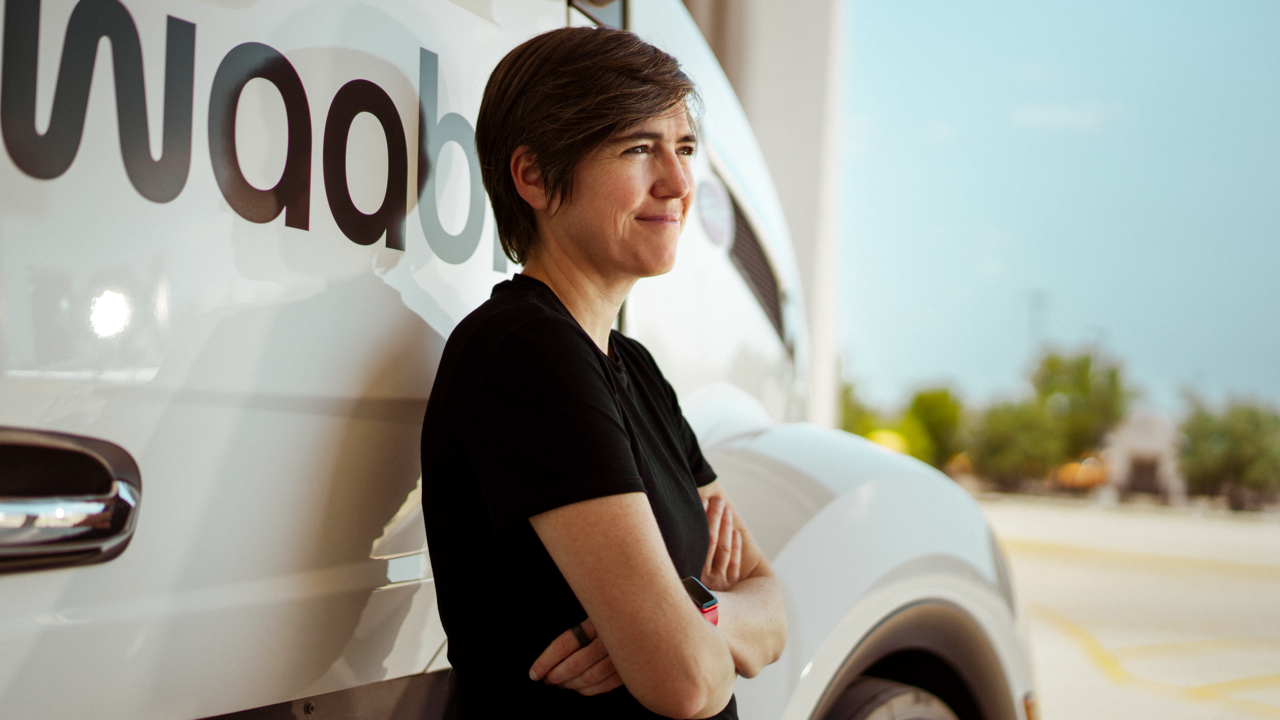
Waabi hauls in $750M Series C to become Canada’s newest autonomous vehicle unicorn
|
Toronto-based Waabi announced Wednesday that it closed an oversubscribed $750 million Series C funding round. The autonomous vehicle technology company secured an additional milestone-based investment from Uber, bringing total available capital to $1 billion.
The funding, the largest fundraise in Canadian history, will fuel continued advancement of Waabi’s Physical AI Platform. The platform will accelerate the Canadian trucking technology maker’s commercial progress and support the company’s expansion into robotaxis.
Khosla Ventures and G2 Venture Partners co-led the Series C round, with participation from strategic investors including Uber, NVentures (NVIDIA’s venture capital arm), Volvo Group Venture Capital and Porsche Automobil Holding SE.
Financial and institutional investors include funds and accounts managed by BlackRock, Radical Ventures, HarbourVest Partners, a wholly owned subsidiary of the Abu Dhabi Investment Authority, and Incharge Capital.
Canadian investors participating include BDC Capital’s Thrive Venture Fund, Export Development Canada, and TELUS Global Ventures.
“The moment is here and fully upon us. Everything is coming together for physical AI to have its moment, with self-driving as the first manifestation at scale,” Lior Ron, Waabi chief operating officer and former Uber Freight CEO, said in an interview with FreightWaves. “Hardware, technology and customers are all ready.”
Read the full article here.
|
Gatik launches fully driverless commercial trucking operations
|
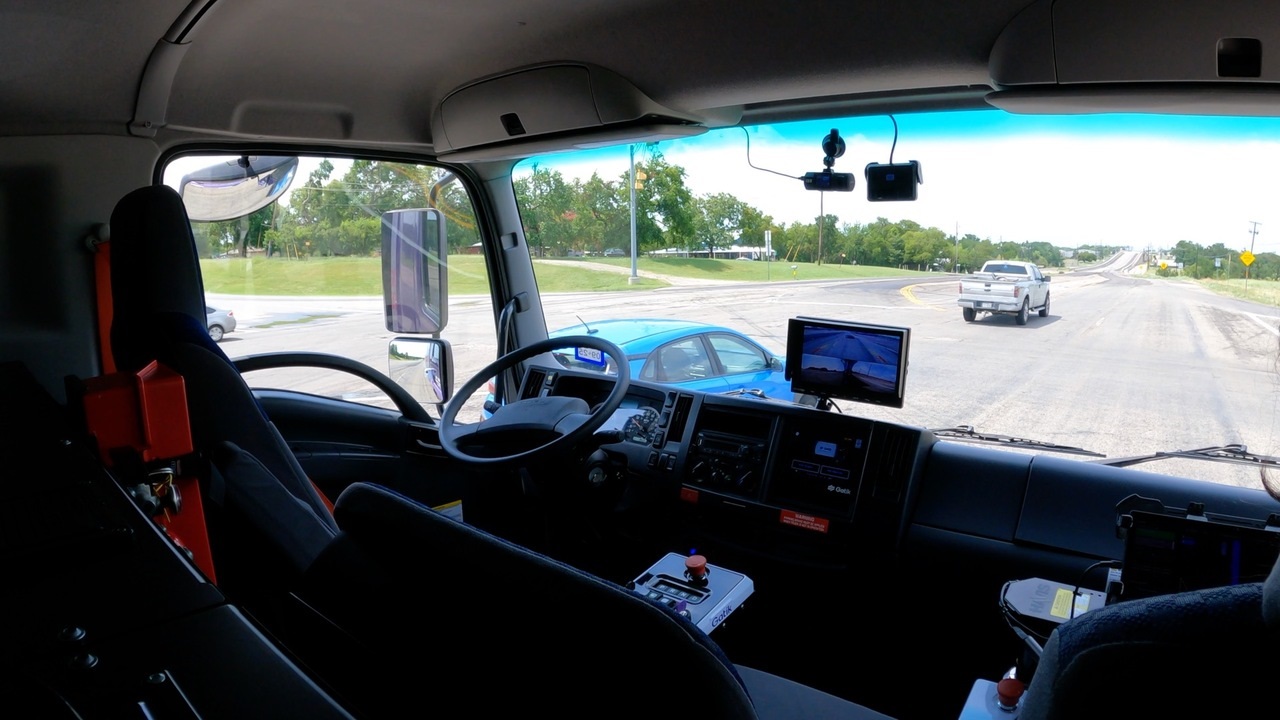
Gatik announced on Tuesday that it has become the first company in North America to deploy fully driverless trucks in commercial operations at scale. The Mountain View, California-based autonomous trucking technology company now operates trucks with no human driver or safety observer behind the wheel.
The medium-duty autonomous trucks equipped with Gatik Driver complete daily deliveries for Fortune 50 retailers across Texas, Arkansas and Arizona. The milestone is part of a larger autonomous trucking technology trend as companies seek to move beyond limited pilots to sustained, revenue-generating operations.
“Autonomous trucking is no longer a promise. It’s a business,” said Gautam Narang, CEO and co-founder of Gatik. “With more than $600 million in contracted revenue, Gatik has proved that autonomous trucking is not only possible but commercially viable, and the fierce demand for our solution reflects how quickly this new model will reshape the future of logistics.”
Narang told FreightWaves the company has secured more than $600 million in committed, multiyear, noncancelable revenue from large companies in the e-commerce, consumer packaged goods and logistics sectors.
Since launching freight-only operations in mid-2025, Gatik has completed 60,000 fully driverless orders without incident, logged more than 2,000 hours of driverless operation across multiple logistics networks and completed over 10,000 driverless miles on public roads.
Narang noted the current driverless fleet consists of 10 revenue-generating trucks, with plans to increase to 60 trucks in the coming weeks and expand to hundreds of driverless trucks by the end of the year.
Read the full article here.
|
Tesla to install Semi chargers at Pilot Travel Centers
|
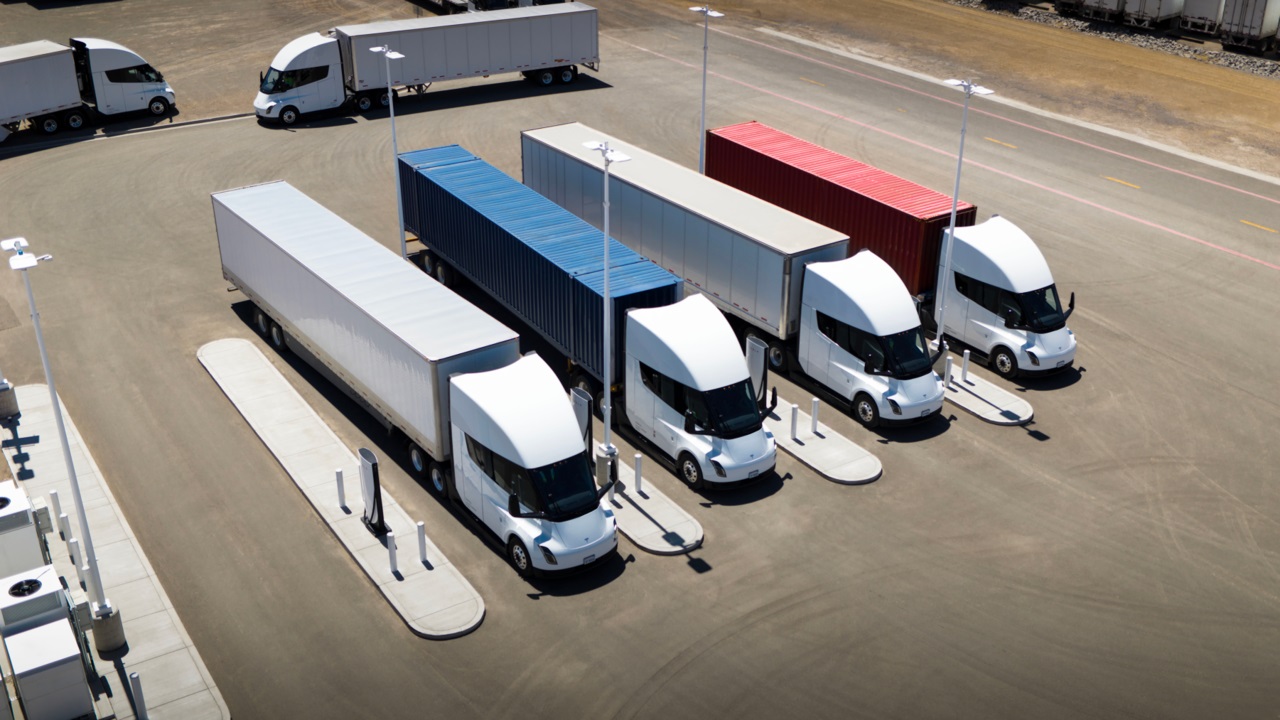
(Photo: Pilot Travel Centers)
|
Pilot Travel Centers on Tuesday announced a partnership with Tesla to install Semi chargers at select locations to expand heavy-duty truck charging infrastructure. The Knoxville, Tenn.-based company is one of the largest travel center operators in the U.S., with more than 900 locations across 44 states and five Canadian provinces.
The initially announced Tesla Semi charger locations will be along I-5, I-10 and several major corridors where the need for heavy-duty charging is highest. The first sites are expected to open in summer 2026, according to the release.
Construction of the charging stations is slated to begin in the first half of 2026. The initial states chosen are California, Georgia, Nevada, New Mexico and Texas. The upgraded Pilot travel centers will have four to eight charging stalls delivering up to 1.2 megawatts of power to each stall via Tesla’s V4 cabinet charging technology.
These Tesla charging stalls will initially be focused on Tesla Semis but may be expanded to include other heavy-duty electric vehicles from other manufacturers.
According to Tesla, the majority of a Semi truck’s 500-mile range can be recovered in a 30-minute charge session. This is designed to match a mandated 30-minute break that drivers must take as part of their hours of service.
|
|
|
Clean Trucking reports that WattEV continues to grow with a recent expansion of its San Bernardino charging depot. The California-based trucking-as-a-service company offers charging services and operates its own electric truck fleet. The expanded San Bernardino site can now charge up to 200 electric trucks daily, offering megawatt-level charging capabilities.
Harbinger Motors, the electric medium-duty truck maker, recently announced Harbinger Industria. The new business line offers Harbinger battery technology as stand-alone products for energy storage and auxiliary power applications. As part of the announcement, Harbinger partnered with Airstream, the maker of aluminum travel trailers that will be the first customer to use Harbinger’s battery storage technology.
FreightWaves’ Noi Mahoney reports that Tesla’s recent Q4 earnings highlighted progress toward its long-delayed but highly anticipated Tesla Semi. Mahoney notes that Tesla officials told investors that volume production of the Semi is on schedule to begin in 2026 as part of a broader push into commercial and industrial markets.
|
As always, thanks for watching and reading.
Thomas Wasson
twasson@firecrown.com
|
|
|
|