|
Straight Talk with Brian Straight • January 11, 2026
|
|
|
|
Hello, and welcome to this week’s edition of Straight Talk. Inside, we discuss:
-
Cargo theft is a systematic problem
-
Freight rates questioned
-
Pepsi adopts digital twins
-
Humanoids get a launch date
|
|
If this was forwarded to you and you wish to receive it each Sunday morning in your email, please go here to sign up for SCMR newsletters.
|
|
|
|
 |
|
(Photo: Getty Images)
|
|
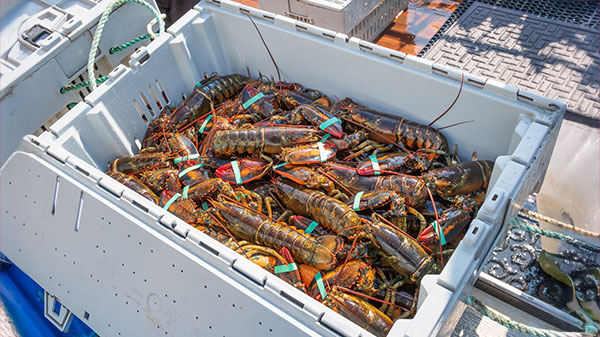
Just before Christmas, a $400,000 load of lobster meat was stolen in Massachusetts. The load was heading to Costco stores in Illinois and Minnesota. That followed an oyster theft in Maine and a crab meat shipment theft out of Massachusetts.
The loads were high-profile examples of the growing threat to cargo. In these cases, thieves impersonated a legitimate carrier to steal the food.
This is not a new problem for the industry, but it is a growing problem. If you want a quick gut-check on where cargo theft is headed, look at what thieves are targeting and how they’re doing it. The recent run of high-profile food thefts isn’t just bad luck or a few opportunistic break-ins. It’s a signal that organized groups are treating freight like a controllable, repeatable business process that can be exploited with the same discipline the supply chain uses to move product.
|
|
Cargo theft is growing
|
|
The data backs up the idea that cargo theft isn’t fading into the background. Verisk CargoNet’s annual analysis reported 3,625 cargo theft incidents in 2024, up 27% from 2023. That’s the kind of increase that should force a boardroom conversation, especially in a world where every percent of margin is fought over. And then there’s a more unsettling trend taking place: the financial impact of cargo theft is accelerating. CargoNet’s Q3 2025 analysis found incident volume roughly flat year-over-year, while the loss severity jumped. Are thieves getting better at selecting high-value targets and executing thefts, and if so, why?
Here’s the other part of the problem: We don’t really know how big a problem cargo theft is. I’ve spent years reporting on cargo theft and what I’ve been told repeatedly is this: Whatever the reporter number is, it is actually higher. Why? Cargo theft is one of those risks that companies quietly manage because admitting you lost a load can feel like confessing to weak controls. In many cases, the incentives don’t support full transparency. Recent ATRI survey findings note that a sizable share of motor carriers don’t report all theft incidents to insurers because losses fall under deductibles or because they’re trying to avoid premium increases. That underreporting dynamic matters because it distorts the narrative. It makes cargo theft look like a problem we can manage when it’s closer to a risk that needs to be proactively managed.
|
|
New strategies
|
|
When I first started reporting on cargo theft, a typical theft looked like this: Thieves would follow trucks out of truck stops or warehouses, often for hundreds of miles waiting for the perfect opportunity to strike. Once that trucker shut down for the night, the thieves would open the trailer and unload the goods. In instances where the trucker dropped the trailer, they may just simply hook up and take it away.
In essence, preventing cargo theft was simple: lock the trailer, pick safer parking, train drivers, maybe add tracking, and call it a day. But, the value of thefts increasing shows that is no longer the case. And why would it be? With technology available today, the game of guessing what is inside a trailer is outdated. Now, thieves can identify targets and strike before anyone knows what happened. Cargo theft is evolving from a physical security issue into a strategic supply chain vulnerability, and we’re not treating it that way yet.
The most important change isn’t where thieves strike, it’s how they infiltrate the transaction. Organized groups are increasingly exploiting digital freight workflows: impersonating legitimate carriers, manipulating load tenders, redirecting shipments, and using identity-based deception that looks normal until it’s too late.
That’s not a problem subject to a bolt cutter, but rather a trust-and-authentication problem.
|
|
Automation’s blind spots
|
|
How many times have you heard someone that stopped a crime say something like this: “Something just felt off.” In fact, there is an entire safety campaign in this country built on the premise of “see something, say something.” But, as we automate more of the transactions in the supply chain, who is going to sense that something is off?
We’re connecting more systems, moving tendering into platforms, digitizing documentation, and experimenting with AI tools to price freight, select carriers, automate appointment scheduling, and reduce human touches. In one sense, that’s progress. In practice, though, every step away from human-centric negotiation also removes a layer of informal fraud detection; that “something feels off” instinct that so often serves as the initial indication of a problem.
Humans aren’t perfect controls, but they’re often the last line of defense against social engineering. When you remove them from the loop without replacing them with equally strong verification and anomaly detection, you’re basically telling criminals: “Go ahead, we’ve given up.”
This is exactly why cargo theft needs to move up the maturity curve from loss prevention to strategic risk management.
|
|
What does strategic look like?
|
|
Start with governance: cargo theft shouldn’t sit only with security or operations. It belongs in the same category as supplier risk, cyber risk, and continuity planning. If your organization runs a risk register, cargo theft needs to be there as a line item with owners, controls, KPIs, and executive review. It should not be an after-action email thread after a load disappears.
Next, treat the freight transaction like a financial transaction. If you were wiring $200,000 to someone, you wouldn’t do it based on an email chain and a logo on a PDF. Yet in freight, we still see workflows where a carrier identity can be spoofed or a dispatch contact can be swapped with minimal friction. That has to change. Multi-factor authentication, verified identities, tighter tendering controls, and secure handoffs shouldn’t be nice to have—they need to be table stakes in a digitized logistics environment. Criminals are using cyber and deception tactics because they work, and supply chains haven’t caught up.
Finally, align incentives so reporting improves. As long as the market quietly penalizes transparency, you’ll keep seeing underreporting and a weak data picture. Theft has long been a cost of doing business buried in a spreadsheet. It’s time to shine a light on it and put some strategy behind preventing it.
Cargo theft is being refined. The criminals are seemingly two steps ahead at the moment, and we as an industry are hard at work removing what few barriers we have in place. The supply chain loves efficiency, but it has to learn the same lesson cybersecurity learned years ago: speed without controls is just acceleration toward the next incident.
|
|
Freight rate perception
|
 |
|
|
|
(Photo: Getty Images)
|
|
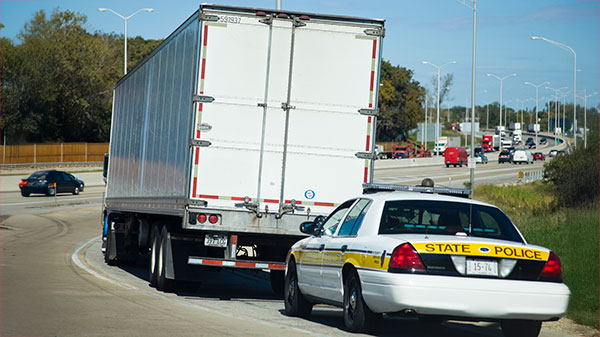
Federal enforcement of English-language proficiency and immigration-related CDL rules has put pressure on the U.S. trucking workforce, and some media outlets have linked recent freight-rate increases directly to this enforcement. That may be part of the story, but I think it’s too early to draw a definitive conclusion. We’ve been here before. This fall, there was significant focus on the American Trucking Associations driver shortage narrative—an argument I’ve covered for years and one that has often helped justify higher rates tied to rising driver pay (fewer drivers drives up wages, right?). Could a similar dynamic be at play now? U.S. DOT data shows roughly 9,500 drivers were placed out of service in 2025 for English-language violations, with ICE also targeting immigrant drivers. The USPS is the latest company to say it was targeting unvetted truck drivers. But, the exact number of truckers taken off the roads remains elusive. Anecdotal evidence abounds, but anecdotal evidence also abounded around the driver shortage narrative. In a data-driven world, I’d love to see some concrete numbers, and importantly, consensus around those numbers. The most important question is scale: how many drivers would need to be sidelined to materially affect capacity and rates, especially when there is evidence that freight volumes themselves remain at lower levels. Notably, in announcement after announcement regarding this crackdown (including ICE and DOT press releases), there are no actual numbers released. Until publicly held carriers report Q4 driver counts, it’s unclear whether seated driver numbers are meaningfully declining or if rates are being influenced more by perception than reality.
|
|
PepsiCo leverages digital twins
|
 |
|
(Photo: Getty Images)
|
|
|
|
|
PepsiCo is increasingly using AI-powered digital twin technology to virtually test plant and warehouse changes before implementing them physically, allowing the company to improve throughput and reduce costs. By partnering with technology leaders like Siemens and NVIDIA, PepsiCo creates detailed 3D simulations of facilities that replicate machines, conveyors, and workflows, enabling teams to evaluate layout changes and operational improvements in a virtual environment. This digital-first approach accelerates design cycles, optimizes capacity, and helps identify potential issues before physical investment, making supply chain and manufacturing decisions more efficient and cost-effective. The companies announced a partnership at CES last week. Read more here.
|
|
What I read this week
|
|
New intelligence tools are helping supply chains read signals, assess conditions, and respond faster to shifting demands. … Explainable AI is the new frontier helping companies modernize traditional S&OP processes. … Lawmakers are pushing legislation that would require more regular reviews of the U.S. electric supply chain. … Hyundai plans to deploy humanoid robots from Boston Dynamics on factory floors by 2028. … Companies looking to localize inventory face hidden tradeoffs that must be considered. … The services sector continued to grow as 2025 came to a close, according to ISM data.
|
|
|
|
|
Thank you for reading, Brian
|
|
|
|
Brian Straight is the Editor in Chief of Supply Chain Management Review. He has covered trucking, logistics and the broader supply chain for more than 15 years.
|
|
|
|
|