
| The Daily // Thu 10.01.26 | View in browser → |
.png)
The Daily
 |
NEWSLETTER BROUGHT TO YOU BY — AURORA
More Miles. More Revenue. Our self-driving Class-8 trucks haul freight on public roads today with no one behind the wheel. Learn more.
|
|
ANNOUNCEMENTS
|

Ethiopian Airlines orders 10 Boeing 777 freighters
Ethiopian Airlines placed a 10-aircraft order with Boeing, becoming the first African carrier to buy the still-unreleased 777-8 freighter, according to Eric Kulisch’s reporting. The order splits between eight 777-8s and two current-generation 777 freighters, adding to an Ethiopian fleet that already runs 18 Boeing jets, including 12 777s, two 767s and four converted 737-800 narrowbody freighters serving more than 70 markets worldwide.
The 777-8 freighter, not expected to enter service until 2028 and possibly later, carries up to 118 metric tons, versus 111 tons for the competing Airbus A350 freighter. Boeing says the jet burns 30% less fuel than the 747-400 it’s built to replace, costs 25% less per ton to operate, and cuts its ground noise footprint by as much as 60%. Ethiopian’s order pushes Boeing’s 777-8 backlog to 89 firm orders, still trailing the 115 firm orders Airbus has booked for the A350 freighter.
An African carrier anchoring demand for a freighter that won’t fly for years is a bet on where air cargo capacity needs to be by the end of the decade, not where it is today. With Boeing still trailing Airbus on firm orders, expect both manufacturers to keep courting cargo-heavy carriers outside the usual U.S.-Europe corridors.
Ocean rates highest in a year amid US-China trade truce
Trans-Pacific container rates from Asia to the U.S. West Coast hit $8,400 per forty-foot equivalent unit, a new annual high, while East Coast rates held near $9,600 per FEU, about $200 below their late-August peak, according to Stuart Chirls’ reporting. Asia-Europe rates, by contrast, fell 9% to roughly $3,400 per FEU and Asia-Mediterranean pricing dropped 7% to about $3,600, suggesting the trans-Pacific strength is a capacity story rather than a demand story: port delays are absorbing more than 8% of global vessel capacity. The U.S.-China trade truce was extended two months past its original Nov. 10 expiration, covering about $30 billion in counterpart imports and nearly 80 U.S. product entries against a Chinese tariff list running more than 1,600 entries deep. Separately, the Panama Canal Authority plans to restore 10 daily Neopanamax transits and raise the maximum authorized draft to 49 feet by mid-October.
Rates climbing on the trans-Pacific while falling on Asia-Europe is a tell: this is congestion, not a broad-based peak season. Shippers routing around port delays should expect the premium to hold until capacity, not demand, catches up.

Daimler bets on owning the entire autonomous truck system
Daimler Truck is building both the hardware and the software for driverless freight, rather than leaning on an outside autonomy partner, according to Thomas Wasson’s reporting. Daimler Truck North America holds 37.8% of the North American Class 8 market through June 2026 and has sold more than 1 million Cascadia trucks since 2007, while its autonomy unit Torc completed driver-out validation at speeds up to 65 mph on a closed Texas course back in November 2024. The company’s timeline calls for driver-out runs on public roads by the end of 2026, commercial freight hauls in 2027, and scaling in 2028, backed by a new U.S. manufacturing plant that breaks ground late this year and starts production in 2029. "We’re building the entire autonomous trucking system, from the truck platform and vehicle architecture to the hardware integration and also the autonomous driving software," CEO Karin Rådström said, adding that "a Torc truck will be able to drive itself on public roads — not on a test track — and without a safety driver in the cab" for the first time.
Controlling both the truck platform and the driving software is a bet that integration, not best-of-breed partnerships, wins the driverless freight race. If Daimler hits its 2027 commercial timeline, it pressures rivals relying on third-party autonomy stacks to prove their approach is just as fast.
Cargo thieves are ‘laundering freight’ through the supply chain, Cornell warns
Stolen freight can reach overseas markets within days of a theft, moving through the same cross-docks, warehouses and paperwork that legitimate cargo does, according to Phil Brink’s reporting. Scott Cornell, EVP of crime and theft specialists at SPG Cargo & Logistics and chair of TAPA Americas, described one case involving stolen headphones that turned up in Europe about a week after the theft. "They stole it, took it right to the port," Cornell said, explaining that thieves generate a new bill of lading so that "all the players on the transaction have been changed" and the paper trail looks clean: "bill of lading and bolt seal trump it all." The result, he said, is that stolen freight hides "in plain sight" in what amounts to "a shadow economy," where a buyer "could literally think that you’re dealing with a legitimate supplier." Cornell pointed to digital bills of lading as a potential check on the practice, though industry-wide adoption remains the hurdle.
If a forged bill of lading is enough to make stolen freight look legitimate, the paperwork itself is the vulnerability, not just the warehouse door. Shippers and brokers relying on document checks alone are checking a box that thieves already know how to fill in.
For transportation cybersecurity, AI isn’t helping the fight so far
AI is currently doing more for cybercriminals than for the companies defending against them, according to John Kingston’s reporting from an NMFTA cybersecurity conference focused on the LTL industry in Long Beach, California. "We’ve been playing around with large language models and agentic AI now for the last four plus years," said James McQuiggan, advisory chief information security officer at Apparent Security, noting agentic AI makes it "a lot easier" for criminals "to go through and collect all the information" needed for an attack; he said a roughly $100,000 investment in a deepfake campaign can return millions in ransom. Melanie Padron, vice president of strategic growth at IT Architeks, compared the skepticism needed for new tech vendor claims to new truck parts: "Do you have a new brake system for your trucks? Would you just trust the word, or would you test it?" Erica Brigance, ArcBest’s vice president of technology, said simply, "the threats are increasing … it certainly keeps me up at night." Panelists urged companies to focus on fundamentals: clear cybersecurity ownership, risk assessments, incident response plans and tested backups, rather than wait for defensive AI tools to catch up.
A four-year head start for criminal use of AI, against defensive tools still catching up, means backups, incident response plans and basic skepticism of vendor claims are doing more work right now than any AI security product.

Brought to you by Samsara — built with operators, for operators. Blind spots cause some of fleets’ costliest, most complex collisions. Learn how AI-powered 360-degree visibility helps you spot risks in real time and protect drivers, pedestrians and cyclists.

| Time | Guest | Topic |
|---|---|---|
| 12pm | Chas Wurster | Chief Technology Officer, PrePass |
| 12pm | Daniel Goff | Vice President of External Affairs, Kodiak |
| 12:30pm | Kelly Soderlund | Head of Insights, Samsara |

White Paper: Q3 2026 Freight Brokerage Rate Report
FreightWaves’ Freight Brokerage Rate Report — sponsored by Triumph — provides a review of the previous quarter and a forecast for the coming months.

Quoting at the speed of the market
How the most advanced freight brokers are turning rate quoting into infrastructure.

More Miles. More Revenue
Our self-driving Class-8 trucks haul freight on public roads today with no one behind the wheel.
What It Takes to Win in the Next Era of Drayage
Demand volatility, terminal congestion and driver shortages are squeezing drayage margins. FreightWaves and CargoWise Landside surveyed operators on where automation and digital investment are actually paying off.
High-Stakes Freight Brokerage: Risk and Accountability
Shippers moving high-value freight say lower-cost brokerage is starting to carry higher risk. FreightWaves and Werner surveyed where compliance gaps and carrier performance issues are driving accountability higher.
New Research: Tariffs Didn’t Raise Costs. They Raised the Execution Standard.
Infios research shows the 2025 tariff overhaul turned transport mode, tariff exposure and trade-route selection into variables shippers now have to manage actively, not fixed costs they can set and forget.
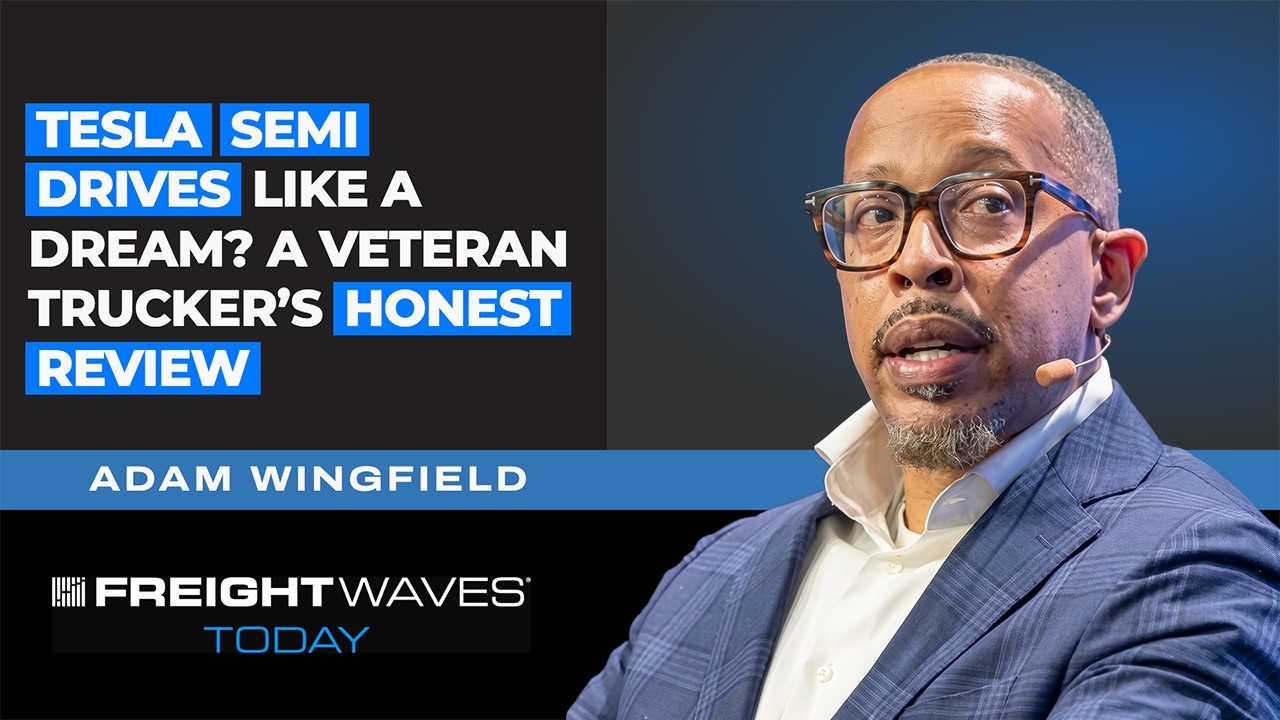 ▶ ▶ |
Tesla Semi DRIVES like a dream? A Veteran Trucker’s Honest ReviewFreightWaves rides along with a veteran trucker to get an honest, behind-the-wheel take on the Tesla Semi. |
 ▶ ▶ |
Rail Traffic SURGES: Intermodal Hits Record HighsFreightWaves looks at what’s driving intermodal rail volumes to record levels. |
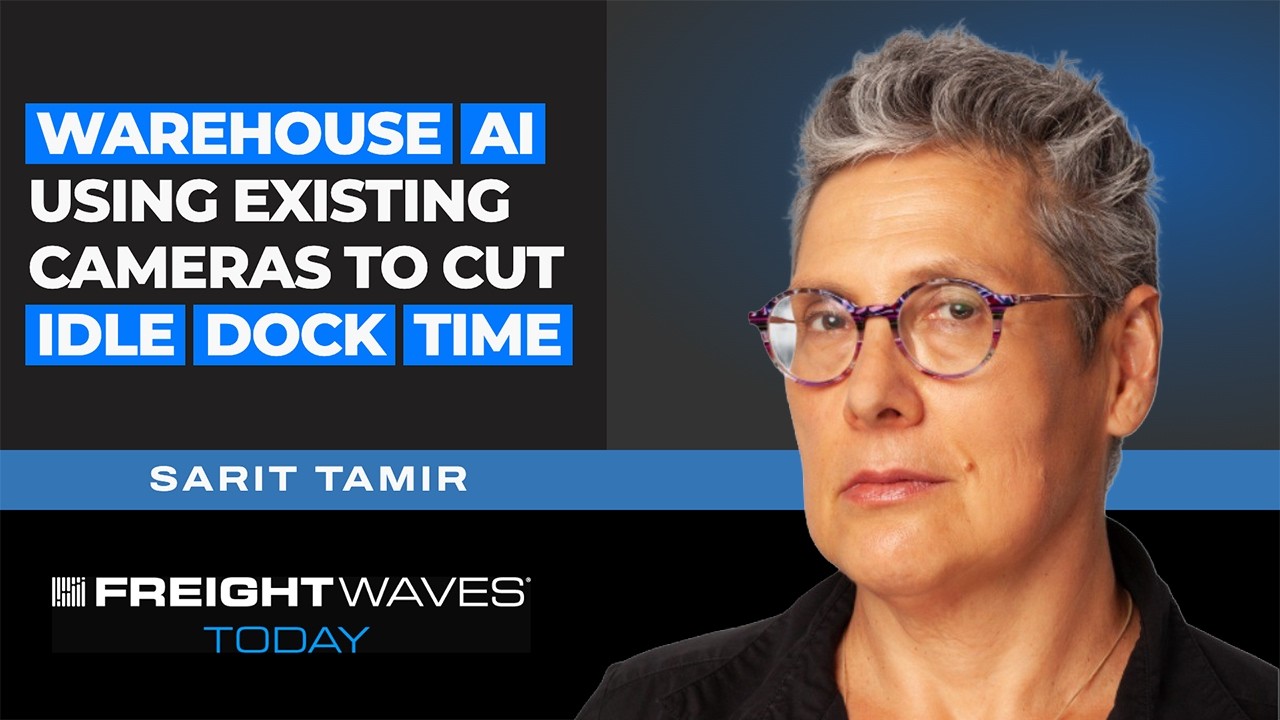 ▶ ▶ |
Warehouse AI Using Existing Cameras to Cut Idle Dock TimeFreightWaves looks at how AI layered onto existing warehouse cameras is helping cut idle time at the dock. |

FreightWaves’ flagship event blends rapid-fire tech demos and world-class speakers with the most legendary networking in logistics. Join 1,000+ freight and logistics experts, industry leaders, entrepreneurs and innovators for a definitive look at the year ahead. Come for the insights, stay for the celebration and leave with the connections that will define your 2027.
|
▸
|
Whether the trade truce extension cools trans-Pacific ratesTrans-Pacific rates hit $8,400/FEU even as the U.S.-China truce bought two more months. Watch whether that extension, plus easing Panama Canal limits, takes pressure off port delays in the weeks ahead. |
|
▸
|
Whether Daimler hits its driver-out public-road timelineDaimler and Torc are targeting driver-out runs on public roads by the end of 2026. Watch whether that milestone slips, the way autonomy timelines across the industry often have. |
|
▸
|
Whether digital bills of lading gain traction against freight launderingScott Cornell says forged paperwork is what lets stolen freight pass as legitimate. Watch whether carriers and brokers move on digital bills of lading, or whether adoption keeps lagging the fraud. |
