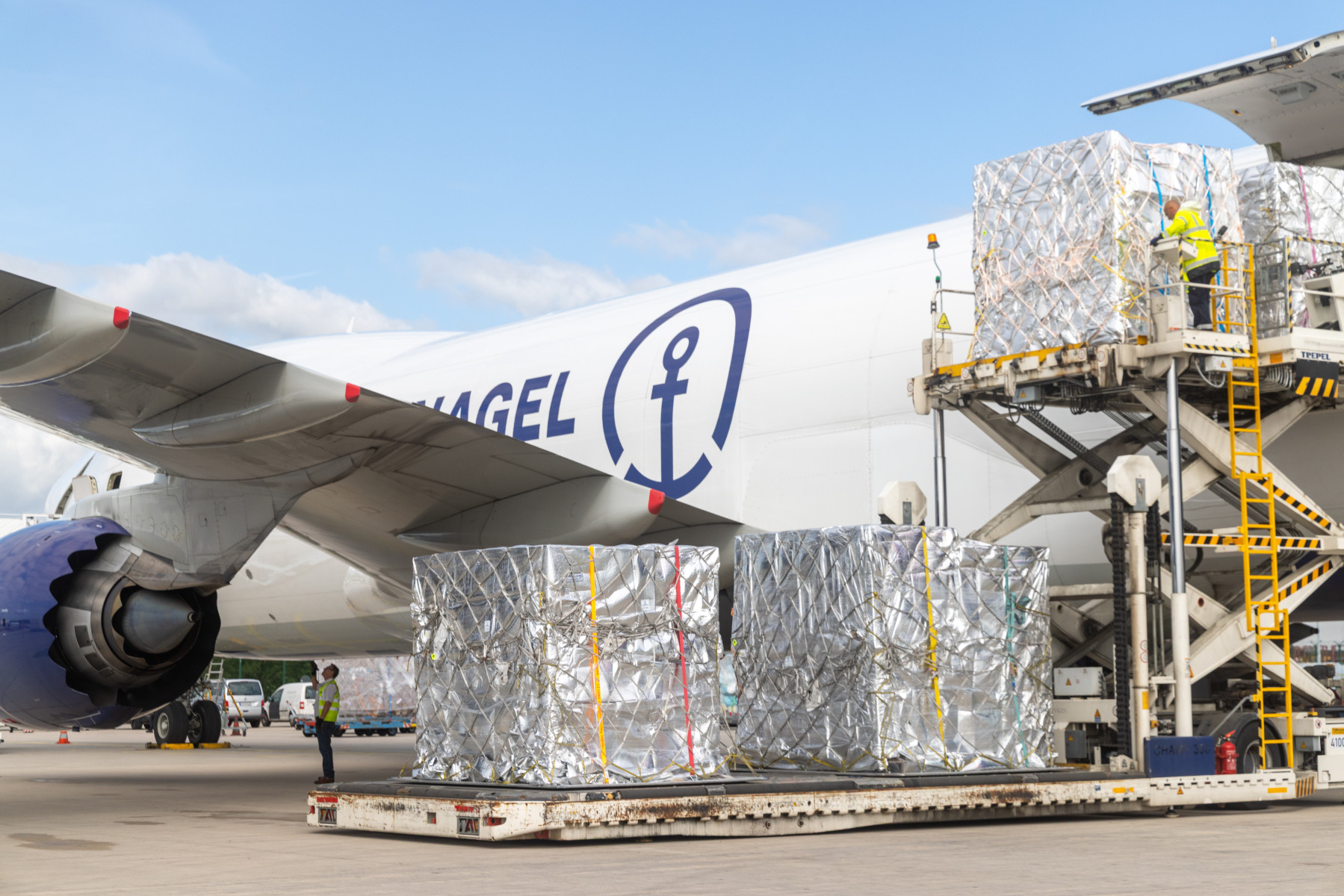
Kuehne+Nagel has expanded its Cool Corridor network for temperature-sensitive healthcare logistics, adding four new routes between Frankfurt and Atlanta, Chicago and Narita, Brussels and São Paulo, and Chicago and São Paulo. The expansion increases the global reach of its network to 12 airfreight lanes connecting major healthcare and pharmaceutical hubs across Europe, North America, Asia-Pacific, and Latin America. The Frankfurt to Atlanta route strengthens the network with dedicated weekly capacity on Kuehne+Nagel’s own Boeing 747-8 freighter, Inspire.
Designed for vaccines, peptides, biologics and other temperature-sensitive pharmaceuticals, Cool Corridors are dedicated transport routes that combine GDP-compliant handling with tightly controlled transfer processes to minimise Time Out of Range (ToR) throughout the shipment journey.
Traditional cold chain shipments often depend on active containers with built-in cooling systems to manage the risk of temperature excursions. Cool Corridors take a different approach by establishing GDP-compliant, temperature-controlled airfreight lanes where Kuehne+Nagel, airlines, and ground handlers follow strict protocols and handling procedures to keep healthcare shipments within defined temperature ranges.
“Healthcare customers are looking for ways to maintain product quality while improving efficiency and sustainability across their supply chains. Cool Corridors provide greater control across the shipment journey, helping protect temperature-sensitive products. With more confidence in shipment conditions, customers can use lighter passive packaging, creating opportunities to reduce logistics costs and transport emissions without compromising product integrity,” says Dorothee Becher, VP Global Air Logistics Healthcare at Kuehne+Nagel.
This development reflects Kuehne+Nagel’s strategic focus on strengthening healthcare logistics. Through close collaboration with leading airlines and ground handling partners, the company continues to expand its Cool Corridor network in response to customer demand while providing reliable, GDP-compliant end-to-end transportation.