Summary: The week leading up to Halloween has the spot market poised to deliver either tricks or treats, with the answer yet to be determined. A rapid rally in dry van spot rates that began in the first week of October resumed near the middle of the month before a sharp decline as uncertainty grips a market oversupplied with truckload capacity and grappling with lower truckload demand.
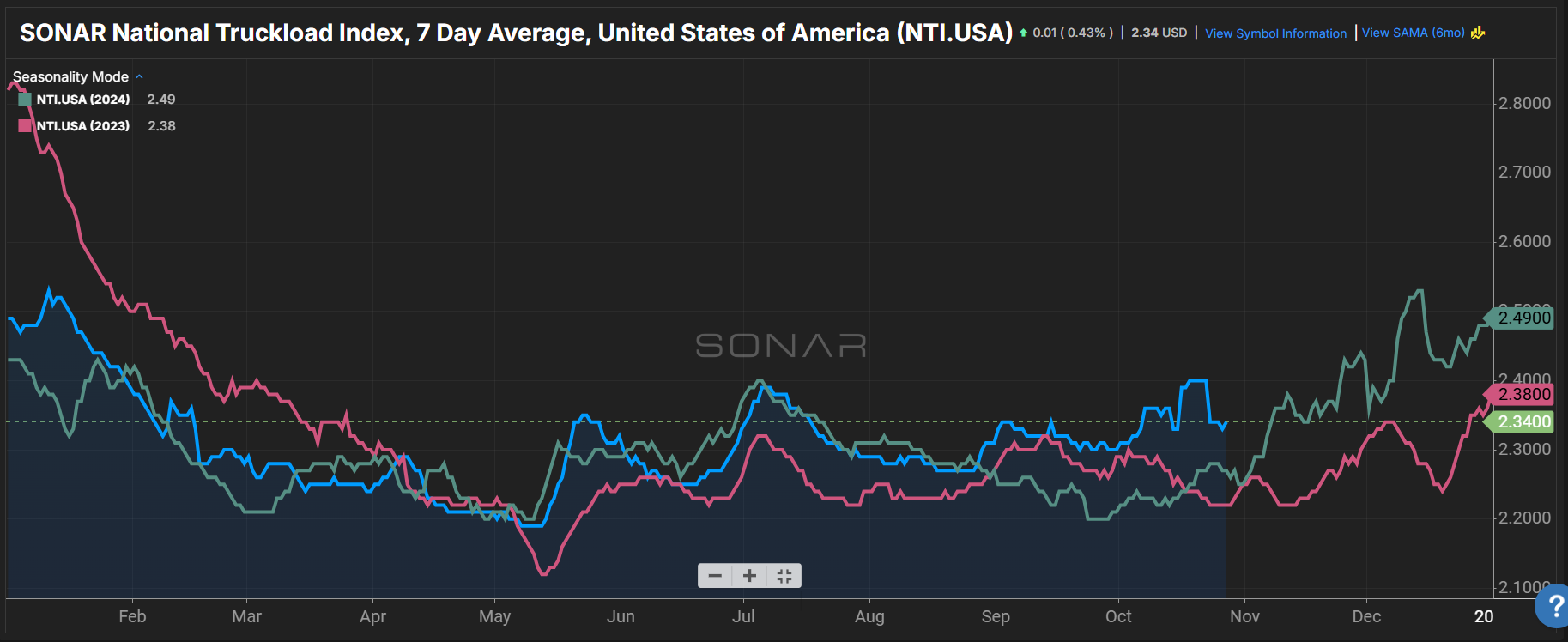
The SONAR National Truckload Index 7-day average fell 6 cents per mile all-in week over week from $2.40 on Oct. 20 to $2.34 per mile. Spot rates are still 4 cents per mile higher compared with last month, when the NTI was at $2.30 per mile. For the year, spot rates remain in a more favorable pricing position, up 8 cents per mile or 3.5% compared with $2.26 per mile in 2024.
Dry van outbound tender rejection rates also saw a decline, falling 37 basis points week over week from 5.76% to 5.39%. Despite the dip, when looking at the past six years of historical data, VOTRI is at its highest rate outside of the COVID-19 pandemic years of 2020 and 2021—a sign that despite muted truckload demand, the supply of contracted truckload capacity is in a better position than the previous three years.
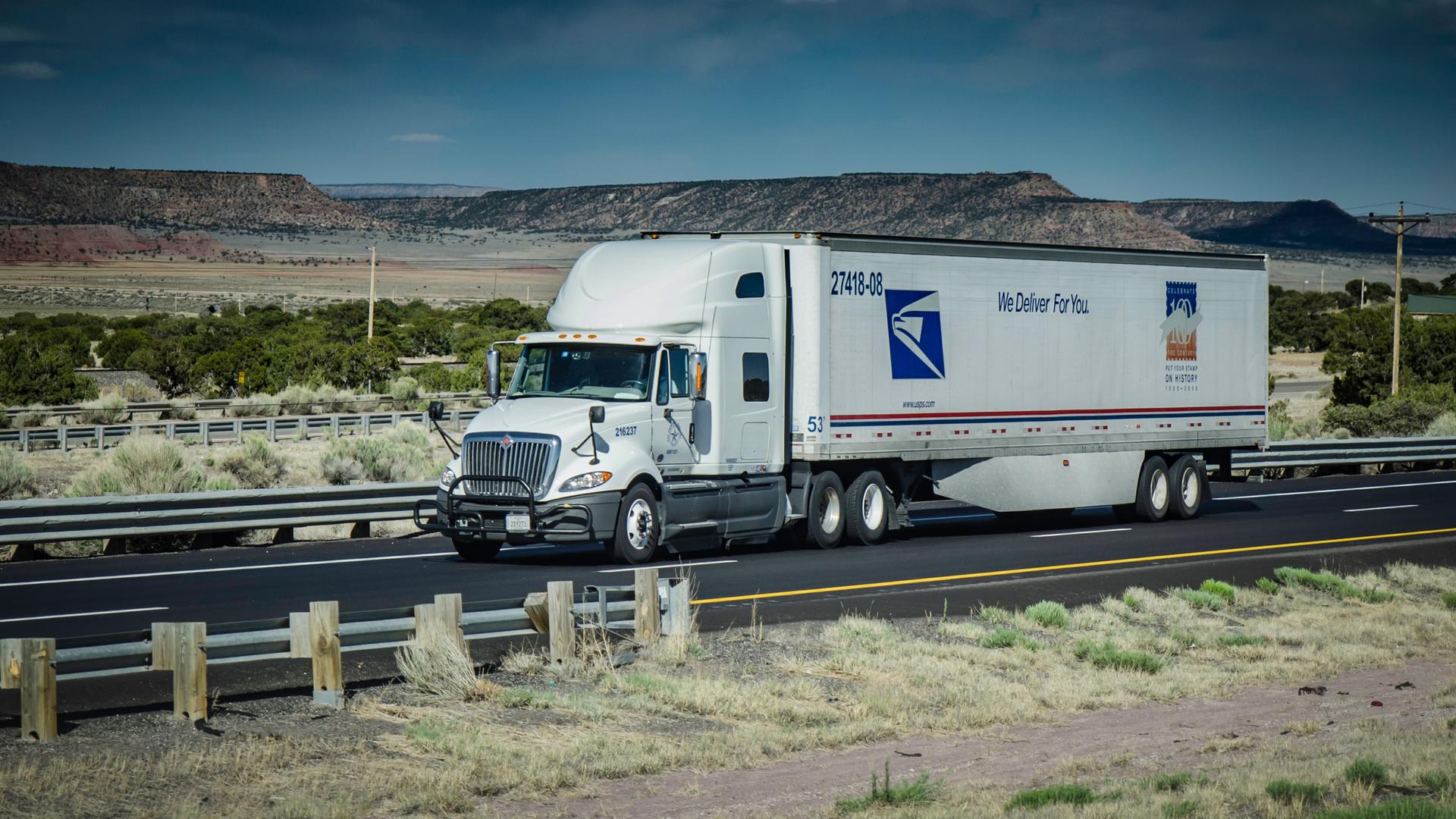
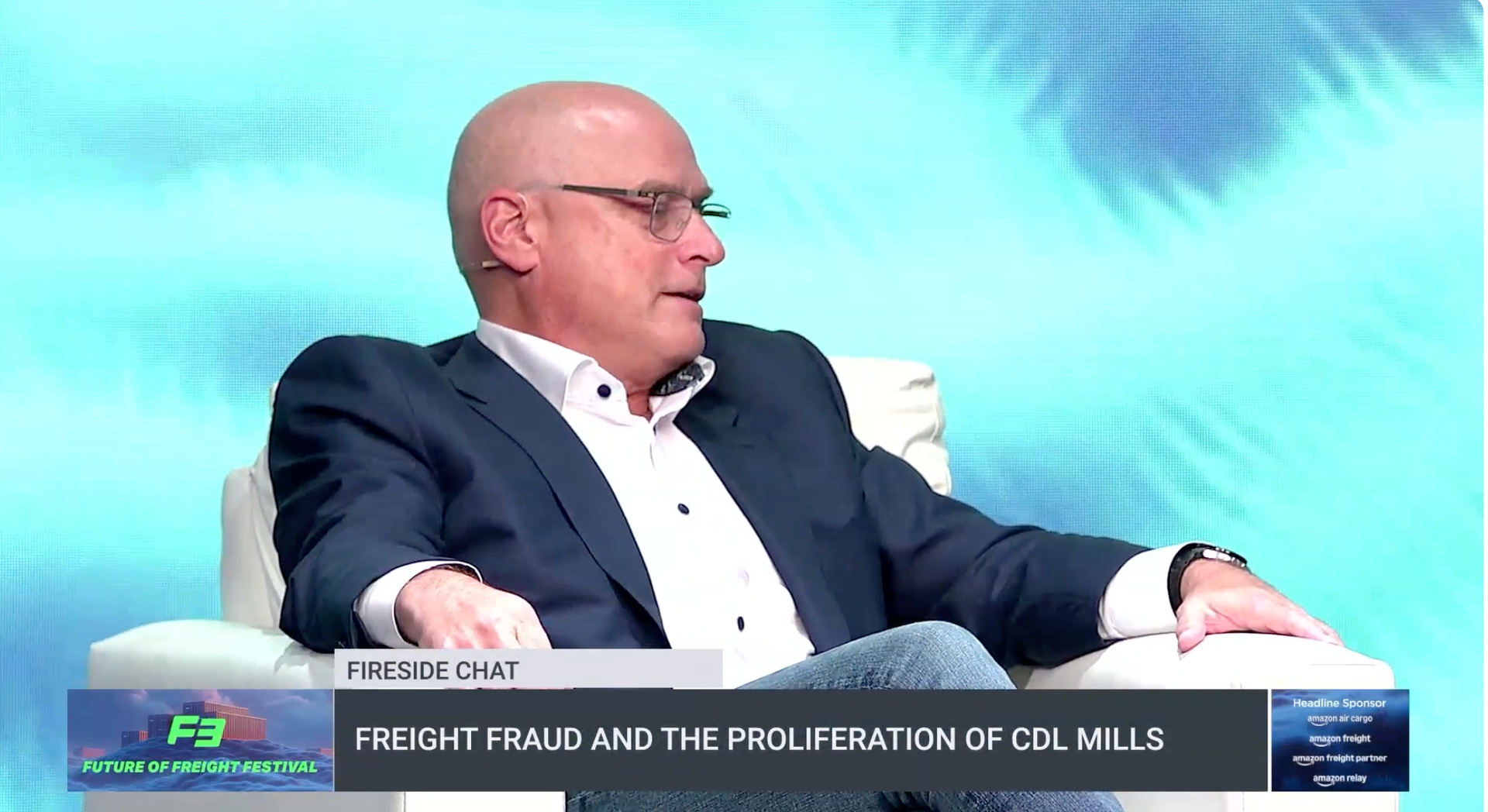
The lingering question looking ahead is to what extent the impact of the DOT regulatory crackdown on non-domiciled CDL holders will have. For some carriers like the United States Postal Service, the impact of these CDL holders was much greater than anticipated. In an article published Monday, FreightWaves founder and CEO Craig Fuller noted that when the USPS implemented a policy banning the use of non-domiciled CDL holders, the results caused severe service disruptions across its nationwide network.
In a call with suppliers, Pete Routsolias, USPS senior vice president of logistics, addressed the non-domiciled “elephant in the room,” stating, “We didn’t understand the magnitude of how many people were using non-domiciled CDLs, and quite honestly, the amount of omits was astronomical. And right now, I am not willing to impact service that bad.” He added, “What we’re announcing is, as of right now, you can go back to using non-domiciled CDL drivers,” while emphasizing that other rules—such as English proficiency and two drivers per truck—still apply.