|
View this email in your browser

THE DAILY
Friday, May 22, 2026
The five minutes that makes you the most informed person in freight today
|
|
Newsletter Brought to You By — Amazon Supply Chain Services
|
|
The Daily
Freight rates are rallying hard into Memorial Day and Montgomery may be coming for shippers next
The freight market is heading into Memorial Day with its strongest momentum in years, and the Supreme Court’s ruling in Montgomery vs. Caribe Transport II just added a new variable, one that may reach deeper into the supply chain than anyone first assumed.
SONAR’s National Truckload Index (Linehaul only) climbed to $2.64 per mile Thursday, up from roughly $2.20 on May 1, a 20% gain in three weeks. FreightWaves CEO Craig Fuller called that number a floor, not a ceiling, heading into the long weekend. "I think this is the lowest number for what we’ll see all weekend," Fuller said during Thursday’s State of Freight webinar. "I think this is going to continue to rally through the weekend. I don’t see any softness coming into Memorial Day." SONAR market intelligence head Zach Strickland added that June historically is the busiest freight month of the year, with construction spending, beverage shipments, back-to-school inventory, and summer goods all compressing into a single demand window.
The macro demand story behind the rally is industrial, not consumer. Fuller and Strickland highlighted the Outbound Tender Volume Index, which keeps climbing even as consumer packaged goods soften. The driver: $800 million in AI data center construction now flowing into the U.S. industrial economy. For scale, the entire interstate highway system cost $700 billion. "It’s going to drive us to the best year on the demand side," Fuller said. Industrial demand, dormant for years, has stepped in where CPG has wobbled, and it shows no signs of slowing.
The supply picture is equally important and now fully explained. Fuller acknowledged Thursday that the depth of the freight recession was only understood in retrospect. A significant share of the capacity overhang came from immigrant owner-operators who entered the market during the pandemic boom and have since exited under the Trump administration’s enforcement actions on English language proficiency and non-domiciled CDLs. "We now know that this was a largely oversupplied situation caused by immigrants," Fuller said. That excess is gone. His advice to carriers: start hiring drivers immediately. "We’ve gone through four years of a down cycle, you’re probably going to go through at least four years of an up cycle with probably premium rates that we’ve never seen before," Fuller’s father Max Fuller said on the webinar.
Then came the legal discussion nobody fully anticipated. Max Fuller and C.H. Robinson CEO Dave Bozeman, appearing at separate venues Thursday, independently raised the same concern: the liability created by Montgomery may not stop with freight brokers. It may extend to shippers. The Supreme Court held that the safety exception in the Federal Aviation Administration Authorization Act applies to brokers because they operate "with respect to motor vehicles." The legal argument follows that shippers who select carriers could face the same exposure. "Shippers are now going to have to start looking because this particular ruling now changes the dynamic and the space of where shippers can be liable on some things," Bozeman said at the Wolfe Research conference, adding that shippers’ vetting standards for brokers will rise as a result.
So What? The rally and Montgomery are moving in the same direction: toward carriers with scale, away from marginal capacity. Shippers who have been using unvetted carriers or sub-scale brokers to squeeze rates need to review those relationships now. The "reasonable care" standard that courts will apply to shippers is still being defined: start building documentation of your carrier qualification process before you need it in discovery.
Read the full story →
|
|
|
Top Stories
Truck insurance premiums rose at more than double the inflation rate since 2017, ATRI finds
Commercial auto insurance premiums averaged 8.3% annual increases between 2017 and 2025, which is more than double the 3.9% inflation rate over the same period, according to a new report from the American Transportation Research Institute. The fourth quarter of 2025 saw a 6.6% sequential increase in commercial auto premiums, the highest of any line of business tracked by the Council of Insurance Agents and Brokers. Combined ratios for commercial auto have exceeded 100 every year since 2014, meaning insurers are paying out more in claims than they collect in premiums. ATRI points to social inflation, distracted driving, and a surge of inexperienced pandemic-era drivers as the primary contributors to escalating claims. Smaller fleets are hit hardest: fleets of 26 to 100 trucks saw per-mile premium costs jump 50.5% between 2020 and 2024.
So What? Any insurance cost increase that flows from Montgomery will be stacked on premiums that have already doubled the rate of inflation over eight years. Small brokers running thin margins face a compounding problem: higher vetting requirements and higher insurance costs on a base that’s already unprofitable for carriers at the industry level.
Read the full story →
|
 |
Industry sees asset-based carriers and large brokers as Montgomery’s winners
Carriers and analysts who appeared at the Wolfe Research investor conference this week converged on the same conclusion: scale wins after Montgomery. Schneider CEO Mark Rourke said organizations with significant scale are better positioned to meet "reasonable care" standards, noting the company cut its brokerage carrier network 76%, from 60,000 to 14,000, in recent years. RXO called the ruling another capacity-tightening event and predicted small brokers unable to absorb higher insurance costs will become acquisition targets. Morgan Stanley analyst Ravi Shanker said the pricing gap between brokers and asset-based carriers will close as broker operating costs rise, shifting market share toward carriers. Landstar, meanwhile, cut its independent carrier network from more than 100,000 in 2022 to roughly 65,000 and called on Congress and the FMCSA to formally define acceptable carrier standards.
So What? Consolidation pressure on small freight brokers is now structural, not cyclical. Insurance costs, carrier network requirements, and capital demands will push sub-scale operators toward exits or acquisition. Shippers relying on small brokers for coverage should be stress-testing their fallback options before capacity disruptions force the decision.
Read the full story →
|
Union Pacific CEO says revised $85 billion Norfolk Southern merger application answers STB’s questions
Union Pacific CEO Jim Vena told the Wolfe Research conference Thursday that he is confident the revised UP-NS merger application satisfies the Surface Transportation Board’s concerns, including the treatment of the Terminal Railroad Association of St. Louis, which is a sticking point for BNSF, CSX, and Canadian National, who all objected to the original filing. Initial concession estimates for the $85 billion deal had reached $750 million; Vena now says the actual number will be "way lower," though not zero. The STB is expected to rule on the application’s completeness by the end of next week. Vena said he is prepared to walk away if regulatory conditions make the deal uneconomic. "This deal has to be better for the company, for Union Pacific," he said. "If it isn’t, we’re pretty good as a standalone company."
So What? The STB’s completeness decision next week is the gate. Acceptance starts the formal 18-month review clock; rejection means another delay and a higher chance Vena exercises his walk-away option. Shippers and intermodal operators should be watching both the STB’s ruling and the objecting railroads’ next moves before next Friday’s deadline.
Read the full story →
|
|
Sponsored By Infios

Tariff Stacking Is Rewiring Supply Chain Execution
Stacked duties in the 20%-to-80% range have turned tariffs from a background P&L cost into a live planning variable that now sits alongside freight cost, lead time, and service level. Infios drew on millions of U.S. customs entries to map exactly how importers responded — mode shifts, bonded warehouse adoption, classification overhaul, and new trade corridors — and which of those changes have proven durable into 2026. The findings: companies that stopped accepting the duty bill and started designing around it have built structural advantages that hold regardless of where policy goes next.
Read the full story → |
|
Fourth Circuit vacates Echo Global’s preemption win and sends broker liability case back to district court
A federal appeals court this week vacated a 2024 summary judgment that had removed Echo Global Logistics as a defendant in a fatal crash case, sending the matter back to a South Carolina district court for proceedings "in light of Montgomery v. Caribe Transp. II." The underlying case, Fuelling v. Echo Global and S&J Logistics, stems from a January 2022 crash on Interstate 85 in Cherokee County that killed James Fuelling when a truck hired by Echo struck his vehicle. The Fourth Circuit’s three-judge panel issued the remand order this week, and at least one Florida plaintiffs’ law firm has already published a post-Montgomery playbook for pursuing broker negligent-hiring cases, outlining a four-point standard covering FMCSA safety ratings, CSA BASIC scores, and carrier hiring histories.
So What? The Fuelling remand is the first hard signal that prior wins under federal preemption are on borrowed time. Echo goes back to full liability exposure. Brokers that settled cases or received favorable rulings before Montgomery should be reviewing those outcomes with counsel now, before new litigation develops on the same facts.
Read the full story →
|
 |
|
|
Sponsored Insight
|
Presented by Amazon Supply Chain Services
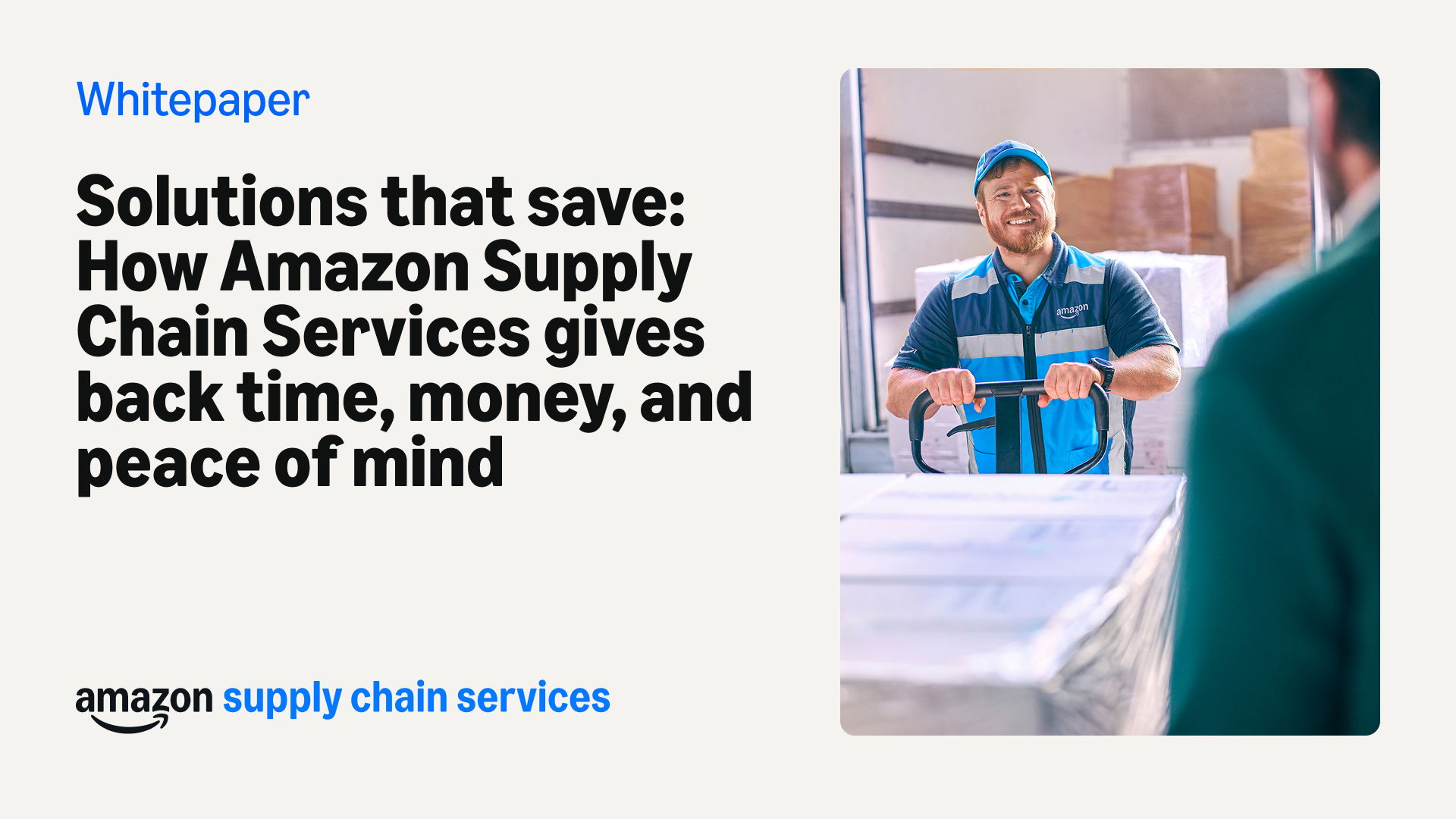
Solutions that save: How Amazon’s Supply Chain Services give back time, money, and peace of mind
Managing a supply chain shouldn’t mean choosing between cost, speed, and peace of mind — but for many businesses, it does. Amazon Supply Chain Services offers flexible, resilient logistics support that eliminates those tradeoffs, helping businesses of every size reduce complexity, cut costs, and reclaim time. With access to Amazon’s global infrastructure and no lock-in required, ASCS gives you the freedom to build the supply chain that works for your business.
Read more → |
|
FreightWaves Announcement
FreightWaves Today, launching June 1st.
The supply chain moves fast. Now your news does too. Craig Fuller and Julie Van De Kamp bring you a daily live show — real-time market analysis and interviews with the leading executives shaping freight and logistics. Live every weekday at Noon ET on FreightWaves socials and tv.freightwaves.com/today.
Watch live → |
|
 |
|
|
From the Research Desk
|
In partnership with Trimble
2026 Outlook: Spot Market Strategies for Shippers, Carriers, and Brokers
SONAR’s NTI hit $2.64 per mile heading into Memorial Day. Procurement teams pricing off 2024 benchmarks are about to feel the gap. Trimble’s 2026 spot market outlook surveys how shippers, carriers, and brokers are rethinking their approach as the cycle turns — required reading before your next rate negotiation.
Download the full report → |
|
In partnership with Avalara
Supply Chain Strategies for an Uncertain Trade Environment
As tariff stacking turns duties into a live planning variable alongside freight cost and lead time, adaptive supply chain strategy isn’t optional anymore. FreightWaves and Avalara surveyed supply chain professionals on how they’re navigating rapid regulatory changes and building resilience against external shocks. The findings are directly relevant to today’s operating environment.
Download the full report → |
|
Courtesy of Werner
Werner Doubles Down on Mexico with Asset-Based Intermodal Expansion
As nearshoring investment accelerates and Mexico posts record foreign direct investment, Werner is expanding its asset-based intermodal footprint across the border to meet rising cross-border freight demand. With industrial development driving new freight corridors, Werner’s commitment to Mexico positions it ahead of the capacity build-out that follows investment.
Read more → |
|
|
Upcoming Event
Supply Chain AI Symposium
July 15, 2026 | The Old Post Office, Chicago
Past the hype, into the work. Operators, founders, and enterprise leaders will gather in Chicago to share what’s actually working when AI meets supply chain — and what still isn’t. An intimate, high-stakes conversation built for the people deploying the technology, not just talking about it.
Register Now → |
|
|
|
What We’re Watching
▸ The STB’s completeness ruling on the UP-NS application, expected by end of next week. Accept starts the formal 18-month review clock. Rejection — or Vena exercising the walk-away clause — sends the $85 billion deal back to square one. Watch the objecting railroads’ next filings before the deadline.
▸ How insurance markets price the Montgomery ruling in the next 30-60 days. ATRI’s data shows commercial auto premiums have run above a 100 combined ratio every year since 2014. The first premium adjustment notices that brokers receive will tell you the true cost of the ruling — and how many smaller operators can actually survive it.
▸ June freight demand data off the Memorial Day weekend. SONAR’s NTI hit $2.64 per mile heading into the holiday. Fuller called June potentially the best demand month the market has seen in years. Watch OTVI and tender rejection rates coming out of the weekend — those numbers will set the Q3 rate narrative before the rest of the industry has time to react.
|
|
|
That’s your Daily for today. See you tomorrow.
Was this forwarded to you? Subscribe here | Have a tip? Just reply to this email.
FreightWaves 405 Cherry St., Chattanooga TN 37402
Unsubscribe | Forward to a Friend | FreightWaves.com
|
|