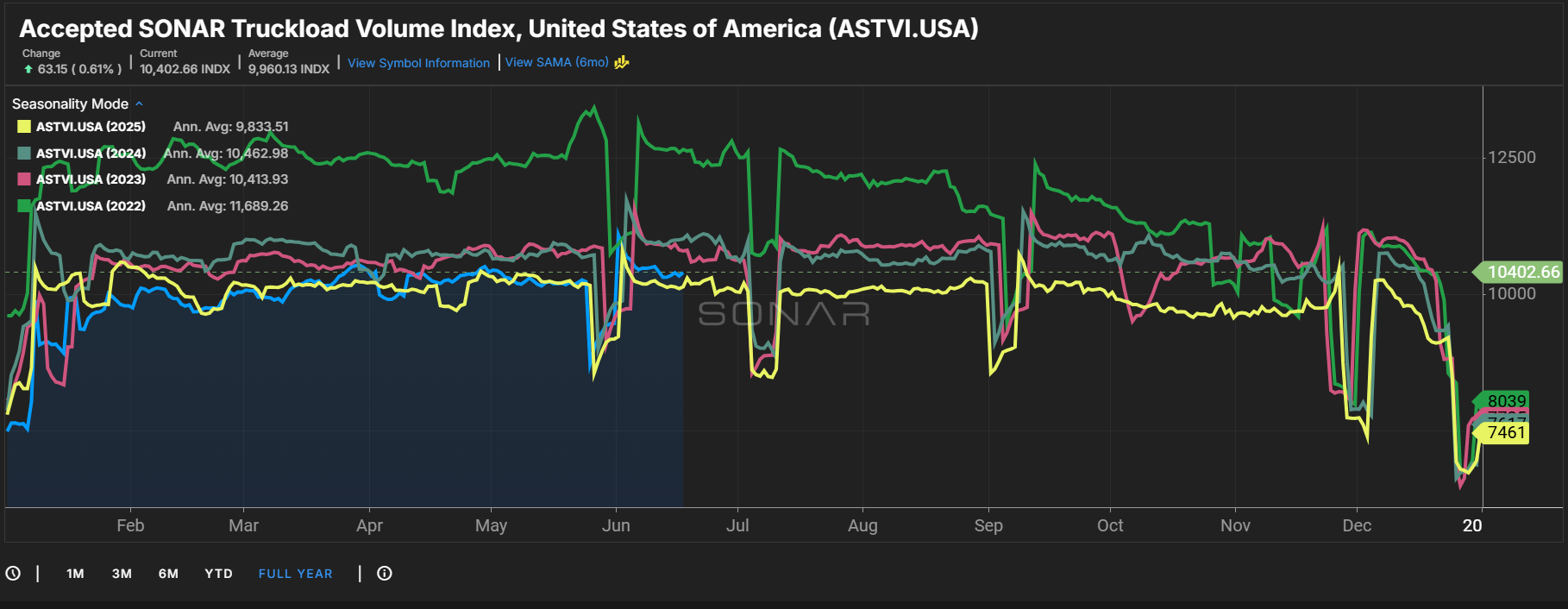
Summary: Truckload volumes continue to trend higher than last year but remain depressed compared with four years of tender volume data. The Accepted SONAR Truckload Volume Index, or ASTVI, is calculated using SONAR’s Truckload Volume Index and Truckload Rejection Index to estimate the portion of tendered freight that was accepted.
Higher tender rejection rates relative to past years’ volumes continue to indicate that the supply of trucking capacity is meaningfully smaller. The ASTVI is 1% higher than this time last year. Compared with four years ago, tender volumes are down 18%.
Outbound tender rejection rates are 1,129 basis points higher than a year earlier. In 2026, the SONAR Truckload Rejection Index, or STRI, stands at 16.50%, compared with 5.21% in 2025. Compared with four years of historical data, the gap widens. Tender rejection rates averaged 10.64% in 2022, 3.86% in 2023, 4.93% in 2024 and 6.05% in 2025. This year’s average is 9.71% as of June 17.
Market analysts are also noting structural changes to trucking capacity compared with previous years. Ryder recently released its 2026 Freight Market Update, which noted that tender rejection rates have reached their highest levels since 2022 while spot market rates have risen above contract rates for the first time since 2021.
For the for-hire truckload sector, higher rates are a boon, but they will increase the costs of recruiting and retaining drivers. The private fleet and dedicated truckload segments are not immune from the upcoming driver pay pressures. Ryder noted, “Companies operating private fleets are also facing continued challenges related to driver recruitment, equipment costs, insurance expenses, and compliance requirements. As a result, many organizations are evaluating dedicated transportation models that provide the benefits of a private fleet without the operational burden.”
The supply of drivers and the possibility of a real shortage remain concerns. Higher rates create more demand for drivers, who in turn seek higher pay. Carriers may end up in an escalating bidding war, including through driver sign-on bonuses, with some drivers job-hopping to capitalize on the opportunity.
Additional headwinds for replenishing the driver pool include the DOT’s crackdown on CDL school quality, enhanced vetting through the Drug and Alcohol Clearinghouse, and increased scrutiny of states for improperly issuing CDLs to both domiciled and nondomiciled drivers.