|
View this email in your browser

THE DAILY
Friday, May 29, 2026
The five minutes that makes you the most informed person in freight today
|
|
Newsletter Brought to You By — Amazon Supply Chain Services
|
|
The Daily
Supreme Court rules last-mile delivery workers can qualify as interstate employees
A unanimous Supreme Court just drew a line that will reshape how every last-mile delivery company in America structures its workforce, and arbitration clauses got significantly harder to enforce yesterday.
The case was Brock v. Flowers Foods. Angelo Brock held a franchise to deliver Butterscotch Krimpets, Jumbo Honey Buns and Wonder Bread across the Denver metro area. He never crossed state lines. Not once. That didn’t matter. Writing for all nine justices, Justice Neil Gorsuch ruled that a transportation worker who handles the final leg of an interstate journey qualifies for the Federal Arbitration Act’s transportation-worker exemption — the carveout that allows employees to sue rather than being forced into individual arbitration. Brock can take Flowers Foods to court. So can a lot of other people.
Gorsuch’s opinion leans on a straightforward hypothetical: imagine the same interstate shipment handed off across three drivers, none of whom individually crosses a state line. "Who was engaged in interstate commerce?" he asks. His answer: all three. "Each of the drivers played a direct, active, and necessary part in ensuring the Krimpets got from a point in State B to a point in State A." That logic, extended outward, covers a very large share of the last-mile workforce in the United States, including Amazon drivers, UPS workers, DHL couriers, gig delivery platforms operating under franchise or independent contractor arrangements. This is the second consecutive Supreme Court term that Flowers Foods lost 9-0 on worker classification under the FAA, which tells you how the court reads the statute.
Attorneys who represent transportation clients offered measured, but pointed, reactions. Christopher Ward of Foley & Lardner said the ruling widens the FAA exemption further than prior decisions suggested, while leaving unanswered how it applies to workers "more loosely connected to the process of transport — such as mechanics, station attendants." Jennifer Bennett of Gupta Wessler, who argued and won Brock’s case, was more direct: "Last-mile delivery drivers, like Amazon drivers and UPS workers, are essential to the nation’s economy — without them, packages wouldn’t be delivered, and bread wouldn’t make it to grocery store shelves," Bennett said. "Today’s opinion decisively rejects the latest attempt by companies like Flowers to force these drivers into arbitration."
One thread remains unresolved. The Scopelitis law firm flagged that courts still disagree on whether contracting with a business entity (rather than an individual) constitutes a "contract of employment" under the FAA. That question is likely the next SCOTUS chapter in this saga. Additionally, Joe Diedrich of Husch Blackwell noted that many states have their own arbitration acts, often without the FAA’s transportation-worker exemption, meaning that some employers may pivot to state law to enforce arbitration clauses.
So What? Any operator using arbitration agreements to manage last-mile driver disputes should review those contracts now. The exemption now covers workers who never cross a state line, provided their route is a leg in an interstate supply chain — which describes most last-mile delivery in this country. Class action exposure just went up. State arbitration laws may offer a partial workaround, but expect litigation on that front as well.
Read the full story →
|
|
|
Top Stories
Hub Group CFO and COO out as $77M accounting error forces three years of restated financials
Hub Group (NASDAQ: HUBG) confirmed Thursday that CFO Kevin Beth and COO Brian Meents have departed, the direct consequence of an accounting error first flagged in February, a $77 million understatement of purchased transportation expenses across the first three quarters of 2025. The problem has since spread: the company must now restate results for 2023 and 2024 and has delayed first-quarter 2026 reporting. Interim CFO Todd Heeter, who brings 30 years of finance experience, will hold the position for at least six months while the board conducts a permanent search. On the bright side, Hub offered a brief Q2 update touting a "successful bid season" with "balanced demand trends and stronger pricing," along with intermodal conversion opportunities and logistics business wins.
So What? Hub Group must file restated financials and its Q1 2026 results by Sept. 14 to remain Nasdaq-compliant. The business fundamentals appear solid enough (the Q2 color was constructive), but losing two C-suite executives mid-restatement creates real execution risk. Watch the permanent CFO search and whether the Sept. 14 deadline holds.
Read the full story →
|
 |
Yellow Corp. liquidating trust set to transfer in June or July, former workers may finally get paid
Nearly three years after Yellow Corp. shut down, a Teamsters memo issued Wednesday indicates former employees could finally receive payment for unused vacation and accrued sick leave. A federal bankruptcy court approved a final liquidation plan in November, calling for proceeds to flow into a liquidating trust; that transition is now expected in June or July. The estate holds a $601 million cash balance. Employee claims were classified as priority under the plan, but a valuation dispute on the claims value and a pending appeal from hedge fund MFN Partners on a pension withdrawal liability settlement have kept payments on hold. Former employees were instructed to keep addresses current with their local unions, as distributions will come by direct deposit or mail.
So What? If you are a former Yellow employee, update your address with your local union now. The estate has the cash; what remains is navigating the settlement disputes and court approvals. The timeline is closer than it has been since the carrier went dark in August 2023.
Read the full story →
DHL eCommerce signs $10B last-mile deal with USPS, the carrier’s longest agreement in 25 years
The U.S. Postal Service and DHL eCommerce announced a multi-year contract valued at more than $10 billion, which is the lengthiest and most scalable deal the two organizations have struck in a quarter-century partnership. Under the arrangement, DHL eCommerce handles pickup, sortation across 19 automated hubs and linehaul through its air and ground network, then hands pre-sorted containers to the USPS for final delivery across 41,550-plus ZIP codes. Postmaster General David Steiner, who this week froze nonessential USPS spending amid a cash crunch, framed the deal as core to his revenue-first stabilization strategy. "We want to continue to grow out that last mile network to make it more efficient, make it faster, make it cheaper for our customers," Steiner said. The $10 billion figure is described as a baseline; both sides expect the total to grow over the contract’s term.
So What? Steiner is running the USPS as a business, not a public utility, and this deal proves large parcel consolidators are willing to pay for the Postal Service’s unmatched last-mile density. DHL eCommerce CEO Scott Ashbaugh cited the multiyear term as the key differentiator, giving his clients confidence to shift volume. Carriers and 3PLs watching this space should note: the USPS’s new auction model is setting market pricing on last-mile access for everyone.
Read the full story →
|
 |
|
Sponsored By TrainsPro
Stay ahead of compliance changes with TrainsPro
Driver compliance isn’t getting simpler. Regulatory shifts, hours-of-service changes, and a tightening labor market mean your training programs need to move as fast as the rules do. Join TrainsPro’s upcoming webinar to learn how leading fleets are keeping drivers compliant and ready — without the administrative overhead.
Register now → |
Zeem CEO calls 2026 the EV inflection point as fleets move charging on-site
Paul Gioupis, CEO of EV infrastructure company Zeem Solutions, says the fleet hesitation that followed the rollback of federal EV mandates is fading — and fast. In an interview with FreightWaves, Gioupis described a market that stumbled after the 2024 election, settled for a quarter or two, then "came back with a nice little roar." California’s Air Resources Board is still enforcing decarbonization mandates, keeping pressure on the state’s large fleets. The rest of the country is following on its own terms, driven by improving vehicle performance. Zeem’s second-generation Tesla Semis, in operation since December, are consistently delivering more than 400 miles per charge. The company is now bundling vehicles, on-site charging infrastructure, and long-term service agreements into unified contracts. "This bundle — give me a truck or an OEM contract, wrap that up into a ten-year bow — that’s going to be the way forward," Gioupis said, "and that’s going to change the way logistics is done forever."
So What? The emerging model for heavy-duty electrification isn’t buy-a-truck — it’s a bundled 10-year infrastructure contract. Fleets evaluating EV adoption in 2026 should be asking about power management agreements, utility rate structures, and on-site charging buildouts alongside the vehicle order. The economics are tipping, and the operators who locked in now will have a cost advantage by the time everyone else catches up.
Read the full story →
Sponsored By Infios
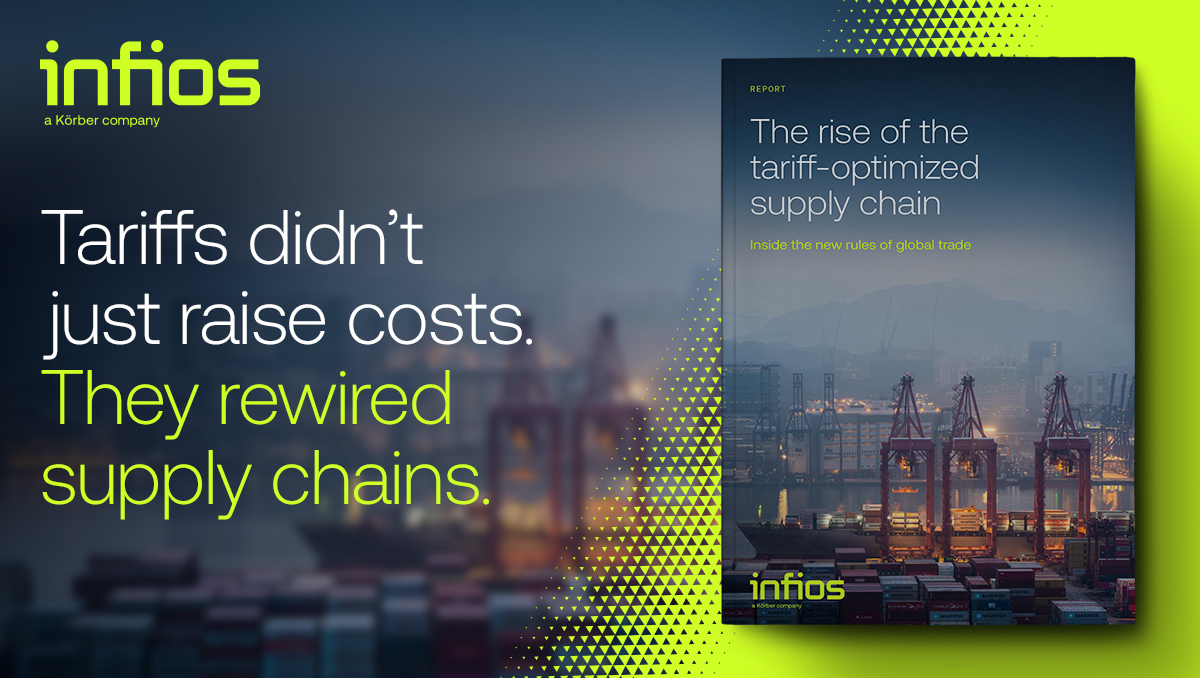
New research: Tariffs didn’t raise costs. They raised the execution standard.
The tariff environment that emerged in 2025 didn’t just add costs — it rewired how the best operators manage trade. Three patterns defined the companies that adapted: transport mode became a tariff decision, duty exposure shifted from fixed to managed, and trade routes became an early-warning system. Infios breaks down the mechanics behind each in a new report.
Download the full report → |
|
|
|
Sponsored Insight
|
Presented by Amazon Supply Chain Services
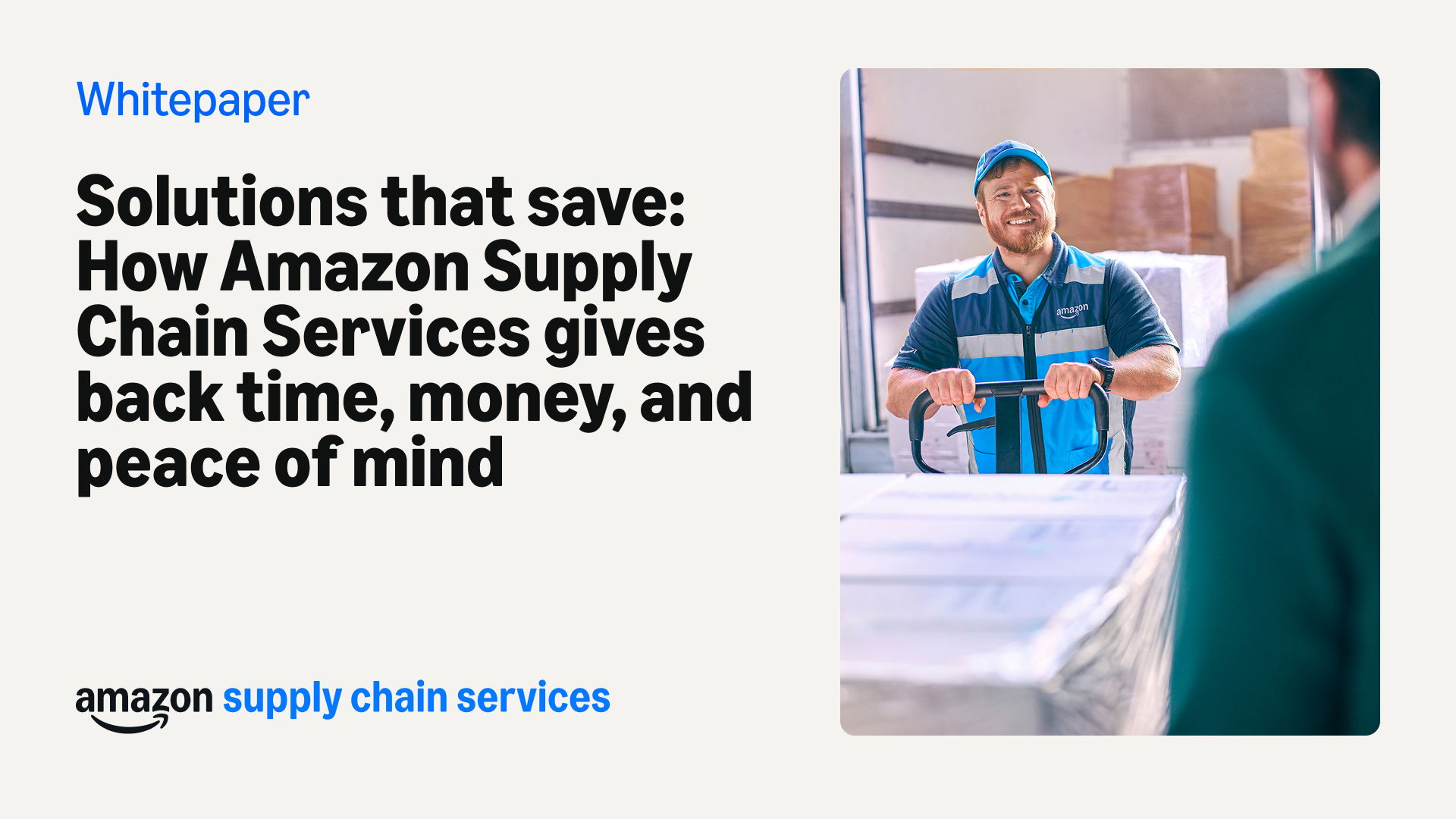
Solutions that save: How Amazon’s Supply Chain Services give back time, money, and peace of mind
Managing a supply chain shouldn’t mean choosing between cost, speed, and peace of mind — but for many businesses, it does. Amazon Supply Chain Services offers flexible, resilient logistics support that eliminates those tradeoffs, helping businesses of every size reduce complexity, cut costs, and reclaim time. With access to Amazon’s global infrastructure and no lock-in required, ASCS gives you the freedom to build the supply chain that works for your business.
Read more → |
|
FreightWaves Announcement
FreightWaves Today, launching June 1st.
The supply chain moves fast. Now your news does too. Craig Fuller and Julie Van De Kamp bring you a daily live show — real-time market analysis and interviews with the leading executives who are shaping freight and logistics. Live every weekday at noon ET on FreightWaves socials and tv.freightwaves.com/today.
Watch live → |
|
 |
|
|
From the Research Desk
|
In Partnership with Trimble
2026 Outlook: Spot Market Strategies for Shippers, Carriers, and Brokers
The spot market is no longer a fallback — it’s a deliberate tool. FreightWaves and Trimble surveyed industry stakeholders on how sourcing strategies are shifting, with findings on the contract-versus-spot divide, technology adoption, and what "market resilience" actually looks like in a volatile rate environment.
Download the full report → |
|
In Partnership with Avalara
Supply Chain Strategies for an Uncertain Trade Environment
Tariff volatility, geopolitical pressure, and shifting regulations are testing supply chain resilience. FreightWaves and Avalara surveyed supply chain professionals to uncover how they’re adapting — and which approaches are actually working in a complex global environment.
Download the full report → |
|
Courtesy of Werner
Werner doubles down on Mexico with asset-based intermodal expansion
Nearshoring is generating cross-border freight volumes that truckload alone can’t absorb. Werner is deploying 400 owned containers — with plans to double that fleet to 800 by year-end — to serve what its leadership sees as a structural, multi-year shift in North American supply chains. Railroad service into central Mexico, according to Werner’s SVP of Intermodal, is "the best it’s been in my 14 years of intermodal."
Read the full story → |
|
|
|
Upcoming Event
Supply Chain AI Symposium
July 15, 2026 • The Old Post Office, Chicago
The industry’s leaders are converging in Chicago for one reason: to build a bulletproof supply chain. An intimate, high-stakes gathering for operators, founders, and enterprise executives figuring out how to actually deploy AI — past the hype, into production.
Register Now → |
|
|
|
What We’re Watching
▸ Class action exposure for gig-economy operators. The SCOTUS ruling opens the door for last-mile drivers to sue collectively. Watch for new filings against Amazon DSP operators, delivery app platforms, and any company relying on arbitration clauses to contain labor disputes.
▸ Hub Group’s Sept. 14 Nasdaq deadline. The company needs to file restated financials for 2023, 2024, 2025 and Q1 2026 to maintain its listing. Any slip in that timeline puts the stock in a difficult position. The permanent CFO search is the other thread to track.
▸ Yellow Corp. liquidating trust transition. The June/July transfer window is approaching. With $601 million in the estate and employee claims classified as priority, resolution is closer than it’s been in nearly three years — but the Teamsters still need to settle remaining valuation disputes before distributions can begin.
|
|
|
That’s your Daily for today. See you tomorrow.
Have a tip? Reply to this email.
Subscribe • Forward to a Friend • Unsubscribe
FreightWaves • 405 Cherry St., Chattanooga TN 37402
|
|