|
View this email in your browser

THE DAILY
Tuesday, June 2, 2026
The five minutes that makes you the most informed person in freight today
|
|
Newsletter Brought to You By — Chevron
|
|
The Daily
Texas Supreme Court rules shippers not liable for carrier accidents in Home Depot case
The freight legal calendar delivered two major decisions in two days — and they cut in opposite directions. One day after the U.S. Supreme Court opened brokers to state-law negligent-selection claims in Montgomery v. Caribe Transport II, the Texas Supreme Court held that passive shippers are not liable for carrier accidents when they played no role in causing the crash.
The case began with an April 2024 crash near Houston on a frontage road of the Katy Freeway. Juwan Smith, a Werner Enterprises driver transporting freight for Home Depot, ran a red light and struck Natalio Garcia at an intersection, killing him. The victim’s family eventually added Home Depot as a defendant, arguing the retailer knew or should have known Werner hired reckless or incompetent drivers. That argument landed without support: the court noted Werner carried a satisfactory official safety rating, and the crash did not involve any hazard created by Home Depot’s cargo, loading, or dispatch decisions.
Judge John Phillip Devine’s opinion drew the line plainly. "The plaintiffs’ liability theory is not viable because it transforms the commonplace act of shipping goods into a basis for sweeping tort liability untethered from control, conduct and risk," he wrote. Attorney Ramy Elmasri of Clausen Miller, who represents insurers and reviewed the decision for FreightWaves, called it consistent with longstanding Texas precedent — but noted the state’s plaintiffs’ bar "has been trying to get to this type of expansion to increase the deep pockets aspect of it." With Home Depot posting $164.7 billion in 2025 revenue, the pockets at issue are not shallow.
The ruling does not grant shippers unconditional immunity. The Texas court’s separate United Rentals decision found a shipper liable when its improper loading of oversized equipment caused cargo to fall from a truck and kill a motorist. That distinction matters: shippers who affirmatively create a roadway hazard through loading, cargo selection, or dispatch pressure remain exposed. Those who hire federally regulated carriers with clean safety ratings and stay out of the driver’s operating decisions are not. Attorney Andrew Petersen of Ziegler Gardener Bell told FreightWaves the ruling "recognizes that liabilities get really tenuous the further down the line you get" — and that it would apply to brokers in comparable circumstances as well. That last point is in direct tension with Montgomery, which gave state courts authority over exactly those broker decisions starting May 14.
So What? Texas has drawn the clearest line yet: shippers who use federally regulated carriers with satisfactory safety ratings are not liable for driver behavior they did not cause or enable. That protection evaporates the moment a shipper’s own loading or instructions contribute to a crash. For procurement teams, the practical takeaway is straightforward: document your carrier selection process using FMCSA safety data, keep your hands off dispatch decisions, and let the liability stay where it belongs — with the carrier and, increasingly under Montgomery, with the broker who placed the load.
Read the full story →
|
|
|
Top Stories
Transportation pricing index hits all-time high in May as capacity keeps contracting
The Logistics Managers’ Index logged a 96 reading for transportation prices in May — the highest in the dataset’s 10-year history and just four points below the index’s ceiling of 100. Transportation capacity contracted to 31.7, signaling conditions the report called "the hottest that the transportation market has been in over four years." Three forces drove the surge: the Strait of Hormuz closure, higher fuel prices, and the accelerating removal of non-compliant drivers from the available pool through federal CDL enforcement actions. SONAR’s Outbound Tender Rejection Index shows carrier rejections running well above the same period in 2025, 2024, and 2023. Survey respondents project pricing to remain near 91 over the next 12 months — no relief is priced into the near-term outlook.
So What? A 96 reading leaves almost no statistical room for conditions to get worse before the index tops out. Shippers still benchmarking off 2024 contract rates will feel the gap at renewal. Budget for a tight market through the end of 2026, and don’t count on CDL enforcement pressure easing anytime soon.
Read the full story →

Ohio to review 5,000 nonresident CDLs as federal driver eligibility crackdown widens
The Ohio Bureau of Motor Vehicles will contact approximately 5,000 holders of non-domiciled commercial driver’s licenses to verify their credentials against FMCSA eligibility standards narrowed in September 2025. Drivers whose documents no longer qualify will receive a 30-day notice of CDL downgrade to a standard Class D license, ending their authority to operate commercial vehicles. Ohio joins California, Washington, Colorado and Pennsylvania, all of which have paused non-domiciled CDL processing under federal scrutiny. The enforcement is converging from multiple directions: more than 3,200 Mexican truck drivers have also lost U.S. visas in recent months for cabotage violations, according to the Nuevo Laredo Freight Carriers Association.
So What? Each state review shrinks the driver pool in a market already logging record transportation prices. Carriers with non-domiciled drivers should audit credentials now — a 30-day downgrade notice is a short runway for finding replacement capacity on lanes that need to keep moving.
Read the full story →
STB conditionally accepts UP-NS merger application, sets July 27 deadline for supplemental data
The Surface Transportation Board conditionally accepted the revised Union Pacific-Norfolk Southern merger application but halted formal review, giving the railroads until July 27 to supply additional data — with a 30-day extension on the table if requested. TD Cowen analysts called the decision a signal that the STB is committed to a "discovery-led" review, not an application-centric one, and now project a merger close no earlier than fall 2027 in the best case. Markets priced in the delay: the two railroads shed roughly $12 billion in combined merger value following the announcement. The board also flagged skepticism about the proposed "committed gateway pricing" mechanism, saying it excludes large traffic categories including intermodal, autos and unit trains, and could weaken competition in some lanes rather than protect it.
So What? A fall 2027 close is the optimistic scenario. Shippers with freight on UP or NS lanes should plan around the existing network for at least the next 18 months. The STB’s focus on constrained corridors and shippers losing routing options suggests any final approval will come attached to conditions that change the deal’s economics.
Read the full story →

FMCSA closes 13 ghost-fleet auto-haul carriers in five months as equipment migrates to new shells
A cluster of 32 hotshot and auto-transport carriers reported 38 combined trucks to federal regulators. Their FMCSA inspection records show 6,082 unique vehicle identification numbers across 7,505 inspections in as many as 46 states — roughly 160 vehicles for every truck on the books. These are "chameleon carriers": entities that maintain minimum insurance filings on paper while running fleets far larger than reported, then dissolve a DOT authority the moment an audit arrives and re-form under a new number within 48 hours. FMCSA shut down 13 core carriers between November 2025 and April 2026. Each time, vehicles migrated to the next shell in the network within days. The Supreme Court’s Montgomery decision, issued May 14, now exposes brokers who place freight with these operators to state negligent-selection claims — a legal exposure that did not exist three weeks ago.
So What? Brokers are now liable for who they book. A carrier reporting one truck while appearing in hundreds of inspections across 46 states is not a one-truck operation — it is the exact profile this enforcement effort is targeting. Vetting against the FMCSA inspection record, not just the self-reported fleet count, is no longer optional. It is the baseline the courts will use to evaluate negligent selection.
Read the full story →
Sponsored By Infios
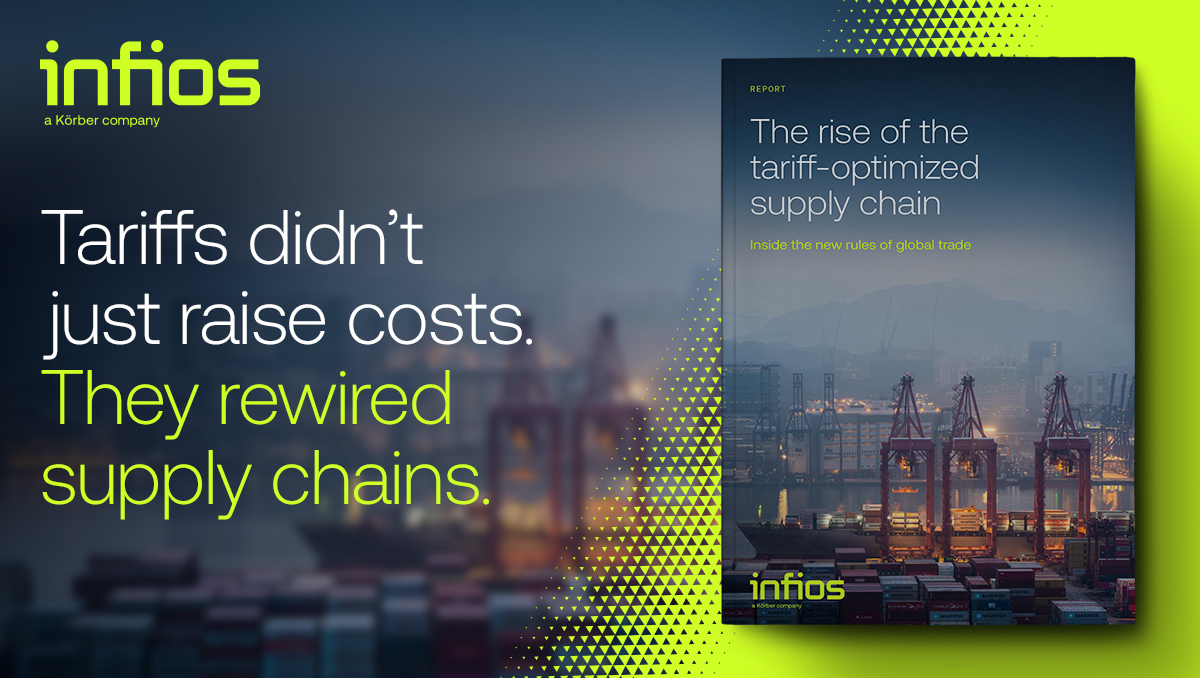
New Research: Tariffs Didn’t Raise Costs. They Raised the Execution Standard.
The tariff environment that emerged in 2025 restructured U.S. trade almost overnight. Three patterns defined how the best-run supply chains adapted: transport mode became a tariff decision, tariff exposure shifted from a fixed cost to a managed variable, and trade routes became an early-warning system. Infios research breaks down each pattern and lays out the capability framework companies are building to compete in a tariff-volatile environment.
Download the report → |

|
|
|
|
FreightWaves Today is brought to you by Samsara
|
 |
|
Samsara AI helps fleets reduce crashes by ~75%. New data from 2,600+ fleets worldwide reveals how Samsara AI helps dramatically reduce crash rates and risky driving behaviors. Get the report now.
Special thanks to our sponsors: Highway, Love’s, OTR Solutions, Pallet, Premier Trailer Leasing, RXO and SONAR
FreightWaves Today is LIVE at 12PM ET at tv.freightwaves.com/today and streamed on LinkedIn, FB and X.
|
Today’s Guests
|
| 12:10 |
Aaron Graft — Triumph Financial, Founder, Vice Chairman & CEO |
|
| 12:30 |
Geoff Anderman — STG Logistics, CEO |
|
| 1:00 |
John Kingston — FreightWaves, Editor at Large & Market Expert |
|
| 1:20 |
Jeremy Donohue — U-Haul, Director of Truck Product |
|
|
|
|
From the Research Desk
|
In partnership with Trimble
2026 Outlook: Spot Market Strategies for Shippers, Carriers, and Brokers
In a market hitting four-year highs on transportation pricing, the difference between a reactive and a proactive spot strategy is real money. FreightWaves and Trimble surveyed shippers, carriers and brokers on how sourcing strategies are evolving — with findings that show spot freight shifting from last resort to deliberate tool. Required reading before your next contract renewal.
Download the full report → |
|
In partnership with Avalara
Supply Chain Strategies for an Uncertain Trade Environment
With tariff policy still shifting and trade route decisions carrying real cost consequences, supply chains need a compliance framework built for volatility. Avalara’s guide helps finance and logistics teams manage cross-border tax and duty exposure without adding friction to freight flows.
Download the full report → |
|
Courtesy of Amazon Supply Chain Services
How Amazon Supply Chain Services Give Back Time, Money, and Peace of Mind
For sellers managing freight in a market where capacity costs are at four-year highs, integrating storage, transportation, and returns under one platform changes the math. Amazon Supply Chain Services lays out how merchants are cutting overhead and improving margins with solutions built to work end to end.
Learn more → |
|
Courtesy of Werner
Werner Doubles Down on Mexico With Asset-Based Intermodal Expansion
As nearshoring continues shifting freight into Mexico lanes, Werner is expanding its asset-based intermodal capacity to serve growing cross-border demand. Read how Werner’s Mexico strategy positions shippers and carriers ahead of the next wave of North American freight volume.
Read more → |
|
|
|
Upcoming Event
Supply Chain AI Symposium
July 15, 2026 | The Old Post Office, Chicago
The industry’s leaders are converging at The Old Post Office for one reason: to build a bulletproof supply chain. Past the hype — an intimate, high-stakes gathering of operators, founders, and enterprise leaders figuring out how to deploy AI in supply chain for real. Join the conversation.
Register Now → |
|
|
|
What We’re Watching
▸ Whether broker vetting tightens under Montgomery pressure. The Supreme Court’s negligent-selection ruling is now live for state-law claims. Brokers booking carriers whose inspection counts far exceed their reported fleet size are carrying legal exposure they weren’t carrying two weeks ago. Watch for revised carrier vetting requirements from larger brokerages over the next 30-60 days — the ones with legal counsel will move fast.
▸ How quickly the CDL enforcement wave compounds the capacity squeeze. The LMI transportation pricing index hit a record 96 in May, with driver removal cited as a direct factor. Ohio’s 5,000-license review is the latest state action in a nationwide compliance push that now spans at least five states plus the cross-border visa enforcement affecting Mexican drivers. Each round of revocations tightens a market that already has almost no room left to worsen on the pricing index.
▸ The UP-NS supplemental data deadline of July 27. The STB has given the railroads six weeks to supply a facility-by-facility rundown of shippers losing competitive routing options. What the railroads deliver — and how the STB responds — determines whether the clock moves toward a fall 2027 close or slips further. The $12 billion in merger value already lost to this delay says the market is not holding its breath.
|
|
|
That’s your Daily for today. See you tomorrow.
Was this forwarded to you? Subscribe here | Have a tip? Just reply to this email.
FreightWaves 405 Cherry St., Chattanooga TN 37402
Unsubscribe | Forward to a Friend | FreightWaves.com
|
|