Aurora expands driverless routes to El Paso
|
|
|
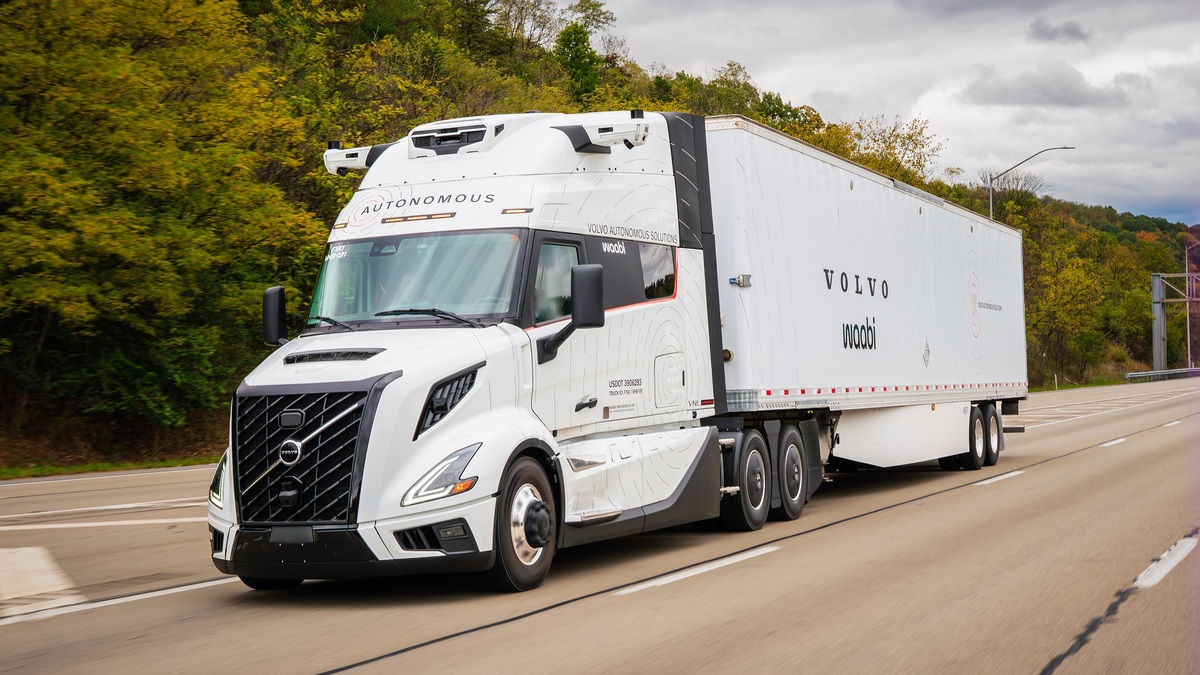
Waabi integrates AI Driver into Volvo Autonomous Truck
|
Autonomous truck technology maker Waabi and Volvo Autonomous Solutions recently announced the successful integration of the Waabi Driver with the Volvo VNL Autonomous. The milestone marks a new chapter in the strategic partnership, which was announced earlier in February. With the integration complete, both companies are now looking toward the next steps—broader commercial deployment.
“The future of autonomous trucking hinges on three critical areas: autonomous technology that is safe, scalable, and can deliver on customer needs; hardware that is purpose-built for autonomous operations from the ground up; and a commercial deployment model that solves problems in the supply chain without added friction,” said Raquel Urtasun, founder and CEO of Waabi, in the release.
For Volvo, the addition of the Waabi virtual driver will augment its custom-built Volvo VNL autonomous truck, which is designed with redundant systems to handle fully autonomous operations. These redundant systems include braking, steering, and communication, among others.
Earlier this year, Urtasun spoke with FreightWaves about the Volvo partnership and noted that the path forward for autonomous trucking technology companies relies on vertical integration and a willing OEM partner.
“We don’t believe that retrofit is an option for that redundant platform; we believe that our technology, and any AV player for that matter, should be vertically integrated into a redundant platform that is purposefully built for self-driving,” said Urtasun.
Waabi’s successful integration is part of a larger push toward commercialization, with the company telling FreightWaves in August that it is preparing for a driver-out milestone by the end of the year. The company also recently appointed former Uber Freight CEO Lior Ron as its chief operating officer in August to help scale operations ahead of an eventual commercial launch.
Volvo’s collaboration with Waabi is part of a yearslong effort in which Volvo Group Venture Capital became a strategic investor in the company back in January 2023, then later invested during the company’s $200 million Series B round.
|
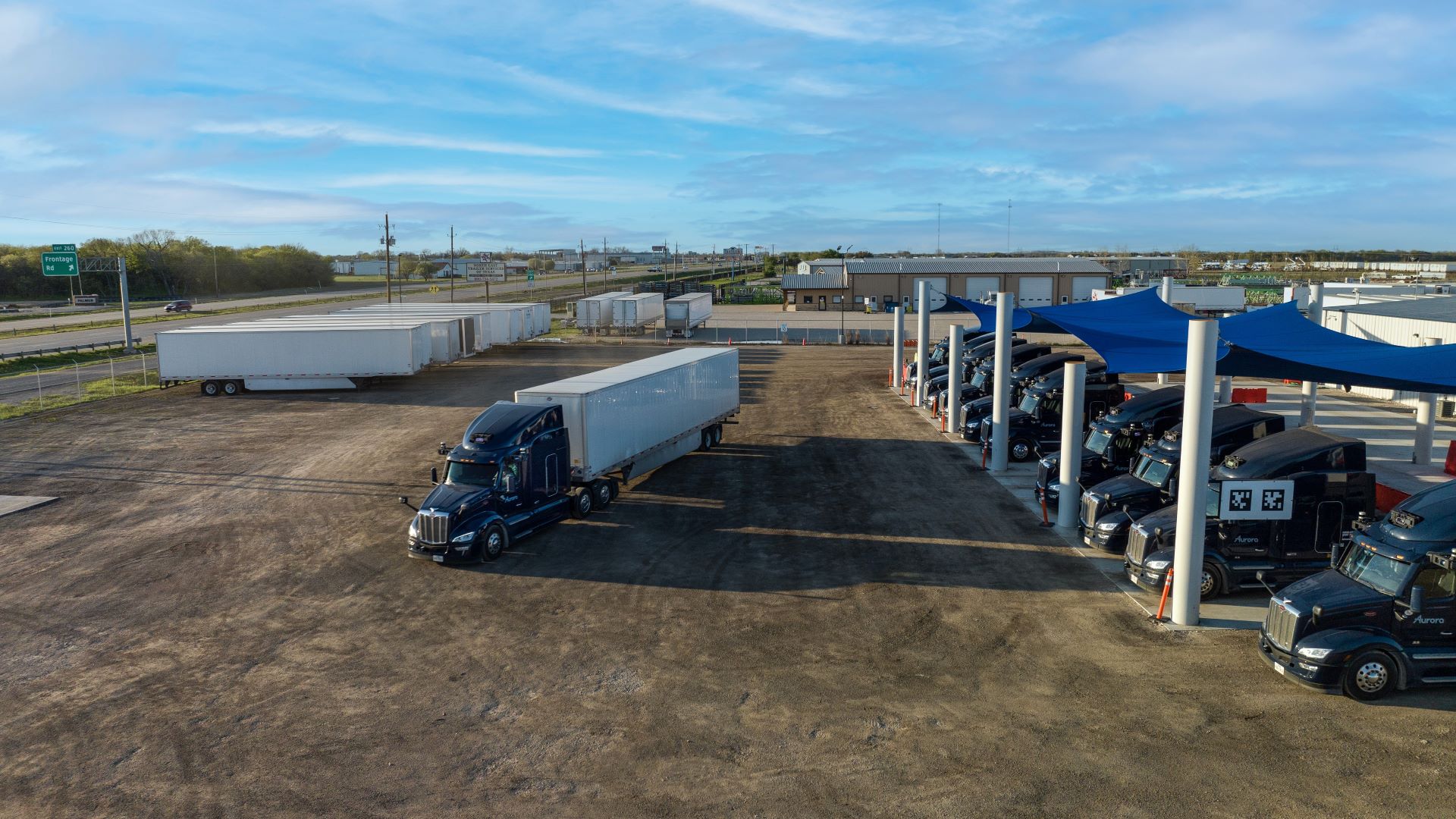
Aurora expands driverless routes to El Paso
|
(Photo: Aurora Innovation)
|
Aurora recently released its Q3 business review, which included the addition of a new freight lane and updates on its driverless validation, hardware upgrades and production status among its OEM partners.
The company reported it had achieved over 100,000 driverless miles on public roads. The trucks ran between Dallas-Fort Worth and Houston, with the company announcing the addition of a westward route to El Paso. The approximately 600-mile run from Fort Worth to El Paso was announced in a press release on Tuesday.
“Six months out from launch, we’re achieving more industry-firsts, expanding quickly and paving the way to deploy hundreds of trucks next year,” said Chris Urmson, co-founder and CEO at Aurora, in the release. “Expanding to El Paso, notching over 100,000 driverless miles and integrating our new hardware with multiple truck platforms extends our strong lead.”
While Texas remains king in the autonomous space, there are plans for an expansion to Phoenix slated for January 2026. The recent addition of the El Paso lane also brought two more carriers on board to test the driverless vehicles.
When Aurora trucks hit the road, the trucks can also be seen on the internet and social media via live streaming. The company has logged over 6,000 hours of watch time for its live streaming of the Aurora Driver in action. The live streams showcase the trucks navigating Texas traffic while running routes.
Read the full article here.
|
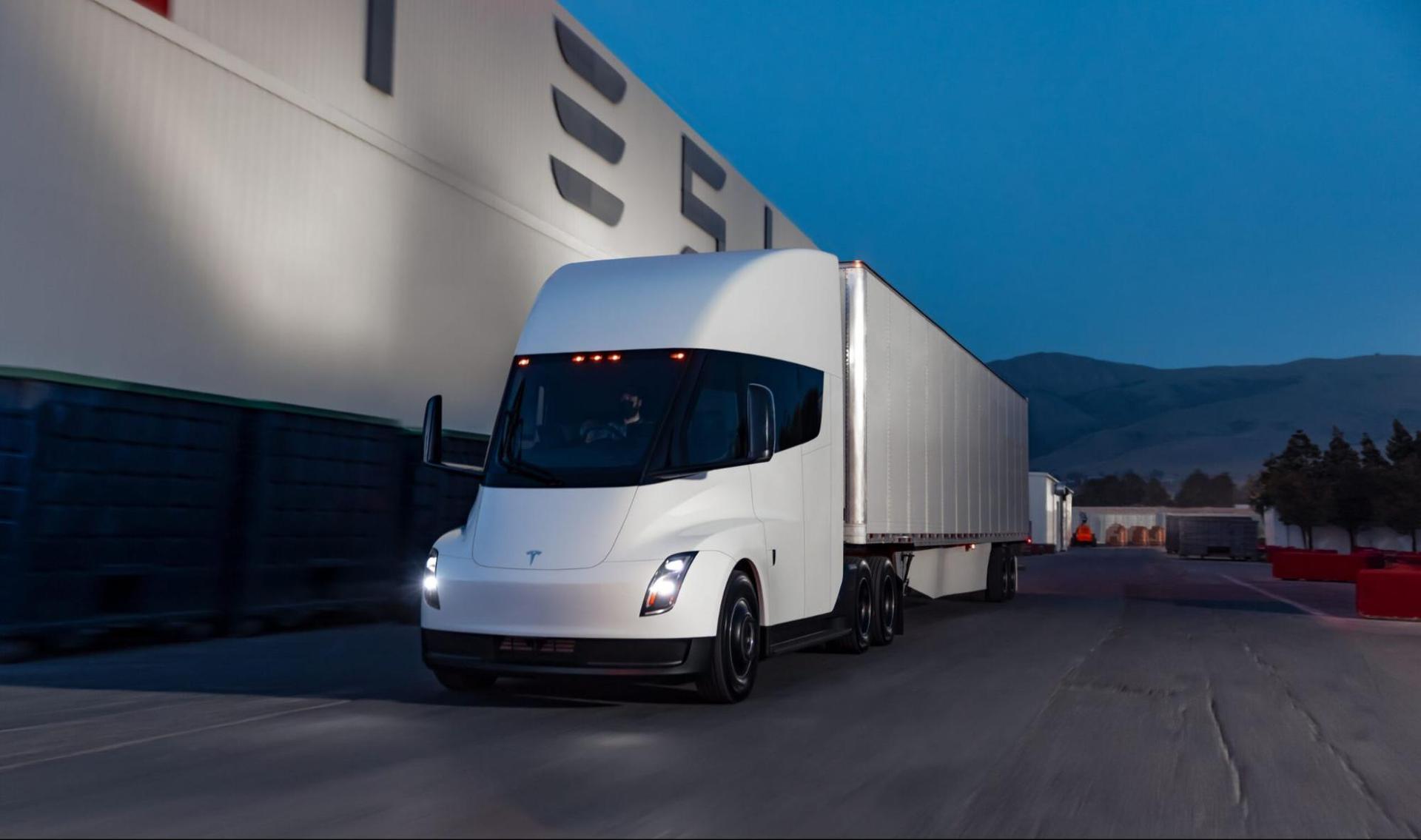
Tesla gives an update on the Tesla Semi during Q3 earnings call
|
Tesla announced during its third-quarter earnings call an update on the production of the Tesla Semi and fielded analyst questions about whether the technology behind the Tesla Semi could one day replace trains.
Lars Moravy, vice president of vehicle engineering at Tesla, told analysts, “So the factory is going on schedule. We’ve completed the building and are installing the equipment now. We’ve got our fleet of validation trucks driving on the road. We’ll have larger builds toward the end of this year and then our first online builds in the first part of next year, ramping into the Q2 timing with real volume coming in the back half of the year. So that’s going quite well, and that’s the first step, obviously, getting autonomous trucks on the road.”
I had long suspected that the path to autonomous truck deployment would mimic rail intermodal, with high-density lanes being profitable, but networks relying on other modes near the fringes of profitability. Moravy suggested that autonomous trucks may be better served with semis operating on shorter distances.
“In terms of trains, they’re really great for long point-to-point deliveries. They’re super-efficient, but that last mile, the load, unload can be better served for shorter distances with autonomous semis, and that would be great. And so we do expect that to probably shift as we really, as Elon said, change the way transportation is considered,” Moravy said.
For Tesla, the current focus on autonomy is for passenger vehicles. Ashok Elluswamy, director of Autopilot software at Tesla, told analysts, “The same technology will extend quite easily to the Semi truck once we have a little bit of data from the Semi trucks.”
|
Article brought to you by Samsara
|
New report reveals how AI is helping transform driver behavior and road safety worldwide. See the Report.
|
|
|
The legal battle over the California Air Resources Board (CARB) continues with Daimler Truck, Volvo Group, PACCAR and International Motors seeking a preliminary injunction to get out of the Clean Truck Partnership. According to a release by Idle Giants, a global coalition of civil society organizations across Europe, the U.S. and Brazil, CARB will appear in court on Nov. 21 seeking a dismissal of the case.
TRATON, the global original equipment manufacturer (OEM) parent company of International Motors and others, announced the launch of a group-wide Green Finance Framework. The goal is to accelerate the financing and refinancing of battery-electric commercial vehicles. The green financing instruments include Green Bonds, Loans, Schuldscheine and Asset-Backed Securities.
|
As always, thanks for watching and reading.
Thomas Wasson
twasson@firecrown.com
|
|
|
|