Daimler Truck, Torc Robotics ink LiDAR upgrade deal for autonomous Freightliner Cascadia
|
|
|
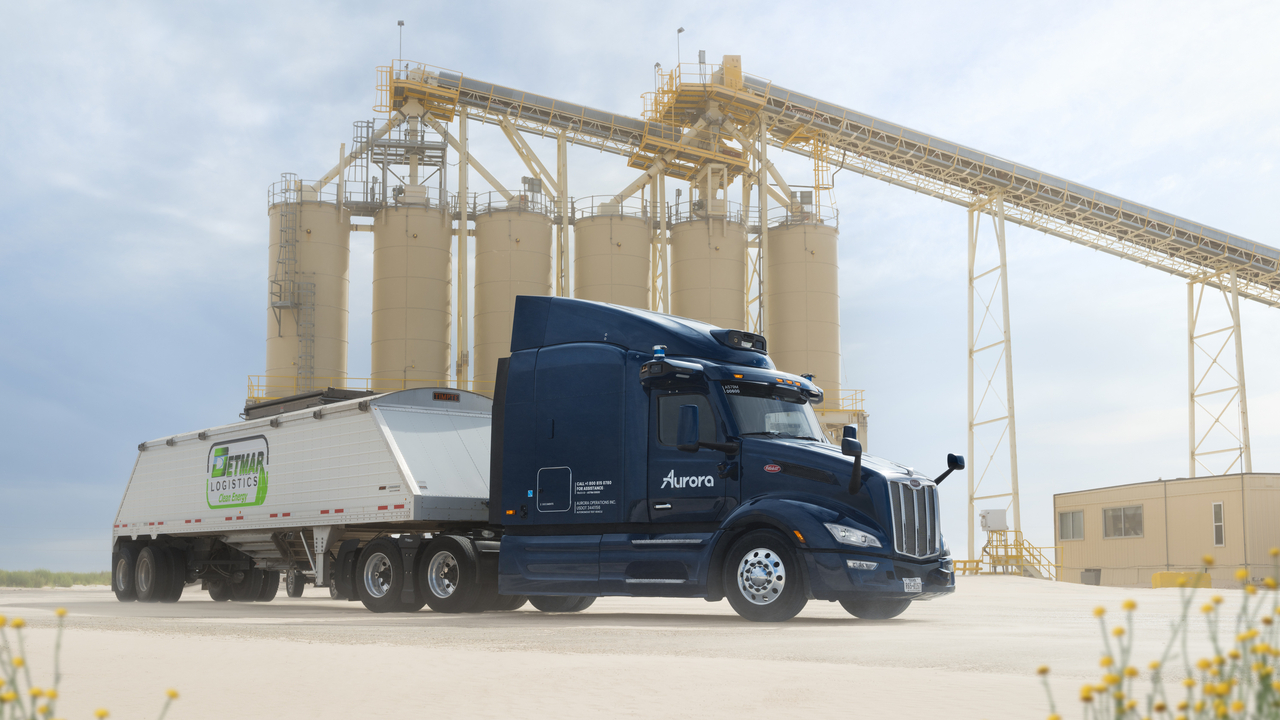
The sand must flow: Aurora’s driverless fleet hits Permian roads
|
(Photo: Aurora Innovation)
|
The number of driverless trucks hauling frac sand in the Permian Basin is growing after Aurora announced Monday that Detmar Logistics will commit to using 30 Aurora Driver-powered autonomous trucks in 2026.
According to Aurora, this deployment marks the first time frac sand will be autonomously hauled on public roads and highways in the Permian Basin. It is another milestone for Aurora, which until now has focused on terminal-to-terminal operations.
Detmar Logistics is a major provider in the dry bulk and frac sand logistics sector. The Aurora-powered autonomous trucks will transport proppants around the clock for multinational oil and gas companies. The release notes that supervised autonomous operations with Detmar will begin early next year between the company’s facility in Midland, Texas, and Capital Sand’s mining site in Monahans.
The supervised autonomous operations will transition to fully driverless once Aurora deploys its second fleet of driverless trucks, expected in the second quarter of 2026. The routes will run along Interstate 20, combining local and private roads surrounding the Detmar facility and the mining site. In addition to driving, the Aurora trucks can autonomously navigate overhead filling silos, a key task for proppant loading. Proppant is a gritty material such as sand. An easy way to remember: All frac sand is proppant, but not all proppants are frac sand.
The Aurora-equipped autonomous trucks will be busy, with the release noting that under the initial contract, each unit will haul sand for more than 20 hours a day. A single human driver typically can drive only 11 hours in a 14-hour shift before requiring a 10-hour break. The automation is estimated to unlock greater savings because of the math.
The distinction — autonomously hauling on public roads and highways in the Permian Basin — is important. There are autonomous trucks hauling frac sand in the Permian and Delaware basins, but only on private roads as of early January.
|
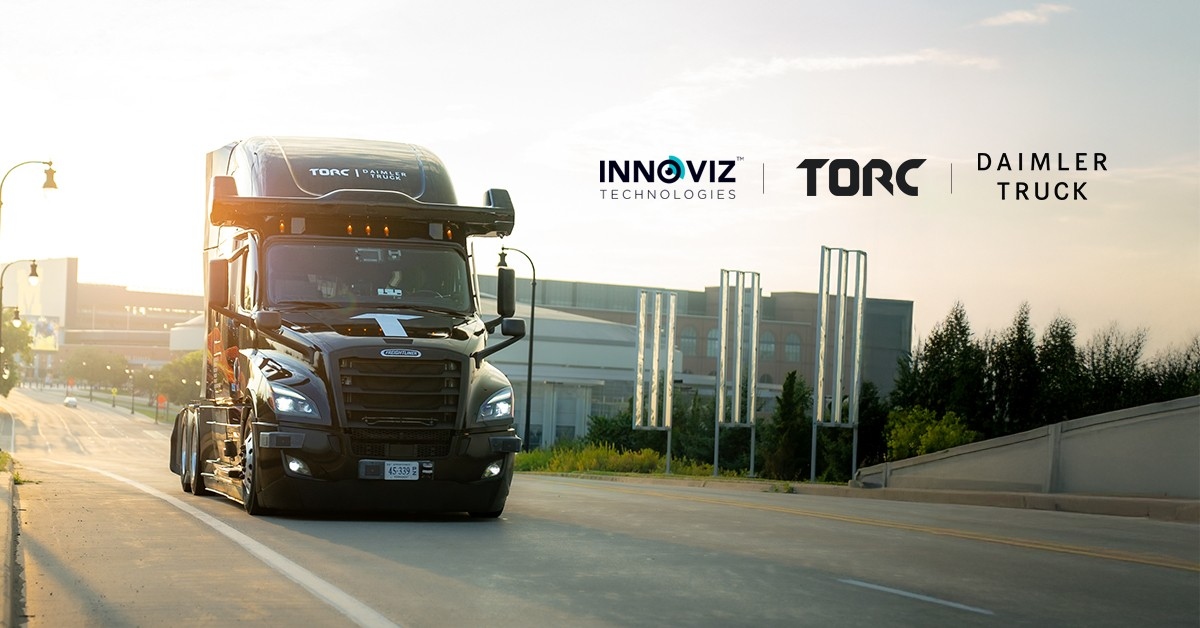
Daimler Truck, Torc Robotics ink LiDAR upgrade deal for autonomous Freightliner Cascadia
|
Daimler Truck’s autonomous Freightliner Cascadia is getting a LiDAR upgrade through a recent deal with Israel-based Innoviz Technologies. The agreement involves Torc Robotics, a Daimler Truck subsidiary that plans to integrate Innoviz’s LiDAR technology into the new autonomous Freightliner trucks and pair it with Torc’s virtual driver software.
As part of the announcement, the companies will collaborate on a joint development effort to advance the sensors required for commercial trucking. The partnership with Daimler Truck was hinted at in Innoviz’s previous disclosure that a major commercial vehicle original equipment manufacturer had selected it for its Level 4 autonomous trucks.
This is part of Daimler Truck’s broader strategy to bring autonomous trucks to market. The company has deployments planned across highways and regional routes in North America.
Developing a Level 4 autonomous truck—one fully operated without a human on board—requires extra steps compared with a regular Class 8 truck. Daimler Truck and Torc will use a combination of sensor technologies, including LiDAR, radar and camera systems, to detect the vehicle’s surroundings regardless of weather and other conditions.
The approach is multilayered and is used for both safety and maneuvers such as turning at intersections or navigating an on-ramp. The LiDAR technology uses lasers to generate a high-resolution 3D map of the environment. Safety requirements mean these autonomous trucks will use both long-range LiDAR to look far ahead and short-range sensors to gather detailed close-proximity data.
Innoviz is the partner for the short-range LiDAR; the announcement notes that Daimler and Torc have already selected their supplier for long-range LiDAR.
Daimler Truck is one of the world’s largest commercial vehicle original equipment manufacturers, with Daimler Truck North America holding a combined market share of about 42% of all Class 8 trucks sold under its Freightliner and Western Star brands, according to a recent Daimler Truck investor presentation.
|
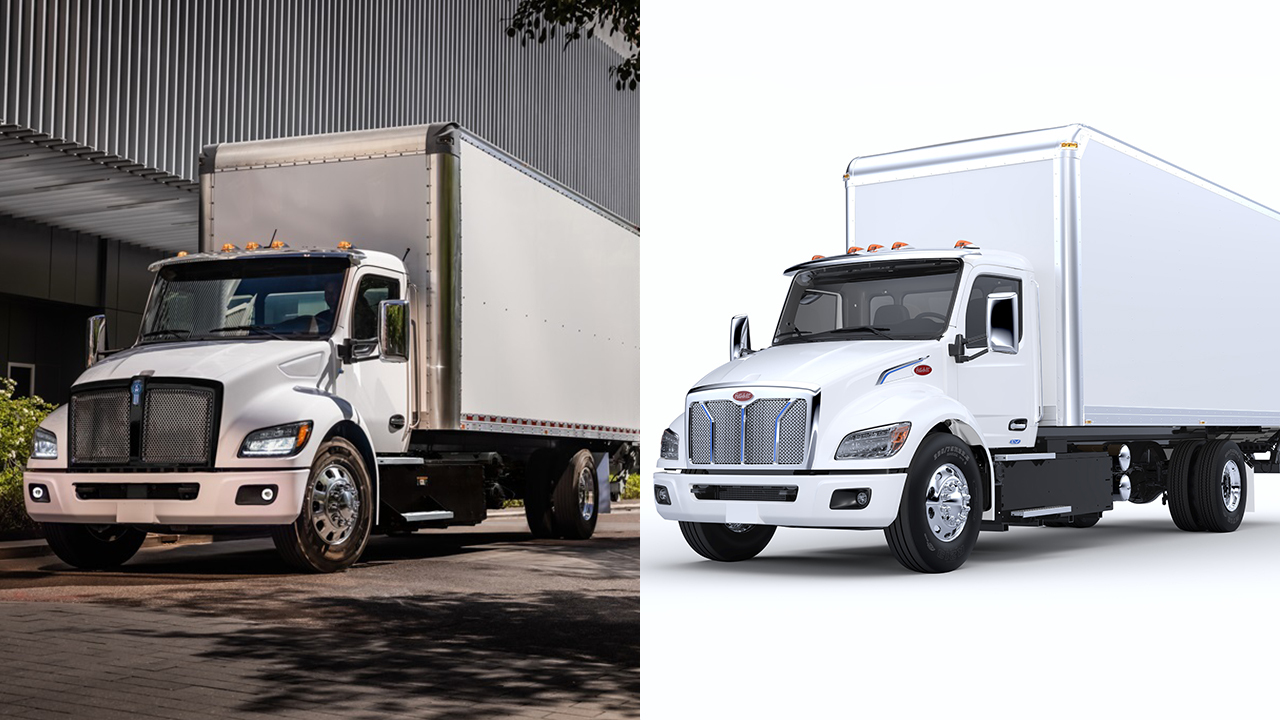
Peterbilt, Kenworth expand EV lineup with new medium-duty models
|
(Photos: Kenworth / Peterbilt)
|
Peterbilt and Kenworth, both subsidiaries of global original equipment manufacturer PACCAR Inc., have announced expansions of their zero-emission vehicle portfolios with the introduction of multiple medium-duty electric truck models.
The simultaneous announcements Tuesday are part of a larger commitment by both companies to provide zero-emission solutions across various applications, from regional delivery to vocational configurations.
Denton, Texas-based Peterbilt unveiled three new electric vehicle models — the 536EV, 537EV and 548EV — designed to address specific customer needs in the medium-duty segment. These new offerings feature zero tailpipe emissions while incorporating the latest safety technologies.
The 536EV and 537EV target regional delivery and service applications, while the Class 8 548EV supports 4×2 tractors and vocational configurations with power takeoffs, such as dump trucks. These models feature distinctive exterior styling with blue-accented crown and grille elements, alongside EV-exclusive panels on the hood sides.
Kirkland, Washington-based Kenworth simultaneously announced its own medium-duty battery-electric trucks: the T280E, T380E and T480E. These Class 6-8 models are designed for pickup and delivery, utility, regional haul and vocational applications. Drivers will find the latest technology inside the Kenworth models, including the Kenworth SmartWheel and a 15-inch digital display.
Both manufacturers’ power options scale to accommodate different applications, with configurations offering up to 605 horsepower and 1,850 pound-feet of torque. The system utilizes lithium iron phosphate battery chemistry and includes selectable three-stage regenerative braking to maximize range and efficiency.
Beyond the vehicles themselves, both brands are supporting the electric vehicle transition with comprehensive charging infrastructure solutions. Peterbilt offers a complete lineup of chargers through PACCAR Parts, with options including both AC and DC chargers with up to 400 kilowatts capacity. The company also provides charging infrastructure planning and installation services through partnerships with Qmerit and Schneider Electric. Kenworth supports DC fast charging with peak rates up to 350 kilowatts, backed by a full suite of charging solutions available through PACCAR Parts.
|
|
|
|
|
BROUGHT TO YOU BY SAMSARA
|
New report reveals how AI is helping transform driver behavior and road safety worldwide. See the Report.
|
|
|
California eyes lifting ban on heavy-duty autonomous trucks
A California ban on heavy-duty autonomous vehicles may soon be lifted, according to a recent proposal by the California Department of Motor Vehicles to revise its regulations. The DMV announced that under the revised regulations, companies could apply for permits to test and deploy heavy-duty autonomous vehicle technology on California roads. The 15-day public comment period began Dec. 3 and runs through Dec. 18.
NASA, USPS ditch Canoo EVs after bankruptcy
NASA and the United States Postal Service have stopped using electric vans made by the bankrupt EV startup Canoo, according to a report by TechCrunch. NASA bought the EVs in 2023 to shuttle astronauts to and from the launchpad for its Artemis missions. As of October, NASA is instead leasing Boeing-commissioned Astrovan shuttles built by Airstream. For the USPS, its six vehicles are no longer in use, according to an email to TechCrunch.
Rivian pushes into autonomy with custom silicon reveal
EV maker Rivian is looking to expand into autonomous technology, according to a recent announcement at the company’s first Autonomy & AI Day, held at its Palo Alto offices.
During the event, Rivian unveiled proprietary, purpose-built silicon and outlined its roadmap for next-generation vehicle autonomy.
Horizon Motors inks deal for solid-state batteries
Ohio-based commercial EV maker Horizon Motors has partnered with Chinese battery maker Chery Automotive to secure a 1 GWh supply of solid-state batteries, according to Clean Trucking. Horizon Motors hopes to use the batteries to improve range and safety and allow for faster charging. Horizon assembles Class 3-8 vocational battery-electric trucks.
|
As always, thanks for watching and reading.
Thomas Wasson
twasson@firecrown.com
|
|
|
|