Tesla releases final specs for Semi, confirms two range option
|
|
|
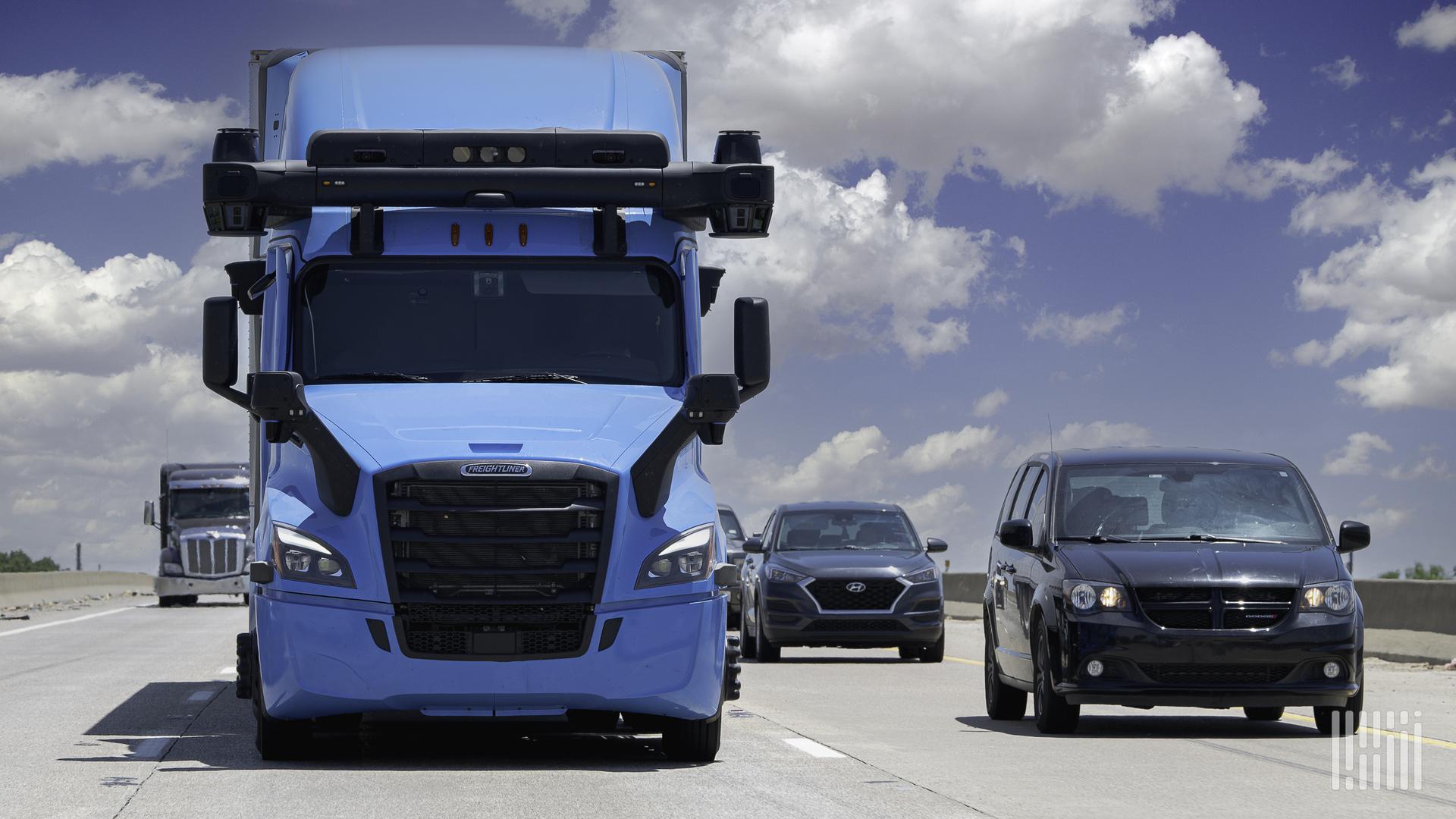
Self-driving bill greenlights revenue-generating rigs
|
(Photo: Jim Allen/FreightWaves)
|
The SELF DRIVE Act of 2026 has cleared a significant hurdle for autonomous trucking: the ability to turn pilot programs from cost centers into revenue streams.
The bill was introduced earlier in February by Rep. Bob Latta (R-Ohio). It grants the secretary of transportation explicit authority to allow manufacturers and fleets to engage in “limited commercial operations” under testing permits. For the first time, federal legislation defines a path for autonomous trucks to transport freight as part of their evaluation process.
The bill includes guardrails around the opportunity. The secretary of transportation can set reasonable limits on participating vehicles and revenue generation on a jurisdiction-by-jurisdiction basis.
Federal preemption is strengthened in this version, specifically prohibiting any state or local subdivision from enacting laws that “prohibit in whole or in part” the manufacture, sale or introduction of automated driving systems (ADS) into interstate commerce. This directly targets the regulatory patchwork that has so far hindered widespread autonomous deployment.
Carrier legal and safety teams will likely view the revised data-reporting rules as a win. Manufacturers now have 30 days after a crash — or 10 days after receiving notice — to file reports with the National Automated Vehicle Safety Data Repository. The previous draft required tighter 20-day and seven-day windows.
The bill also narrowed reporting triggers to objective outcomes: fatalities, hospital-transported injuries, airbag deployment, strikes of vulnerable road users or vehicle towing. Police reports alone no longer mandate disclosure, eliminating the burden of reporting minor fender benders.
States are prohibited from requiring separate crash data if it is already reported to the federal repository, creating a single point of entry that protects proprietary fleet information.
|
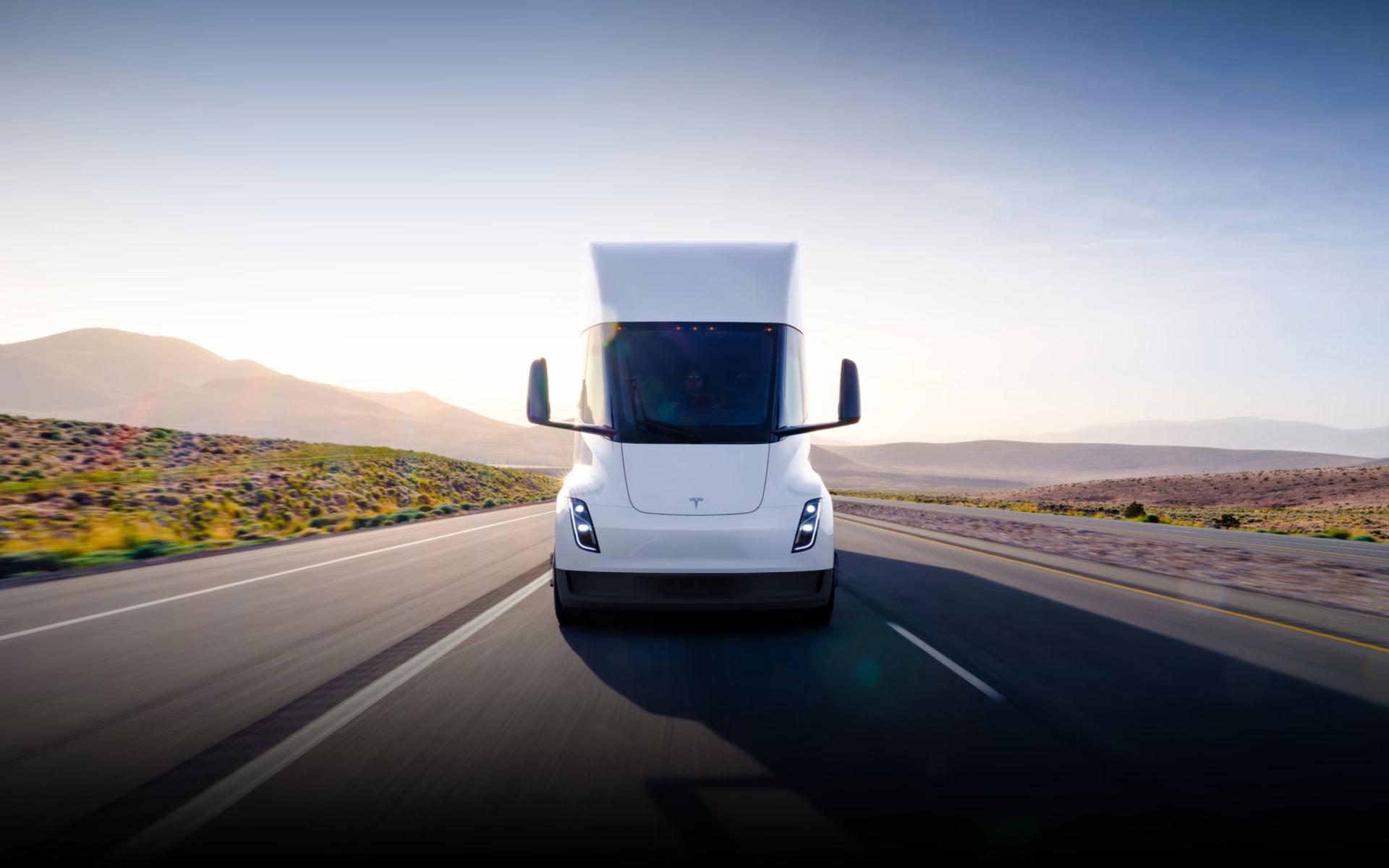
Tesla releases final specs for Semi, confirms two range options
|
Tesla has publicly released the final specifications for its long-delayed Class 8 battery-electric Semi, confirming two variants will be available when customer deliveries begin this year.
The electric vehicle manufacturer updated its product page Feb. 8 with detailed specifications for Standard Range and Long Range models, offering approximately 325 miles and 500 miles of range, respectively. Both trucks are rated for an 82,000-pound gross combination weight and feature a three-motor powertrain with drive power up to 800 kilowatts.
The Standard Range model carries a curb weight under 20,000 pounds, while the Long Range version tips the scales at 23,000 pounds, owing to its larger battery pack. Both achieve an energy consumption of 1.7 kilowatt-hours per mile and can charge to 60 percent capacity in 30 minutes. The Long Range model supports peak charging speeds of 1.2 megawatts.
CEO Elon Musk wrote on X on Feb. 8 that “Tesla Semi starts high volume production this year.”
Fleets including PepsiCo, DHL Supply Chain and ArcBest have been testing the Semi in their operations. Giga Nevada near Reno completed construction in October, with production line installation ongoing. The facility is designed for a capacity of 50,000 vehicles per year.
Tesla is simultaneously building out charging infrastructure through a partnership with Pilot Travel Centers to construct charging stations at about 20 truck stops along I-5 and I-10, with the first locations opening this summer in California, Georgia, Nevada, New Mexico and Texas.
|
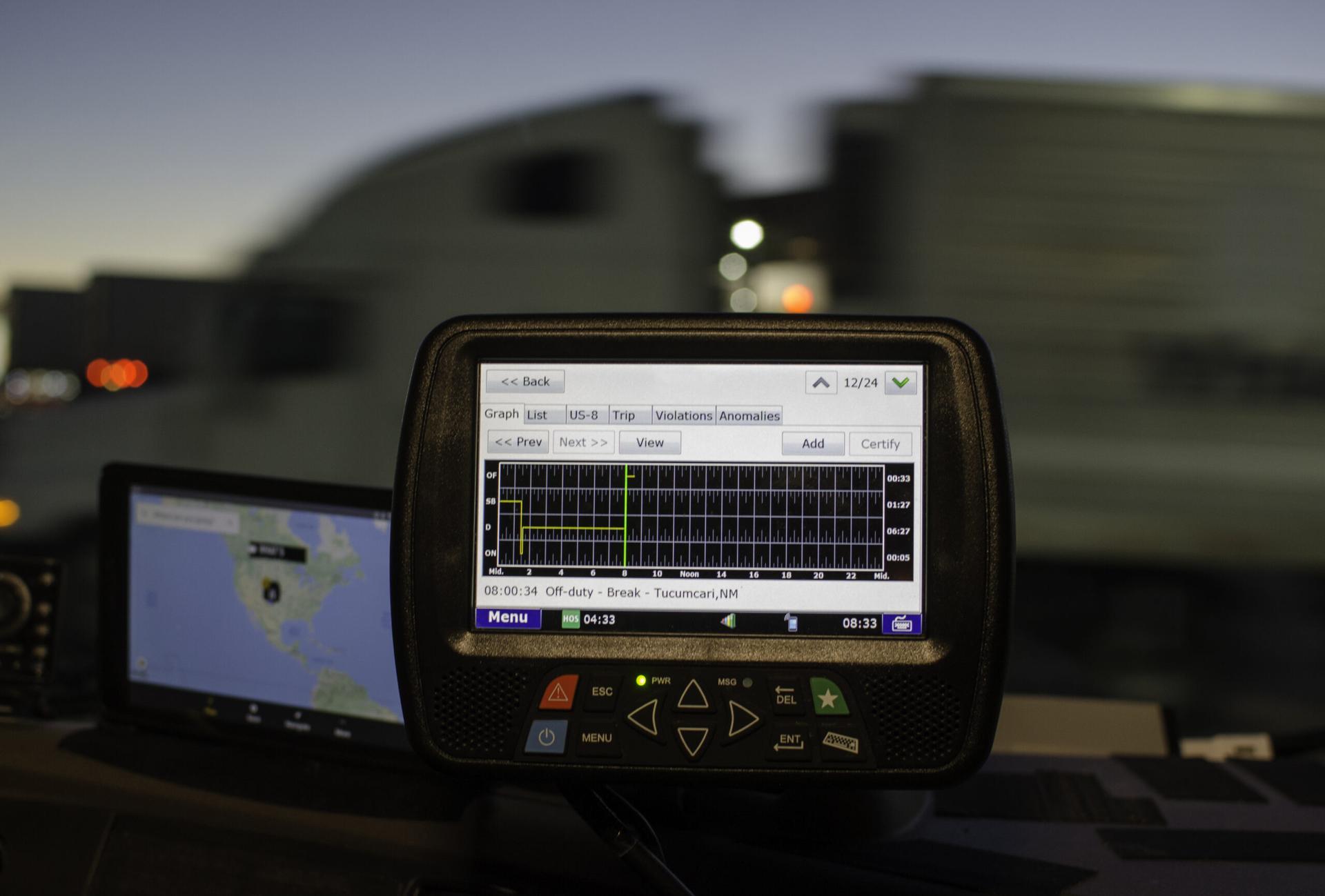
FMCSA Opens Comments on Industry-Wide ELD Exemption
|
(Photo: Jim Allen/FreightWaves)
|
The Federal Motor Carrier Safety Administration (FMCSA) is seeking public input on a petition that could fundamentally reshape how truck drivers track their hours. The move, if approved, would give professional drivers the option to use paper logs instead of electronic logging devices (ELDs).
The Federation of Professional Truckers (FOPT), an Ohio-based advocacy group, filed the exemption request, arguing that manual logbooks should remain a viable alternative to digital tracking. The exemption would extend to any driver or motor carrier opting in, not just FOPT members.
Under current rules, paper logs are restricted to drivers using them eight days or fewer in a 30-day period, or those operating vehicles with engines manufactured before model year 2000. FOPT wants those barriers removed entirely.
“Paper logbooks remain enforceable and understood by enforcement officers nationwide,” wrote Micheal Cobb, CEO of FOPT, in the petition. “Small carriers face disproportionate financial burdens from ELD requirements, as compliance costs exceed $500 annually per truck according to FMCSA’s Regulatory Impact Analysis. Technical limitations and frequent malfunctions highlight the continued necessity of paper alternatives.”
The group cited Executive Order 12866, which requires agencies to avoid unnecessary regulations when “reasonable” alternatives exist. “Allowing drivers to use either method ensures compliance without undermining safety,” they asserted.
FOPT’s “Safety Assurance Plan” includes member education on proper log completion, random internal audits by carriers and exclusion from the exemption program for drivers with hours-of-service violations.
The petition’s success may face headwinds. While the Trump administration champions “pro-trucker” initiatives, FMCSA recently tightened vetting of approved ELDs and cracked down on fraudulent devices. This may signal a preference for fixing technology over loosening requirements.
The agency is accepting comments through March 11.
|
|
|
IN PARTNERSHIP WITH ACT EXPO
|
Connected vehicles, ADAS safety tech, autonomous advancements and software-defined vehicles drive innovation. Learn More.
|
|
|
According to Clean Trucking, Hyroad Energy acquired 113 hydrogen fuel cell semis at Nikola’s bankruptcy auction and launched the first U.S. trucks-as-a-service model for hydrogen. The Austin-based company has reconditioned 52 Nikola Tre semis and is preparing roughly half its fleet for lease agreements while planning five refueling stations in the Los Angeles and Houston areas.
Bedrock Robotics raised $270 million in Series B funding, pushing its valuation to $1.75 billion. According to the company’s press release, the construction industry faces a labor shortage of nearly 800,000 workers over the next two years. The San Francisco-based company, founded by former Waymo engineers, is targeting its first fully operatorless excavator deployments in 2026.
On Jan. 27, the EPA partially approved California’s Heavy-Duty Inspection and Maintenance program for in-state trucks while blocking its application to out-of-state vehicles, citing Commerce Clause conflicts. CARB dismissed the ruling as “bluster” and vowed to continue enforcing the program for all trucks operating in California.
Junko Yoshida reported on her Substack that Waymo’s chief safety officer acknowledged on Wednesday that the company’s robotaxis rely on remote operators in the Philippines for difficult driving scenarios. Sen. Ed Markey called the revelation “fairly shocking,” questioning whether critical safety employees should operate outside the U.S. when split-second interventions may be needed.
|
As always, thanks for watching and reading.
Thomas Wasson
twasson@firecrown.com
|
|
|
|