EPA Launches Investigation Into DEF System Failures, Demands Data From Engine Makers
|
|
|
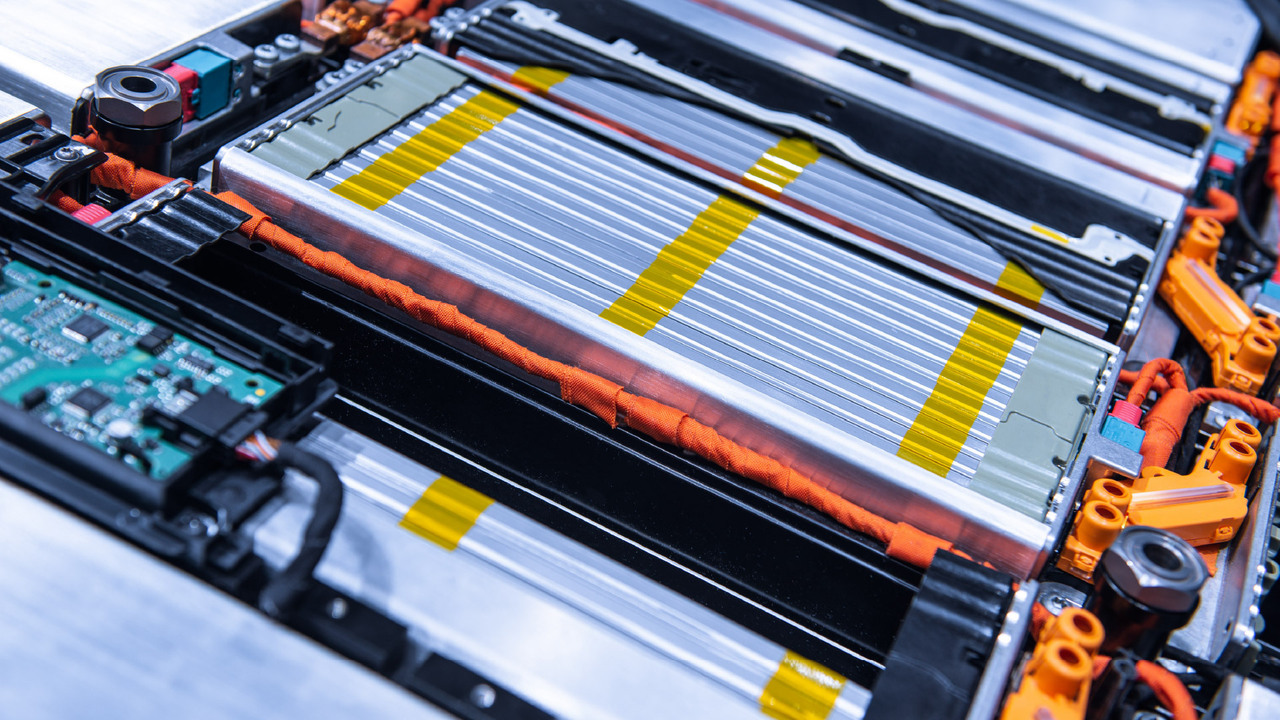
Geotab Study Finds EV Batteries Remain Durable as Charging Habits Shape Longevity
|
Geotab released findings from its third major study on electric vehicle battery degradation on Feb. 7, analyzing aggregated telematics data from more than 22,700 EVs across 21 makes and models. The research confirms modern batteries remain robust, with an average annual degradation rate of 2.3 percent, though charging behavior has emerged as the primary factor influencing how quickly batteries age.
The study focuses on state of health (SOH), which measures a battery’s current capacity compared to its original capacity. Average batteries are projected to retain 81.6 percent SOH after eight years.
“With any emerging technology, there are always more questions than answers,” Charlotte Argue of Geotab said. “For EV batteries specifically, questions like ‘How long is this battery going to last?’ or ‘How quickly will I lose capacity?’ are critical for both consumers and fleet operators.”
Charging power proved the strongest operational influence on battery health. Vehicles relying heavily on DC fast charging above 100 kW experienced 3.0 percent annual degradation, roughly double the 1.5 percent rate observed in vehicles using AC or lower-power charging.
The study debunked the common “20 percent to 80 percent” charging rule, finding fully charging batteries has minimal long-term impact for users who drive immediately afterward.
Climate plays a moderate role, with hot-climate vehicles degrading approximately 0.4 percent faster annually. High-utilization vehicles showed rates 0.8 percent higher than low-use counterparts, though productivity gains typically outweigh this penalty.
“Because EVs have fewer parts to repair and batteries are lasting longer than anticipated, there is a real opportunity for fleets to keep these vehicles longer than gas cars, driving down total cost of ownership and increasing ROI,” Argue said.
Read the full article here.
|
EPA Launches Investigation Into DEF System Failures, Demands Data From Engine Makers
|
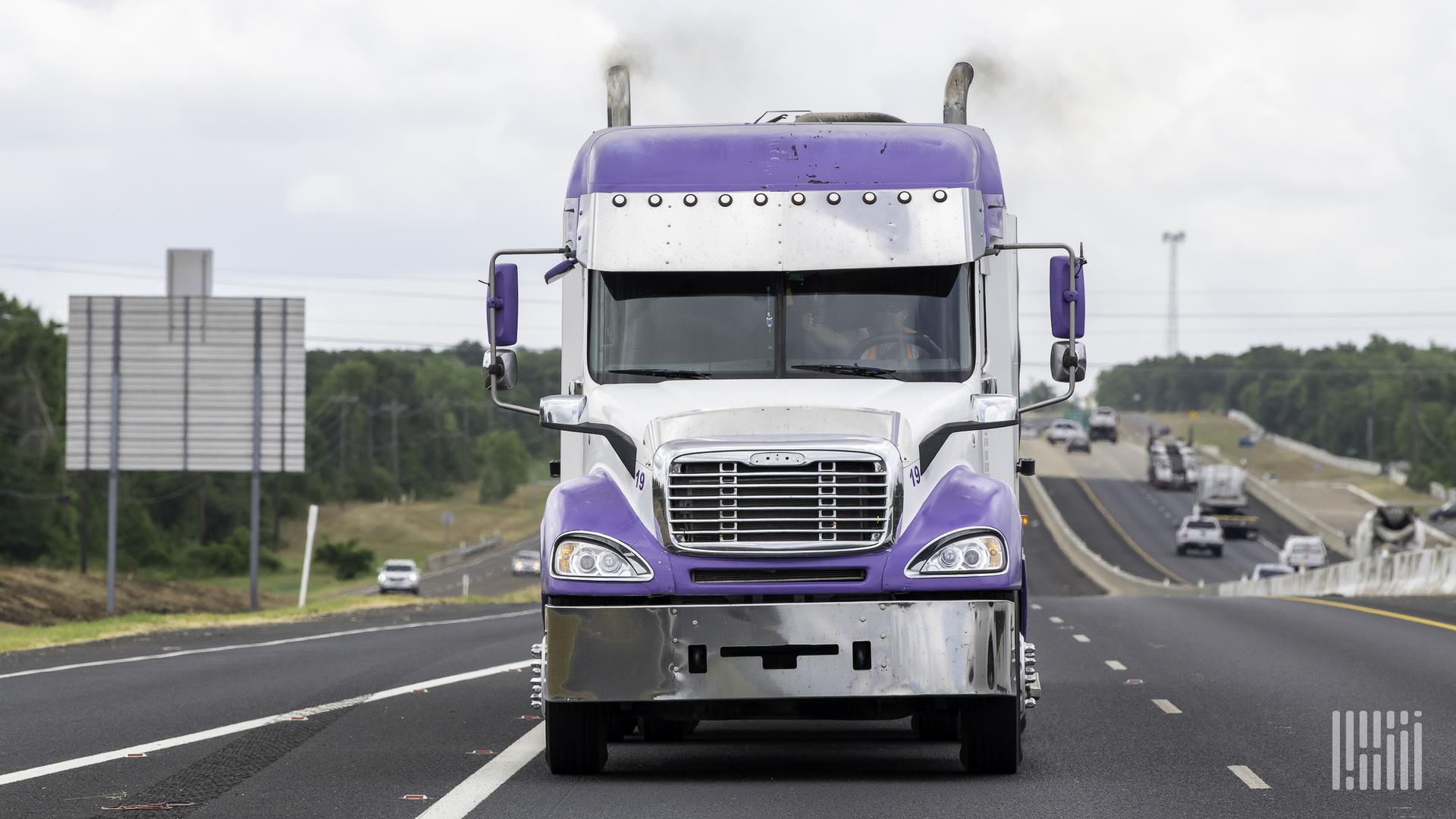
(Photo: Jim Allen/FreightWaves)
|
Environmental Protection Agency (EPA) Administrator Lee Zeldin announced on Tuesday that the agency is launching a formal investigation into Diesel Exhaust Fluid (DEF) system reliability, demanding internal data from the 14 largest diesel engine manufacturers representing 80 percent of the market.
The investigation marks a significant shift in EPA philosophy, treating DEF-related issues as a manufacturer quality problem rather than a driver compliance matter. The agency has given manufacturers 30 days to provide warranty claims and engine failure rate data or face additional inquiries or penalties.
EPA is specifically targeting data from Model Years 2016, 2019 and 2023 to identify whether specific components or designs are prone to premature failure.
“Today, we are furthering that work and demanding detailed data to hold manufacturers accountable for the continued system failures,” Zeldin said. “The Trump EPA is committed to ending unnecessary frustrations and days lost on the road and in the field for American farmers and truckers.”
The investigation builds on guidance issued by the Trump administration in August that effectively ended the immediate 5-mph engine derate for most DEF-related faults. Under 2025 protocols, diesel engines now provide drivers with a 650-mile or 10-hour warning window before a mild engine derate occurs, with full speed restriction to 25 mph not taking effect for nearly four work weeks.
Previously, a faulty sensor could leave a driver stranded within hours.
The collected data will serve as the foundation for future rulemaking. EPA stated it is also reassessing the 2022 Heavy-Duty Engine and Vehicle NOx rule to determine whether derates may no longer be necessary for emissions compliance.
Read the full article here.
|
ACT Expo 2026 Embraces the Digital Frontier for Commercial Fleets
|
ACT Expo 2026 is shaping up to be the most comprehensive show in the event’s 16-year history, bringing nearly 400 speakers, over 200 vehicles on display and typically more than 12,000 attendees to Las Vegas. This year’s conference highlights a commercial transportation industry undergoing technological transformation, with an expanded focus on the digital technology layer that sits atop advanced vehicle platforms.
Erik Neandross, president of Clean Transportation Solutions at TRC and host of ACT Expo, said the event reflects a maturation of the industry’s approach to emerging technologies. The “digital frontier” encompasses software-defined vehicles, real-time data analytics, artificial intelligence in fleet management and predictive maintenance.
“While the digital frontier can be all-encompassing and overwhelming to fleets, especially given how loosely the term ‘AI’ is thrown around these days, when a customer is able to make the right technology selections to fit their application and operation, we have seen fleets reporting significant improvements in uptime, asset utilization and productivity, the driver experience, and safety,” Neandross said.
Advanced Driver Assistance Systems are driving fleet investment conversations, with lane-keeping technology, collision avoidance systems and automatic braking delivering economic benefits including improved driver retention, reduced downtime and better insurance outcomes. “Fleets that operate more safely have better CSA scores, which they can then use to better retain existing customers, attract more customers, and develop longer-term, more robust relationships,” Neandross said.
The conference will feature a main stage panel with autonomous vehicle leaders including Aurora, Kodiak, Waabi, Torc and PlusAI discussing commercialization strategies. Commercial battery-electric vehicle deployments continue rising from about 800 in 2021 to more than 41,000 in 2024, according to the 2025 edition of State of Sustainable Fleets.
Rivian CEO RJ Scaringe will deliver a keynote address, while Tesla’s Semi program prepares for commercial production. Natural gas remains viable, with Neandross noting one large over-the-road fleet told him, “these things print money.”
Read the full story here
|
|
|
The U.S. Department of Transportation‘s Pipeline and Hazardous Materials Safety Administration issued a Request for Information to examine safety risks of transporting hazardous materials in heavy-duty electric trucks versus diesel. Concerns include thermal runaway fires, added weight affecting stability, electronic interference and charging hazards, potentially slowing EV adoption.
Horizon Motor earned CARB Executive Order certification for its 2026 Class 3-5 battery-electric trucks, allowing sales in California and CARB-adopting states. The approval meets heavy-duty zero-emission rules, qualifies vehicles for HVIP incentives and advances cleaner fleets through solid-state battery technology.
DeepWay Technology Co., a Chinese trucking tech firm, secured about $172 million in pre-IPO funding from investors including Temasek Holdings, ABC Impact, Lenovo Capital, Puhua Capital and Sunwoda Electronic. The company develops assisted-driving systems and freight solutions for heavy-duty electric trucks.
Uber introduced AV Labs, deploying sensor-equipped vehicles to gather real-world driving data for autonomous partners including Waymo, Waabi and Lucid Motors. The division processes information for reinforcement learning, targeting edge cases to accelerate robotaxi and autonomous trucking development without initial fees.
|
As always, thanks for watching and reading.
Thomas Wasson
twasson@firecrown.com
|
|
|
|