Tesla Semi pilots prove range and driver appeal ahead of summer ramp
|
|
|
Lawmakers push national AV framework to cut cross-state chaos
|
(Photo: John Gallagher/FreightWaves)
|
Rep. Bob Latta, R-Ohio, is pressing Transportation Secretary Sean Duffy for swift action on a single national standard for autonomous trucks. On March 23, Latta sent a letter to Duffy urging passage of the SELF DRIVE Act of 2026.
The legislation, introduced Feb. 5 as H.R. 7390, would give the National Highway Traffic Safety Administration clearer authority over automated driving systems. It would allow manufacturers to self-certify safety through a detailed “safety case” demonstrating no unreasonable risk. Most importantly, the bill would preempt the current patchwork of more than 35 state laws that create regulatory headaches for companies testing or deploying driverless Class 8 trucks across state lines.
Latta emphasized the importance of uniform federal rules as freight volumes continue to grow. “We need uniform rules so freight can move efficiently across state lines without regulatory friction,” he wrote in the letter.
The Owner-Operator Independent Drivers Association continues to voice strong opposition. The group argues that self-certification places too much reliance on unverified manufacturer claims and does not provide adequate cybersecurity protections for 80,000-pound vehicles operating on public highways.
Industry watchers say passage of the bill could significantly accelerate commercial deployment of fully autonomous highway trucking, with some analysts pointing to 2027 as a potential tipping point for broader adoption.
|
Tesla Semi pilots prove range and driver appeal ahead of summer ramp
|
(Photo: Thomas Wasson/FreightWaves)
|
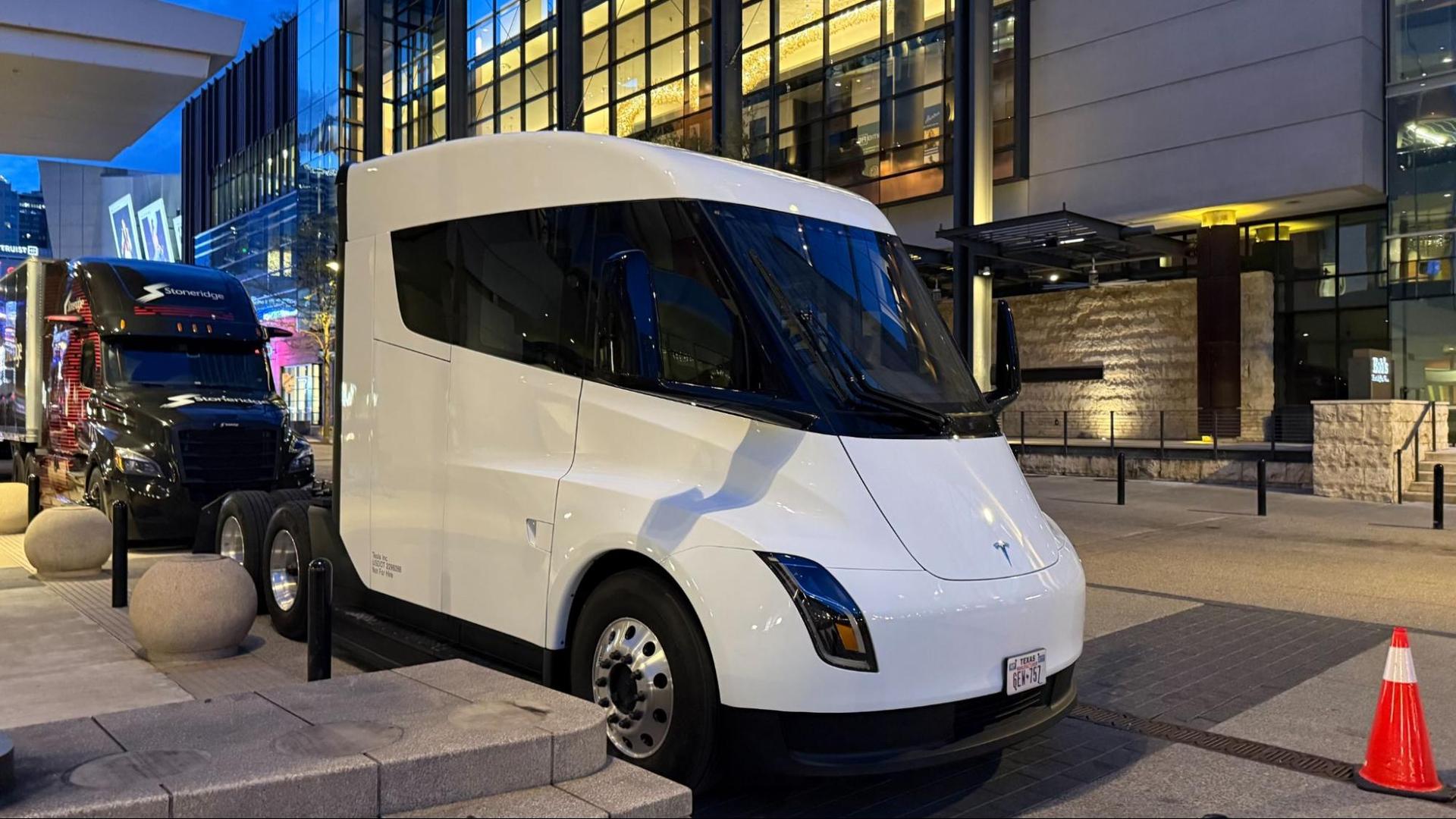
Early real-world pilots of the Tesla Semi are generating strong positive feedback from drivers and fleet managers just months before volume production begins.
Operators at IMC Logistics, Hight Logistics and King Fio Trucking put the electric tractor through its paces. They consistently praised the centered driving position that eliminates traditional blind spots, paired with surround-view screens that provide full 360-degree visibility. Drivers also highlighted the smooth automatic transmission that reduces physical strain, strong acceleration on hills and a real-world range approaching 500 miles.
“Tesla Semi is the only truck in the market that can deliver 500 miles on a single charge, with superb energy efficiency and fast charging,” one IMC Logistics driver said after completing early test runs.
Tesla plans to begin customer deliveries this summer from its Nevada Gigafactory. The company expects initial output between 5,000 and 15,000 units in the first full year, scaling toward 50,000 units annually.
Pricing remains under $300,000, making it competitive with other heavy-duty electric tractors. California has already reserved more than 1,000 Semis through its grant program.
The positive driver reception comes as Tesla partners with Pilot Travel Centers to roll out Megawatt Charging System sites along major freight corridors.
|
Study: Battery-electric truck charging infrastructure wins on cost
|
(Photo: Jim Allen/FreightWaves)
|
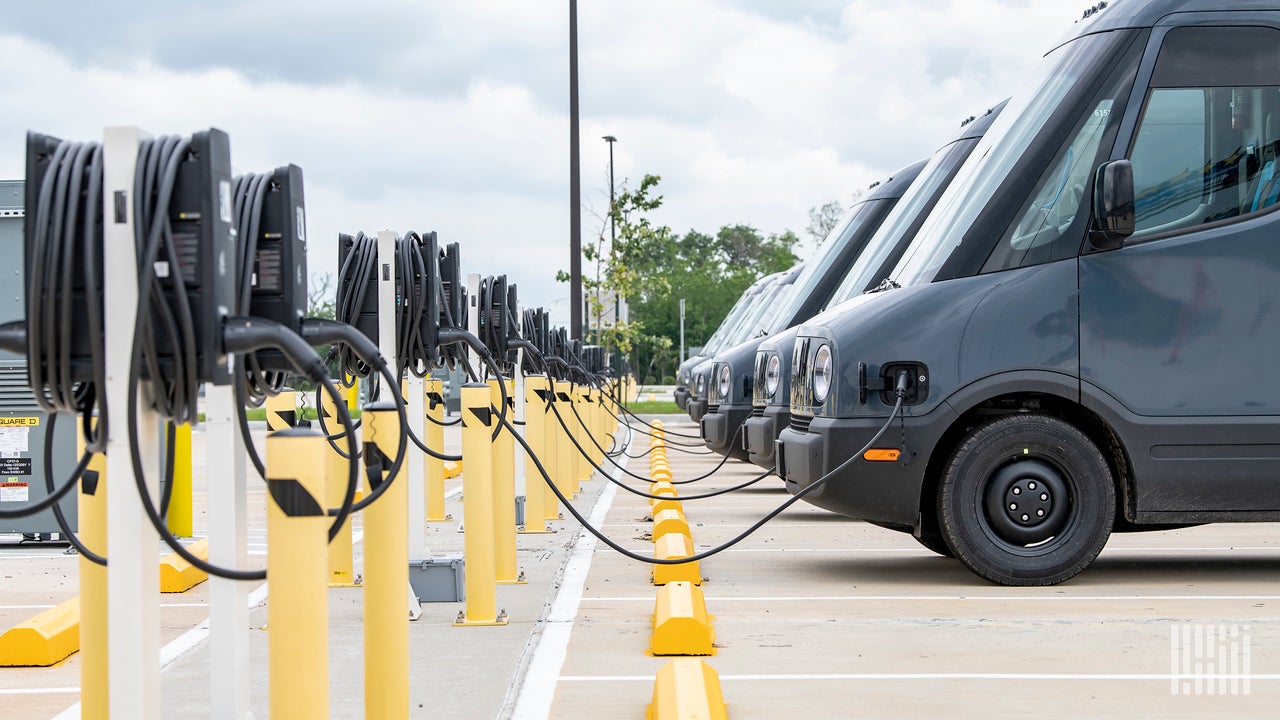
A new study released March 23 delivers a clear economic advantage for battery-electric truck charging infrastructure over mixed networks that include hydrogen.
Researchers at the American Council for an Energy-Efficient Economy found that building out charging stations for battery-electric trucks costs two to four times less than a comparable network that also supports hydrogen fueling stations. The cost gap holds even if hydrogen trucks represent only 20 percent of the national heavy-duty fleet.
The analysis recommends that states prioritize shared, high-utilization charging hubs along key freight corridors. These hubs would serve both long-haul and regional operations more efficiently.
ACEEE analysts called for better cross-state coordination between officials, utilities and private developers. “Battery-electric is the lower-risk, lower-cost backbone for zero-emission freight,” the report states. “No need to overbuild expensive parallel hydrogen networks.”
The study notes that hydrogen faces significant production challenges and much higher infrastructure costs, making it better suited for niche applications at best. Battery-electric solutions, by contrast, offer fleets immediate benefits in both operating economics and cleaner air in communities along truck routes.
The findings align with ongoing development of Megawatt Charging System technology and planned corridor buildouts, including new sites from Tesla-Pilot partnerships expected this summer.
|
|
|
IN PARTNERSHIP WITH ACT EXPO
|
Connected vehicles, ADAS safety tech, autonomous advancements and software-defined vehicles drive innovation. Learn More.
|
|
|
Colorado lawmakers advanced a bill that would let voters decide whether commercial autonomous trucks over 26,000 pounds must carry human operators. The measure expires in five years and spares CDOT road-safety vehicles. Teamsters support it for job safety. “We’re making a lot of commonsense decisions every day that a computer can never make,” driver Nate McCarty said. (CBS News)
Uber will invest up to $1.25 billion in Rivian through 2031 to deploy up to 50,000 fully autonomous R2 robotaxis. Deployments begin in San Francisco and Miami in 2028, scaling to 25 cities by 2031. Rivian CEO RJ Scaringe called it “one of the safest and most convenient autonomous platforms in the world.” (Rivian)
Niantic used more than 30 billion Pokémon Go player images to train Visual Positioning Systems for Coco Robotics’ autonomous delivery bots. The crowdsourced data helps robots navigate GPS-dead zones in dense urban streets. “It turns out that getting Pikachu to realistically run around and getting Coco’s robot to safely and accurately move through the world is actually the same problem,” said Niantic Spatial CEO John Hanke. (Popular Science)
The Trump administration is finalizing long-delayed guidance on the Renewable Fuel Standard for blending biofuels into gasoline and diesel. A decision is expected by month’s end. Agriculture Secretary Brooke Rollins said officials are “ensuring that our agriculture community is frankly put first and farm security is national security.” (Transport Topics)
Workhorse launched a 140 kWh version of its W56 step van with an estimated 100-mile range at full payload. Pricing starts at $169,000 for in-city delivery fleets. CEO Scott Griffith said the model offers fleets “a no-compromise option to control costs while still ensuring efficient operations” against fuel-price volatility. (Workhorse)
|
As always, thanks for watching and reading.
Thomas Wasson
twasson@firecrown.com
|
|
|
|