|
Straight Talk with Brian Straight • November 2, 2025
|
|
|
|
Hello, and welcome to this week’s edition of Straight Talk. Inside, we discuss:
|
|
If this was forwarded to you and you wish to receive it each Sunday morning in your email, please go here to sign up for SCMR newsletters.
|
|
|
|
 |
|
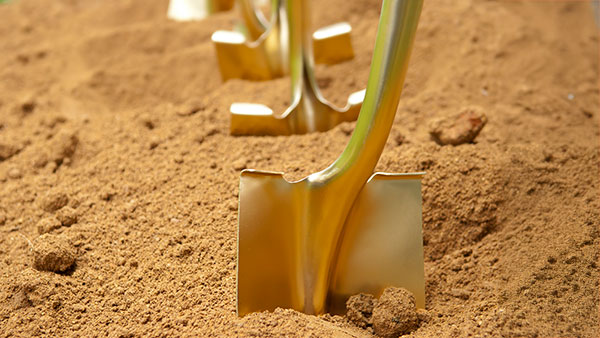
(Photo: Getty Images)
|
|
I’ve attended a lot of conferences in my career, but every now and then, a session hits differently. That happened recently when I listened to Alain Hunkins, CEO of Hunkins Leadership Group, at the ASCM CHAINge conference in Columbus, Ohio.
Hunkins spoke about leadership, not in abstract terms, but in human ones. His core idea was simple yet profound: leadership is about people, not processes. And the tool that makes it real? Rituals. Culture, he said, isn’t built because we want to have a good company culture. It is built because we develop rituals that allow the culture to develop, grow and thrive.
It means when you put your shovel into the ground, have a purpose for doing so. Don’t dig without a clear path forward.
Like many of you, I work remotely most of the time. My routines are efficient, predictable, and, at times a little stale. They keep me productive, but they don’t always make me feel connected. My colleagues are in various locations. We sometimes are working on the same challenges, but we don’t know that someone else is having that challenge.
Hearing Hunkins talk about rituals instead of routines made me realize how much of our culture, both at work and in life, is something we create by default rather than by design. The routine is digging because the schedule says to dig; the ritual is digging because you know you’re laying the foundation for something that matters.
|
|
Routine vs. ritual
|
|
Hunkins defines the difference this way: “A routine is a habitual action with no emotion or meaning. A ritual is a repeated action with meaning, emotion, and shared experience.”
That line has been echoing in my head ever since. It’s made me think more deliberately about the way I start my day, how I connect with colleagues, and how I show up to conversations. My interactions will help define that culture. It’s also made me think about how organizations like ours and yours, where people may never share the same office or even the same continent, can still build culture intentionally.
|
|
Rituals in a distributed world
|
|
In supply chain, “distributed” isn’t just a work model, it’s the operating system for most organizations. Truck drivers are on the road, warehouse staff are on shifts, planners are online at 5 a.m. for Asia calls, and leadership might be spread across time zones and continents. That reality makes the idea of building culture through rituals sound almost impossible. But it’s not, if you put forth the effort to do so.
The key is to design small, intentional practices that create shared meaning across distance. These rituals don’t require physical proximity, they require consistency, visibility, and participation. In our organization, our group editorial leader holds weekly calls with editorial staff members on his team. The broader editorial team gathers once a month via Zoom for an hour to discuss topics of interest. These could be particular projects one of us is working on. It may be a challenge we are having. It may be efforts within the broader organization that impact us. These editorial-focused calls are led by an executive, which gives us insight into the business objectives of the organization, but also give him insight into the challenges we face on the editorial side.
Now, my suggestion here is not to have more meetings with staff, but make the meetings you do have more meaningful. Be intentional about the topics. Be strategic. Meetings should not be mindless, they should be mindful.
|
|
1. Start with a visible rhythm
|
|
Remote and field-based teams need a pulse they can count on. That might mean a weekly “Monday kickstart” message from leadership highlighting wins, priorities, and shout-outs across regions. Or a Friday reflection post that asks teams one simple question: “What worked well this week?” Even recording a quick 2-minute video instead of sending a memo might be a better option. It helps put a human face to leadership.
|
|
2. Build micro-rituals into daily work
|
|
As Hunkins explained, rituals don’t have to be grand gestures. They live in the details of how people connect. He suggested:
|
-
Creating check-in rituals that humanize communication: start team calls with one personal question before diving into data.
-
Encouraging shared signals: a simple emoji reaction, a recurring status update phrase, or a 7-minute “stand-down” at the end of the day to mark closure and reset focus.
-
For frontline or mobile workers, adopt short voice-note updates or photo check-ins to replace long reports. The goal is participation, not perfection.
|
|
3. Make the invisible visible
|
|
Remote staff can easily feel disconnected from the broader purpose. Rituals can change that. Post weekly photos or short stories from the field—drivers, warehouse teams, or planners showing what success looks like where they are. That creates shared ownership and pride. One idea is asking employees to post a 10-second clip of what their workweek looked like. We do this already on TikTok, Instagram or whatever social platform we populate. Over time, it can become a living highlight reel of the organization’s culture.
|
|
4. Reinforce belonging through leadership presence
|
|
In distributed environments, leadership presence isn’t about being seen, it’s about being felt. Leaders like to say their “door is always open.” For remote employees, what does that look like? It looks like a standing Zoom or Teams meeting link where employees can just jump in to connect, to share an idea or thought, or just to get a quick update on the company.
Another option may be for leaders to start each monthly meeting with a “story from the field” that highlights a small win from a far-flung part of the organization. These micro-moments remind everyone that leadership attention extends beyond headquarters.
|
|
5. Document and celebrate the rituals themselves
|
|
Finally, treat the rituals like assets. Write them down. Name them. Celebrate them when they stick. Hunkins shared a story of a company he worked with that had a “daily 7-minute huddle” to kick off the day. It was 7 minutes. No more, no less. But it brought everyone together for that brief moment in time, reinforcing the team culture concept. That visibility turns routine behaviors into symbols of identity.
In short, rituals are how we replace proximity with presence. They’re how you make a hybrid or global organization feel human again.
|
|
Small steps, big culture
|
|
One of my favorite moments in Hunkins’ talk was when he said, “Pick one ritual. Start ridiculously small. Commit to 30 days. Consistency beats intensity.” It’s a reminder that culture isn’t something that happens in all-hands meetings or corporate retreats. Culture is built one small, deliberate action at a time. Many companies forget that.
For me, it’s been starting every workday with the same routine. In my job, two of the challenges I face is the traditional writer’s block that so many journalists and writers face, and the never-ending number of tasks that need to be done. Few of them are immediate, but all of them must be addressed. Writers, by nature, are procrastinators. We work well on deadline, but given time, that’s a different story.
So, one of the things I’ve adopted is a morning routine. It starts with doing the daily Wordle (is that still a thing?). It is for me. I then check through my emails. Make sure we have a post on scmr.com, and then I get into the rest of the day and what it brings. But what I’ve found is that just doing the same thing each day in the same order gets me centered on the tasks ahead. It gets me into the “work day.” If I enter a day without a clear starting point, procrastination kicks in. And before you know it, the day is gone and very little was accomplished.
In the remote world of supply chain, that same process can be accomplished and help employees become centered into the job at hand. All of the above ideas can work, but what is most important is building that routine/ritual. It must be consistent and regular.
|
|
The takeaway
|
|
In a business driven by data, automation, and technology, it’s easy to forget that people make supply chains work. Rituals give those people rhythm, purpose, and connection, whether they’re sitting at a desk, behind the wheel, or on a warehouse floor.
If we want to build resilient organizations, we have to design culture as carefully as we design processes. And if you’re wondering where to start? Maybe, as Hunkins said, it’s just finding “the toothbrush you’ll actually use twice a day.”
|
|
The humans behind the data
|
 |
|
|
|
(Photo: Getty Images)
|
|
S&OP, like other supply chain disciplines, is quickly becoming a technology-driven process. But, Rob Haddock, former global planning executive at Coca-Cola and now founder of Demand Chain AI, opened a CSCMP conference session by reminding the audience that even the most advanced AI can’t fix broken fundamentals. Joining Haddock in the conversation was Don Wermerskirchen, director of transportation optimization at Coca-Cola. It was Wermerskirchen, who works on the logistics side, that said the best S&OP process is cross-functional, not siloed. “It takes a lot of involvement from everybody and you really have to keep reminding the cross-functional partners involved in that,” he said. “If you don’t give me that information or if you don’t involve me in that, I’m not going to be able to save any money or reduce expense because we’re doing it at the last minute.” It also isn’t primarily about technology. It is about people and processes. Technology can give you the answers, but it can’t ask the right questions. “It really does come down to partnering, constant retraining, and reteaching. Technology moves fast, but adoption moves at the speed of trust,” explained the third panelist, Jennifer Krueger, who leads planning and procurement at gaming equipment manufacturer Light & Wonder. You can read more on this topic here.
|
|
Manufacturing’s challenges
|
 |
|
(Photo: Getty Images)
|
|
|
|
|
If the current environment is not challenging enough, a new Gartner survey found almost half of organizations lack the confidence that their manufacturing processes will deliver on business outcomes over the next three years. The survey of 128 leaders with responsibility for manufacturing or supply chain decisions was conducted in May. Forty-nine percent said they lack confidence and two-thirds felt they were not pursuing the needed redesign of their manufacturing operations to benefit from advanced automation, including AI. “CSCOs picture a near future of advanced automation where machines are involved in completing a majority of tasks, yet most operating models are not keeping pace to enable these strategic priorities,” said Simon Jacobson, VP analyst in Gartner’s Supply Chain practice. Gartner has an upcoming webinar on the topic. You can view it here.
|
|
What I read this week
|
|
By embedding AI and GenAI agents, retailers can turn seasonal chaos into a seamless, personalized experience that drives efficiency and repeat sales. … Procurement needs to evolve by anchoring customer value, cross-functional collaboration and AI-driven talent into a cohesive process. … Artificial intelligence is all the hype, but how do you move it from a pilot to a proven performer? … Before deploying AI agents in your procurement operations, consider these five things. … The Federal Reserve has lowered interest rates for a second consecutive month. … DHL Global Forwarding has launched a consolidated clearance service for U.S. imports.
|
|
|
|
|
Thank you for reading, Brian
|
|
|
|
Brian Straight is the Editor in Chief of Supply Chain Management Review. He has covered trucking, logistics and the broader supply chain for more than 15 years.
|
|
|
|
|