
| The Daily // Mon 09.28.26 | View in browser → |
.png)
The Daily
 |
NEWSLETTER BROUGHT TO YOU BY — QUANTIX
One call covers dry bulk, liquid bulk, packaging, warehousing and managed transportation. Quantix removes the obstacles between your material and your customer. One partner, nationwide. Learn more.
|
Amazon expands one-shipment fulfillment to eight countries
|
8
Countries reachable from one U.S. inbound shipment
|
45%
Lower storage costs versus Amazon’s existing single-country program
|
70%
More revenue earned by sellers listing in multiple countries
|
Amazon started letting sellers reach eight countries from a single U.S. warehouse shipment this week, expanding a fulfillment program that until now processed inventory one country at a time.
Global Warehousing and Distribution currently connects the U.S.; the U.K., Japan, Germany, France, Italy, Spain and Canada are set to come online by the end of 2026, according to Thomas Wasson’s reporting. Storage costs under the program run 45% lower than Amazon’s existing single-country Warehousing and Distribution service, and FBA replenishment moves five days faster. Compliance testing is expanding to electronics and baby products by year-end, with broader category expansion planned for 2027.
Only 30% of Amazon selling partners currently list in more than one country, even though sellers who do earn 70% more revenue on average than single-country sellers. Toy sellers in the pilot program reported 60% savings on compliance costs. Pamela Lee of Elizabeth Mott, one of the pilot sellers, said her three-person team now spends about five hours at the end of each month managing multiple sales channels, down from what used to require separate country-by-country operations.
Amazon is absorbing the compliance and logistics friction that used to require a dedicated international freight forwarder or a country-specific 3PL relationship. Sellers who’ve stayed U.S.-only because going global meant hiring for it now have one less excuse, and 95% of independent sellers already run multiple sales channels, so the geographic expansion gap looks more like an open opportunity than a structural barrier.
Aurora targets 30,000 driverless trucks by 2030
Aurora Innovation is targeting more than 30,000 driverless trucks on the road by 2030, with revenue climbing past $5 billion and gross margins near 60%, according to Thomas Wasson’s reporting. The company plans to exit 2026 with 200 fully allocated driverless trucks and an $80 million revenue run rate, scaling to more than 1,000 trucks and roughly $200 million in revenue by the end of 2027. Aurora expects to reach gross margin breakeven with 500 trucks in the first half of 2027 and needs 7,500 trucks running to hit positive free cash flow by 2028, backed by $185 million in planned 2027 capital spending that falls below $50 million the year after. Werner executive Daragh Mahon said the economics "become viable at scale," while Aurora CFO David Maday pointed to a market of more than 2 million trucks in operation and 250,000 built every year as the runway.
The math needs volume before it needs anything else: 500 trucks to break even, 7,500 to turn cash-flow positive. Insurance rates are already projected to fall 15% to 25% a year as autonomous mileage data accumulates, and that’s the input most likely to move the timeline.

Hapag-Lloyd revises Zim terms as Israeli review continues
Hapag-Lloyd is revising the terms of its bid for Zim Integrated Shipping Services as Israeli regulators keep weighing the deal, according to Stuart Chirls’ reporting. The $4.2 billion offer still pays Zim shareholders $35 a share in cash, a 58% premium over the Feb. 13 share price, but the reworked structure allocates 16 vessels to the surviving Israeli entity instead of 11, drops that entity’s debt, cuts its foreign-ownership cap from 24% to 10% and limits its shares to Israel’s domestic exchange. Combined, Hapag-Lloyd and Zim would run more than 400 vessels and over 3 million TEUs of capacity, carrying more than 18 million TEUs a year while holding Hapag-Lloyd’s seventh-place ranking among global carriers. Zim shareholders have already approved the deal, and Hapag-Lloyd CEO Rolf Habben Jansen traveled to Israel in person this week as government and regulatory clearance remains outstanding, with closing still targeted for late 2026.
Shareholder approval was the easy part. The concessions on vessel count and foreign ownership show how much Hapag-Lloyd is willing to give up to get Israeli government sign-off before the late-2026 closing target slips.
Trucking per diem stays flat as other IRS rates climb
The IRS is holding its transportation-specific per diem rate flat for the fiscal year starting Oct. 1, keeping the meals and incidental expense allowance at $80 a day for travel within the continental U.S. and $86 outside it, according to John Kingston’s reporting. The separate High-Low Substantiation Method, open to any company and not limited to trucking, is rising instead: the high-cost locality rate climbs to $329 from $319, and the rate for all other areas increases to $230 from $225. The list of high-cost localities shifts too — Panama City, Florida, drops off entirely, while designations like Aspen, Colorado (all year except October and November) and New York City (all 12 months) carry over.
Drivers on the transportation-specific method get no increase this year, while companies using the High-Low method get a modest bump. Carriers should confirm which method their per diem program actually uses before assuming everyone’s rate went up.
Feds charge Nevada trucking owner in $105M fraud scheme
Federal prosecutors have charged Kristopher Lunsford of Henderson, Nevada, with running a $105 million investment fraud scheme built around semi-truck financing, according to Phil Brink’s reporting. Lunsford faces six wire fraud counts and two money laundering charges, carrying up to 20 and 10 years respectively, with prosecutors seeking forfeiture of more than $105.9 million. Investors were told to put up $25,000 to $40,000 per truck for weekly payouts of $1,000 to $1,250 over a five-year term, an implied annual return near 260%. The Justice Department says Lunsford used roughly $75 million in new investor money to pay earlier investors while personally pocketing more than $25 million; a parallel SEC civil case covering a longer window puts total money raised above $127 million from about 765 investors nationwide, tied to a claimed fleet of 2,000 trucks. The SEC says Lunsford withdrew about $10 million in cash and spent more than $6.2 million on travel, bars and nightclubs and over $1.9 million at casinos.
A 260% promised annual return was the tell. Any per-truck investment pitch offering payouts that outrun what a truck can actually earn hauling freight is the same red flag investigators say they saw here.
Ship fee suspension left out of extended US-China trade truce
The trade truce reached last week extends the broader tariff standstill from Nov. 10, 2026, to Jan. 10, 2027, but the agreement made no mention of the reciprocal port fees on Chinese-linked vessels, according to Stuart Chirls’ reporting. The U.S. Trade Representative’s Section 301 fees, suspended for one year starting Nov. 10, 2025, are still set to resume Nov. 10 unless USTR issues a separate notice extending the pause. The schedule charges $50 per net ton for Chinese vessel operators and Chinese-owned vessels, and $18 per net ton or $120 per discharged container, whichever is higher, for non-Chinese operators running Chinese-built ships, capped at five chargeable rotations per vessel per year and one chargeable call per rotation. Treasury Secretary Scott Bessent announced the two-month truce extension Sept. 23, days before the Trump-Xi summit concluded Sept. 25. More than 200 maritime and trade groups had already urged USTR to extend the fee suspension separately, and no formal notice had done so as of publication.
A trade truce extension doesn’t automatically extend a fee suspension that runs on its own legal track. Carriers and operators moving Chinese-built or Chinese-owned tonnage should plan for the port fees to resume Nov. 10 unless USTR acts separately, truce or no truce.

Brought to you by Samsara — built with operators, for operators. Blind spots cause some of fleets’ costliest, most complex collisions. Learn how AI-powered 360-degree visibility helps you spot risks in real time and protect drivers, pedestrians and cyclists.

| Time | Guest | Topic |
|---|---|---|
| 12pm | Gabe Ribeiro | Head of Partnerships & Marketing, Hey Bubba AI |
| 12:30pm | Gilberto Castro | Head of Disaster Response Team for the Americas, DHL Group |

White Paper: Q3 2026 Carrier Rate Report
FreightWaves’ Carrier Rate Report — sponsored by Trimble — provides a review of the previous quarter and a forecast for the coming months.
The Autonomous Freight Blueprint: Unlocking Predictable Capacity and the Early Mover Advantage
The autonomous trucking revolution isn’t coming, it’s already here, and the window to lead it is now.
.jpg)
Why Going Global Isn’t Always the Right Call
A logistics guide to balancing cost, risk, lead time, inventory, and transportation tradeoffs.

One Network for Every Form of Chemical Freight
One partner for dry bulk, liquid bulk and warehousing.

What It Takes to Win in the Next Era of Drayage
Demand volatility, terminal congestion and driver shortages are squeezing drayage margins. FreightWaves and CargoWise Landside surveyed operators on where automation and digital investment are actually paying off.
High-Stakes Freight Brokerage: Risk and Accountability
Shippers moving high-value freight say lower-cost brokerage is starting to carry higher risk. FreightWaves and Werner surveyed where compliance gaps and carrier performance issues are driving accountability higher.
New Research: Tariffs Didn’t Raise Costs. They Raised the Execution Standard.
Infios research shows the 2025 tariff overhaul turned transport mode, tariff exposure and trade-route selection into variables shippers now have to manage actively, not fixed costs they can set and forget.
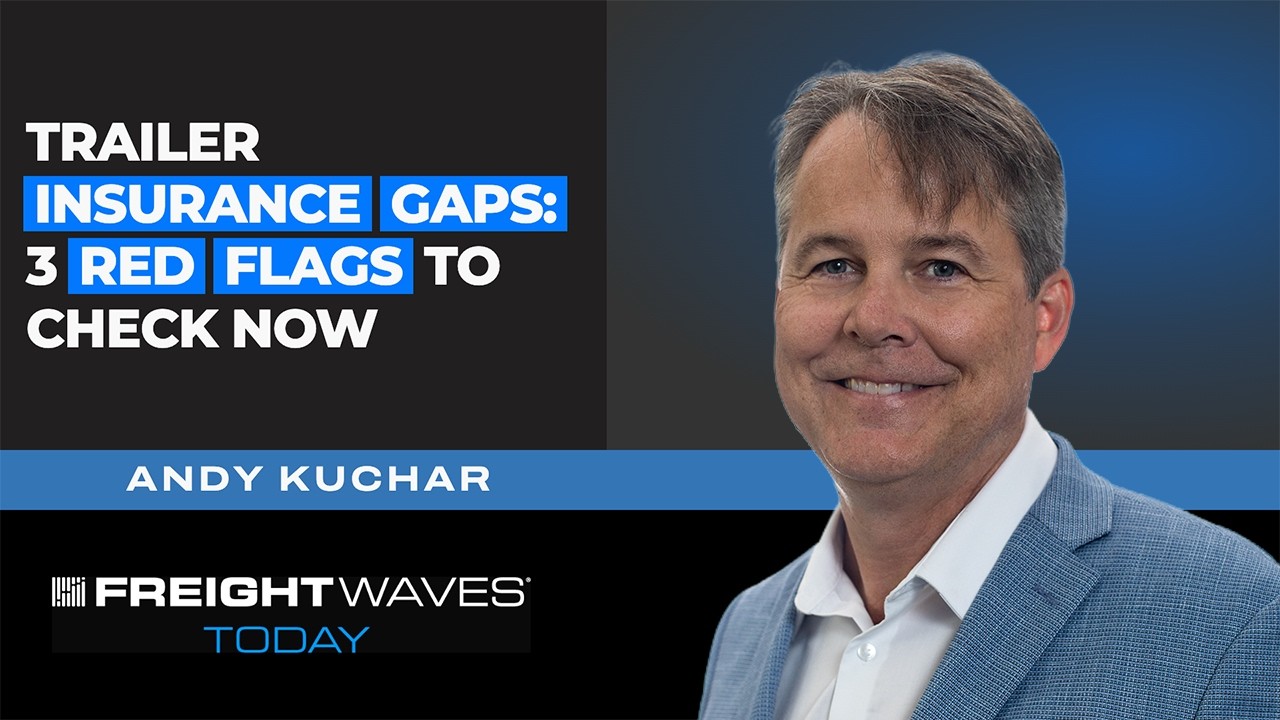 ▶ ▶ |
Trailer Insurance Gaps: 3 Red Flags to Check NowFreightWaves breaks down the trailer insurance blind spots carriers should catch before a claim exposes them. |
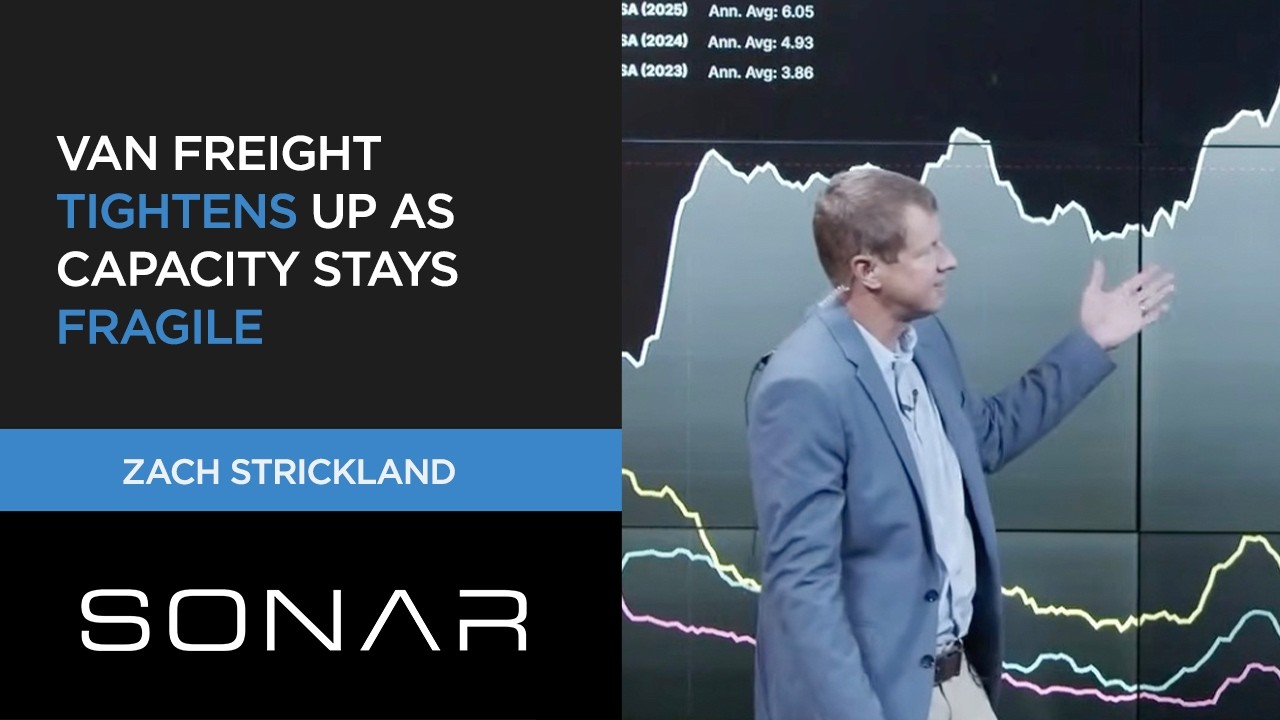 ▶ ▶ |
Van Freight Tightens Up as Capacity Stays FragileFreightWaves looks at why dry van capacity keeps tightening even as broader freight demand stays uneven. |
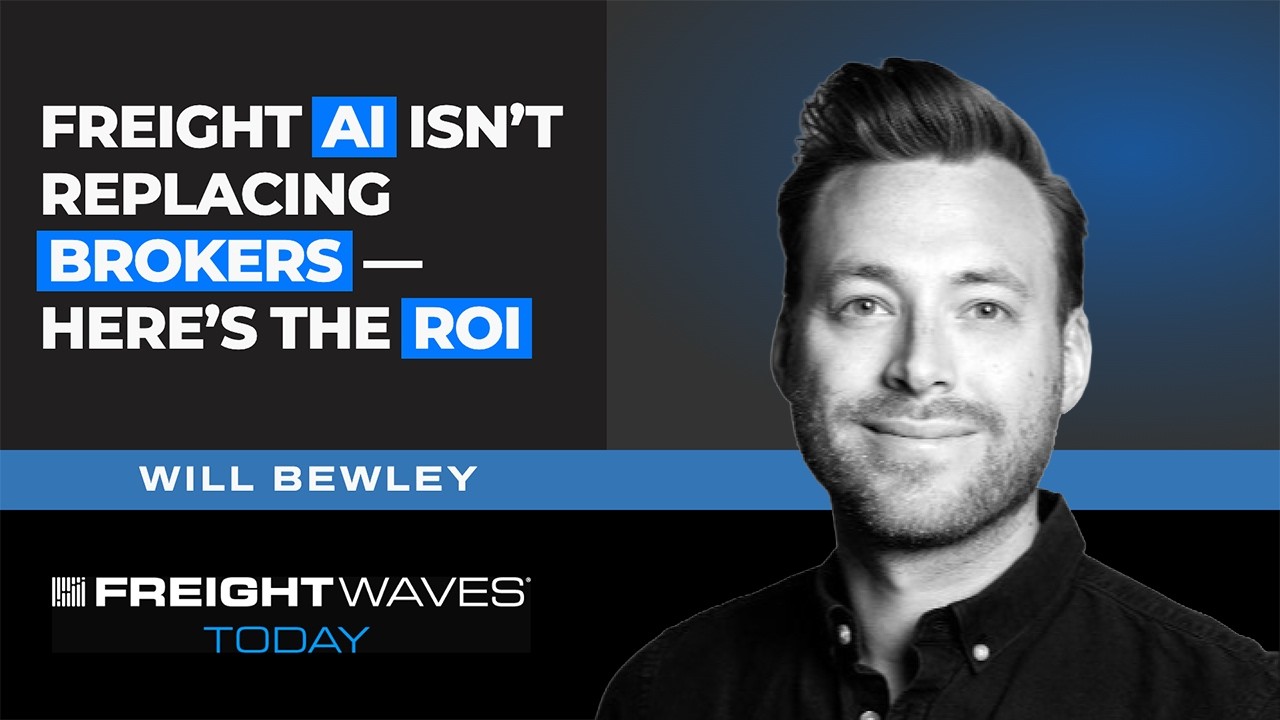 ▶ ▶ |
Freight AI Isn’t Replacing Brokers — Here’s the ROIFreightWaves examines where AI tools are actually paying off for brokers rather than replacing them. |

|
▸
|
Whether Aurora’s driverless truck economics hold past the pilot scaleAurora needs 500 trucks to break even and 7,500 to turn cash-flow positive. Watch whether insurance costs keep falling fast enough to get there on schedule. |
|
▸
|
Whether Israeli regulators clear the Hapag-Lloyd-Zim dealShareholders already approved the takeover and Hapag-Lloyd’s CEO visited Israel this week. Watch whether the revised vessel and ownership terms are enough to get government sign-off before the late-2026 target. |
|
▸
|
Whether carriers update per diem programs before Oct. 1The High-Low Substantiation rates rise while the transportation-specific rate holds flat. Watch whether fleets running the wrong method catch the mismatch before the new fiscal year starts. |
