Freight on Trial, AI Slop, Klarna’s Scorecard & the Times Square Circus
From Supreme Court broker risk to Turvo’s swivel-chair warning, OneRail on last mile resilience, and Klarna’s sustainability model—what actually holds when systems strain.
Welcome to this week’s Supply Chain Radar, where safety bills spark legal firestorms, flexibility replaces forecasts, and AI finally gets called out for making trucks look… European. ⚖️🚛🤖🧟
From broker liability heading toward the Supreme Court to freight leaders designing for breakage instead of balance, plus Times Square’s logistics circus, and Klarna’s sustainability scorecard—this week is about what actually holds when systems strain.
👉 Scroll on for policy friction, adaptable freight, and this week’s Egg-O-Meter check-in. 🥚📊
What’s Your Take: Broker Safety Bill ⁉️
Transportation attorney Matthew Leffler argues the Patrick and Barbara Kowalski Freight Brokers Safety Act aims to improve highway safety but risks crippling freight markets. By broadly penalizing brokers for carriers’ past DOT violations, the bill could raise costs, sideline small carriers, and spark regulatory chaos, all without meaningfully improving safety. With broker liability already before the Supreme Court of the United States, Leffler says lawmakers should rethink the approach.
Logistics expert Sean Wu recently explained that freight winners in 2026 will design for adaptability, not predictability, as tariffs, labor gaps, and volatile capacity reshape networks. Blending contract and on-demand freight, empowering faster decisions, and leaning on tech-enabled capacity matching will outperform rate squeezing. Resilience now means optionality, and those who build it will move faster when things break.
Bad AI visuals are quietly wrecking supply chain credibility. The post breaks down common ImageGen failures, like wrong truck types, generic cartoon styles, broken infographics and logo mishaps, and explains how smarter, human-led oversight turns AI from brand risk into brand asset. Used responsibly, AI can build trust instead of slop.
Manifest 2026 (Feb. 9–11, Las Vegas) is set to bring thousands of logistics leaders under one roof—and standing out will be harder than ever. As the event’s official media partner, Pesti Group is helping brands cut through the chaos with targeted PR, content, and lead-gen strategies designed for real ROI, not booth selfies.
Bouncing between tabs isn’t just annoying, it’s a hidden productivity tax. In a recent breakdown from Turvo, Madjid Kouider explains how the “swivel-chair” effect slows teams, increases errors, and delays ROI. Kouider argues ease of use is the real competitive edge, driving faster adoption, real-time collaboration, and a true single source of truth across logistics networks.
Pesti Group isn’t guessing from the sidelines; we’ve lived the late-night calls, deadline chaos, and market whiplash that define global supply chains. That’s why we know which stories stall and which ones move markets.
Our edge isn’t a playbook; it’s earned trust, hard-won relationships, and industry instinct.
On The Backroom, retail strategist Doug Stephens joins Retail Dive to unpack what 2026 holds for an industry navigating AI anxiety, economic uncertainty, and shifting consumer trust. With shoppers wary of AI and supportive of regulation, Stephens argues retailers’ tech decisions won’t just shape business outcomes; they could influence society itself. In retail’s next chapter, trust may be the ultimate differentiator.
The Quiet Tech Revolution You’re Probably Missing 💻
Forget the hype cycles, the real breakthroughs are happening quietly. This piece from Petra Trubačová and Semantic Visions spotlights five under-the-radar shifts already reshaping the world, from “physical AI” optimizing freight trains and cruise ships to drones scaling by the millions, quantum-safe security going mainstream, and AI agents becoming actual teammates.
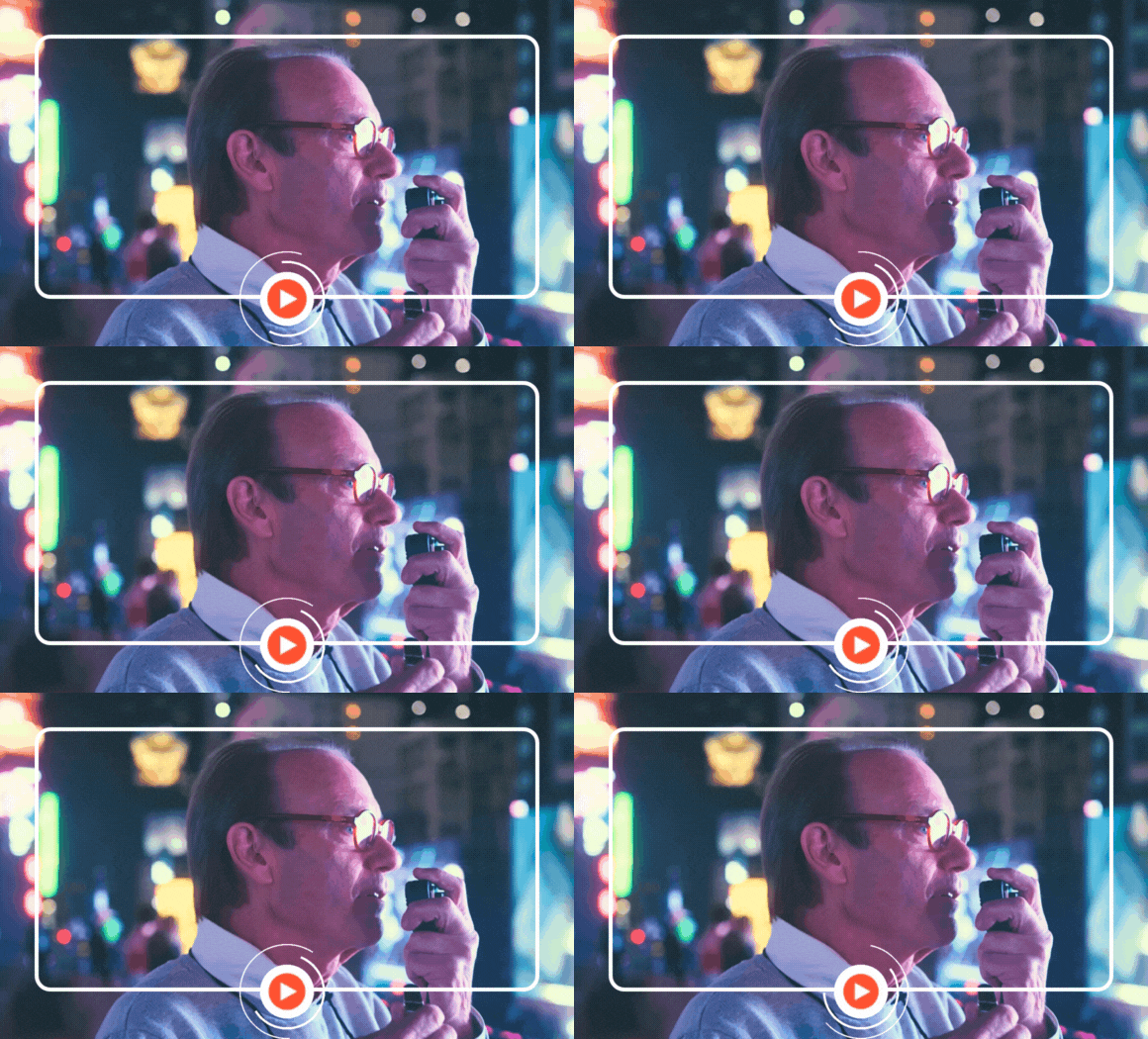
Behind Times Square’s iconic New Year’s Eve is a logistics feat worthy of a mega-event playbook: a 12,000-pound Waterford Crystal ball, 90,000 attendees (with zero bathrooms), 7,000 police officers, celebrity coordination without transport, and a 235-person sanitation crew that cleans it all before sunrise. It’s crowd control, security, sponsorships, and cleanup at extreme scale.
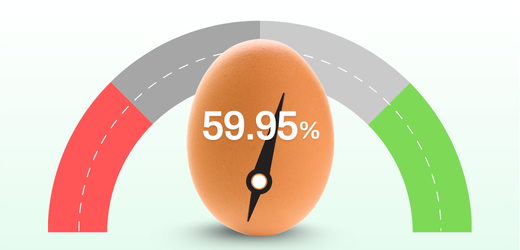
Here’s the scoop on the SCR Egg-O-Meter: It’s a brand-new rating tool that checks out what the media said about business and supply chain execs in the past 30 days and scores them based on the tonality of mentions from a natural language processing algorithm.
The “Egg-o-Meter” is like a quirky kitchen gadget for measuring how well a supply chain leader can cook up success. It cracks open key traits—like adaptability, collaboration, and innovation—and scrambles them into a perfect leadership recipe. The goal? To avoid being a hard-boiled traditionalist or a runny risk-taker. It’s all about being the ideal sunny-side-up mix to lead teams through the ever-changing heat of the supply chain kitchen! 🍳📦
Salah Said, Head of Sustainability at Klarna – 59.95%
Under the leadership of Salah Said, Klarna has emerged as a quiet but serious force in supply chain sustainability—proving that fintech can shape physical-world outcomes as powerfully as heavy industry.
Said, who brings more than a decade of experience across nonprofits, social enterprises, and major European corporations, joined Klarna to drive change from the inside out. His philosophy is clear:sustainabilityonly works when it’s embedded into everyday business decisions, not treated as a side initiative or marketing layer.
At Klarna, that mindset has translated into concrete action. The company has committed to reaching net zero emissions across its value chain by 2040, with targets validated by the Science Based Targets initiative. One of its most distinctive tools is an internal carbon fee applied across Scope 1, 2, and 3 emissions. Since 2021, that program has generated $7 million for Klarna’s Climate Transformation Fund, supporting durable carbon removal, nature restoration, and decarbonization projects—going well beyond traditional offsetting.
Supply chain visibility and accountability are central to the strategy. Klarna employees can track emissions at the department and vendor level through internal dashboards, reinforcing shared responsibility across procurement and operations. On the consumer side, tools like Klarna’s CO₂e Emissions Tracker—now used by more than 7 million customers—help influence purchasing behavior and spotlight retail partners offering circular and resale options.
For Said, collaboration is the real accelerant. He views partnerships with nonprofits, technology providers, and peers not as a competitive threat, but as a necessity for scaling impact across complex global supply chains. Klarna’s recent Net Zero Awardunderscores that approach: sustainability built into systems, financed creatively, and driven by action—not talk.
In an industry where ESG often stops at disclosure, Klarna’s model shows what happens when sustainability is treated as infrastructure.
👇Check out this interview with Said on his sustainability considerations
.png?width=1196&upscale=true&name=Header-Image-SCR%20(1).png)