Waabi highlights direct-to-customer model and street driving capabilities
|
|
|
Editor’s Note:
Truck Tech will return in January—on Friday, Jan. 2, to be exact. The week of Christmas is hit or miss in terms of news, but I plan to publish some articles next week as my Christmas gift to you.
It’s hard to believe it’s been nearly one year since I took over the Truck Tech newsletter and reporting beat. I started at FreightWaves as a market analyst, learned podcasting and sponsored content, and now I’ve learned how to become a writer.
I once read somewhere that you never feel like a real writer until someone else says you are one. I’m lucky to report that someone this year called me a writer, so it’s official. I want to thank you, the reader, for joining me on this journey. And we’re just getting started.
I also want to give special thanks to Alan Adler—not only for giving me so many introductions, but also for always being available for any questions I have while learning the ropes.
Here are some previews and my notes that will be the foundation for those articles.
|
|
|
Autonomous trucking may soon strike gold in the Golden State
|
(Photo: Thomas Wasson/FreightWaves)
|
I wrote a small blurb last week that a California ban on heavy-duty autonomous vehicles may soon be lifted, according to a recent proposal by the California Department of Motor Vehicles to revise its regulations. The comment period has ended, and I caught up with Earl Adams, former chief counsel of the Federal Motor Carrier Safety Administration and now vice president of policy and regulatory affairs at PlusAI. I wanted to find out if California was late to the autonomous party or if it was taking its time.
The first thing is clarification: Adams noted that California did not ban all autonomous vehicles, just heavy-duty ones. Passenger and light-duty vehicles were not affected—hence why there are so many Waymos zooming around Los Angeles and San Francisco.
The second thing is California and its unique regulatory framework. If you are familiar with the California Air Resources Board and the various other standards, one could imagine that California would also want to go above and beyond the existing federal autonomous vehicle guidelines. Compared with states like Texas and Arizona, which rely on existing federal standards for baseline safety, California wants to lead the field for this emerging technology.
Imagine it like a race. In lieu of a unified federal framework, the states are creating their own additions to sit on top of the existing safety standards. Things like safety thresholds, permit requirements and first-responder plans are among the issues that both autonomous vehicle companies and regulators want to hash out.
Third, this rulemaking is coming from the California Department of Motor Vehicles, not Gov. Gavin Newsom. There’s always a political element, and there have been numerous examples of lawmakers attempting to ban autonomous vehicles in the state. Organized labor like the Teamsters is also up in arms about the potential rule change. I was on a panel on SiriusXM’s Road Dog Trucking with a Teamsters California leader, who is not for autonomous trucks. They also don’t appear happy with Gov. Newsom, after they had earlier helped him out when he was dealing with a voter recall that failed back in 2021.
I’ll dive deeper into my interview with Earl next week, but for now there are a few pieces to ponder.
|
Waabi highlights direct-to-customer model and street driving capabilities
|
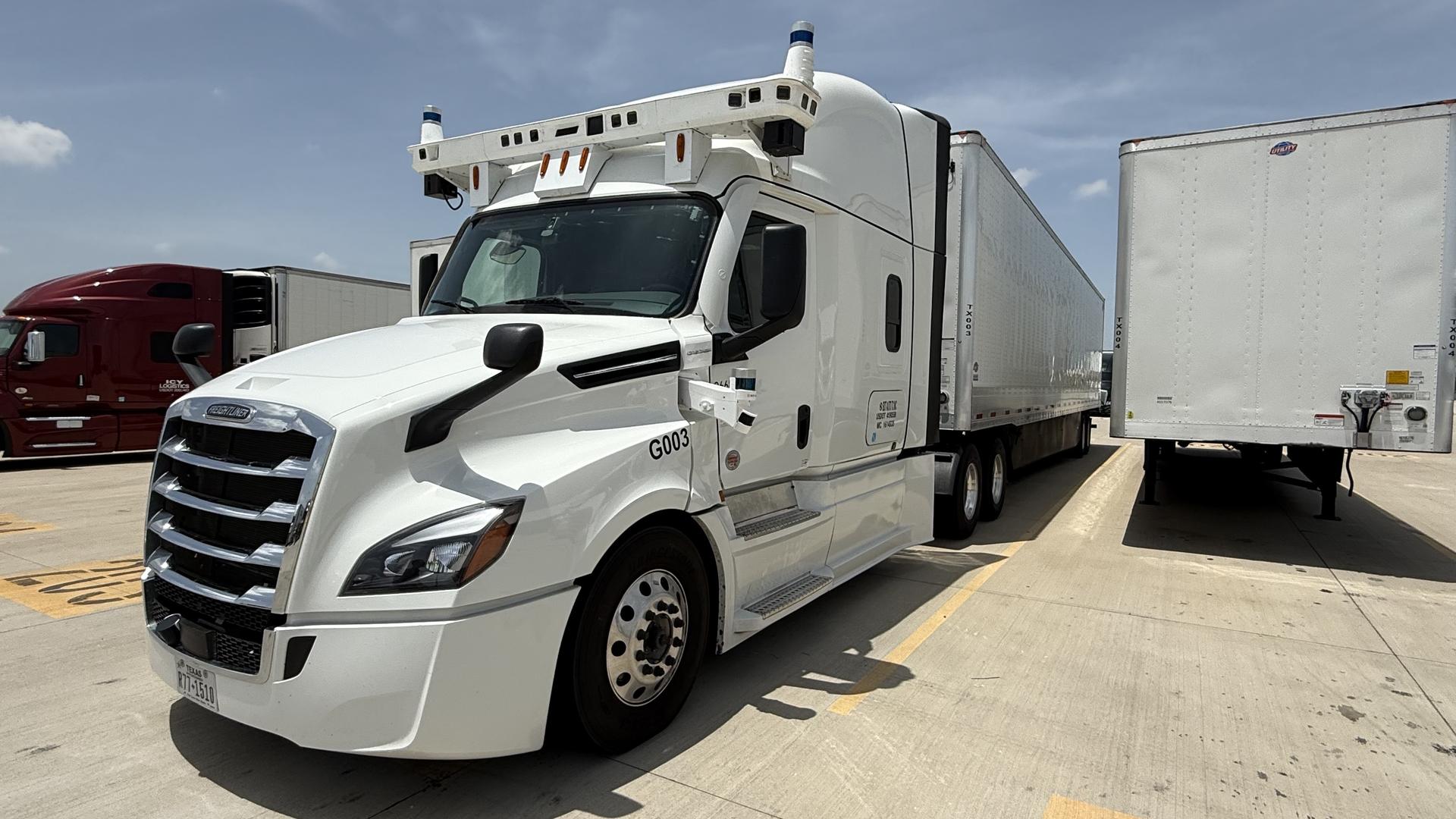
Waabi recently released a blog post about its recent business updates and how its autonomous trucks are quite literally “taking it to the streets.” It’s less an advocacy pun and more like a competitive advantage, as autonomous big rigs prefer highways, like their human drivers.
I caught up with Lior Ron, former Uber Freight CEO who became Waabi’s chief operating officer back in August. Since then, Waabi has been busy, gearing up for a commercialization push while refining its virtual driver.
One thing Ron mentioned is the differing strategies among autonomous trucking tech companies. While some providers are focusing on a sprint for fully driverless operations, Waabi believes that the better strategy is to have the fully redundant platform ready but only remove the driver after close coordination with the OEM. At the moment, I don’t know if there is a single OEM that is comfortable with totally driverless runs. You can do it with your own rig, but if you’re partnered with an OEM, it does come with strings. I’ll have to expand on this idea in a later piece, after I speak with a Texas lawyer about product liability and how that relates to autonomous vehicles.
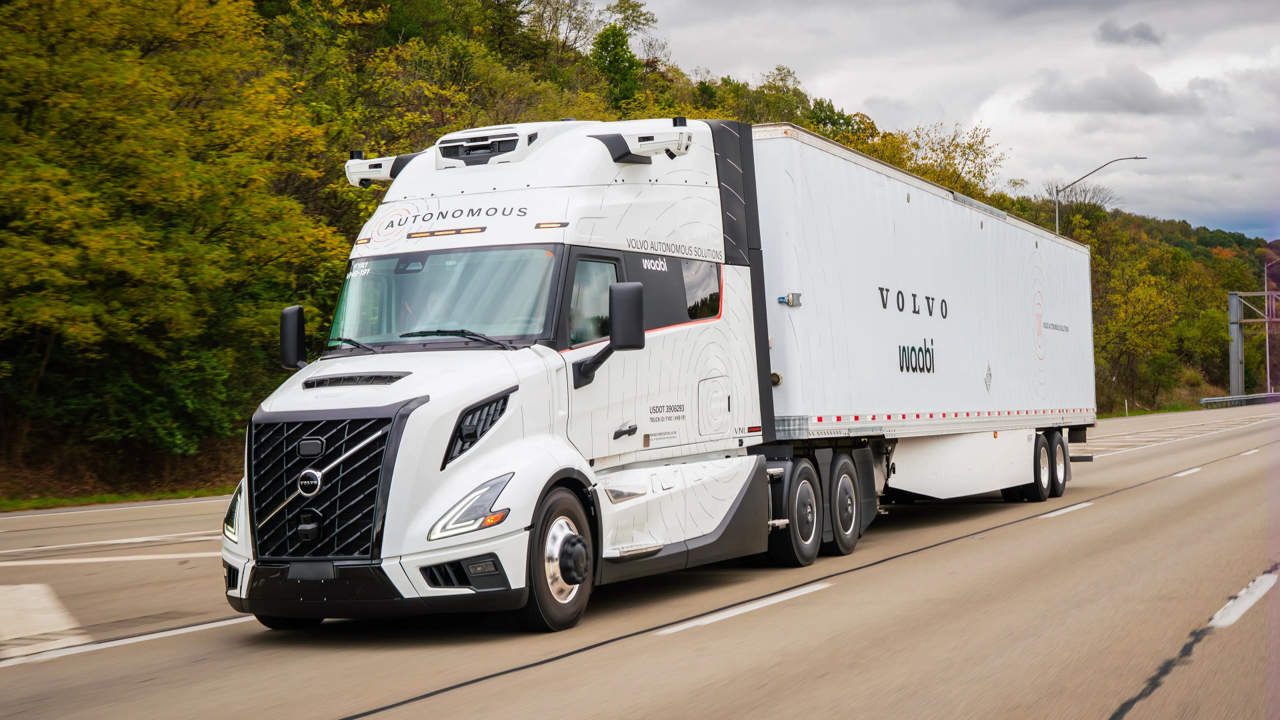
Waabi’s initial commercialization deployment will be with Volvo, its primary OEM partner. Volvo Autonomous Solutions, which is also an autonomous trucking company, will be handling the fleet operations aspect. For Waabi, the outsourcing model has benefits, allowing customers later the ability to manage the assets themselves while hiring the Waabi driver as their virtual driver.
We also dove into the great debate between autonomous point-to-point or a hub-and-spoke method. I have heard both arguments, but the hub-and-spoke method—similar to less-than-truckload—seemed to be the most in-vogue option on how to handle autonomous fleet operations.
For Ron, he believes its breakthrough in surface-street driving will give it a leg up. Customers like facility-to-facility without the hassle of the dray-like handoffs between first- and last-mile vendors. It’s also a pain to calculate how everyone gets paid. Keep an eye out on this, as this conversation should pick up steam in the coming year.
|
Quantum Systems acquires FERNRIDE
|
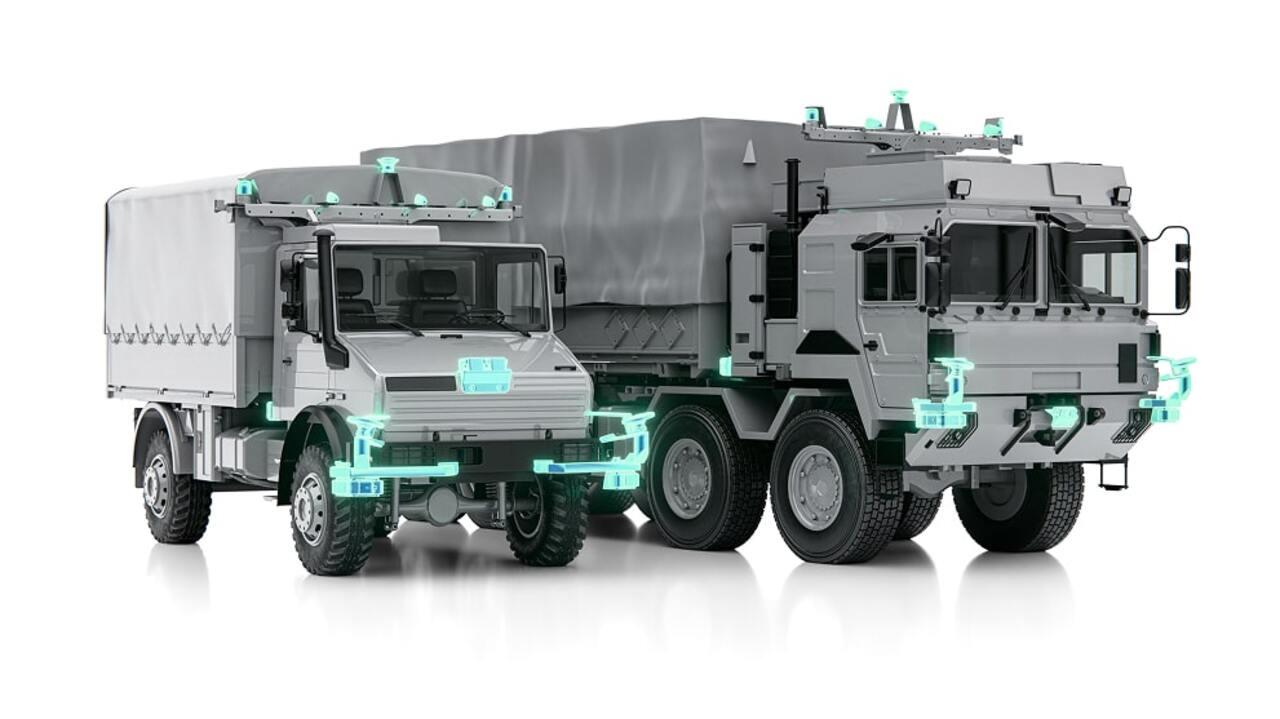
Fernride, which was the first European company to operate autonomous terminal tractors without safety drivers while generating commercial revenue, has been acquired by Quantum Systems. Quantum Systems is known for its fully autonomous uncrewed aerial systems—or drones, for a less fancy term—and serves defense and security customers across Europe and the Americas.
While Quantum Systems has air autonomy, Fernride will complement its offerings with its ground autonomy capabilities. Fernride was the first company to obtain TÜV approval for autonomous trucks in Europe and had recently expanded into the defense sector through initial tests with the German Armed Forces.
According to the release, “Quantum Systems’ operational experience in Ukraine has demonstrated the relevance of the interaction between air and ground robotics. The integration of Fernride solutions into MOSAIC UXS, Quantum Systems’ autonomous mission software, is intended to enable multi-domain operations that improve situational awareness and decision-making.”
In layman’s terms, autonomous defense applications are going to be big business in the very near future. It costs anywhere from $71,000 to $95,000 to train an American soldier, depending on whom you ask. If you lose one in combat, it can cost anywhere from $606,000 to $750,000. Supply chains are also a weak link in the defense world, creating huge demand for autonomous solutions, especially for combat service support applications.
Fernride is not the only autonomous vehicle technology maker to also be making defense-related applications. Kodiak Robotics, now Kodiak AI, has a $50 million Defense Department contract as part of the Army’s Robotic Combat program.
Forterra is another autonomous vehicle tech maker that operates in both the commercial and defense spaces. Forterra has Defense Department contracts that include an Army contract worth $114 million to build autonomous breaching systems. Forterra recently raised a $238 million Series C earlier in November.
|
|
|
|
|
BROUGHT TO YOU BY SAMSARA
|
New report reveals how AI is helping transform driver behavior and road safety worldwide. See the Report.
|
|
|
Kodiak AI has partnered with Verizon Business for its 5G telematics and ThingSpace IoT management solutions. The announcement notes it will help enable Kodiak’s operating model and manage the massive amounts of data that its driverless trucks generate. This will also help with the company’s Assisted Autonomy capability, enabled by Verizon partner Vay Technology.
Clean Trucking reports that Rivian’s EV delivery vans will not receive new autonomous vehicle technology that was unveiled at the company’s first Autonomy and AI Day. That tech will be used for the R2 and Gen 2 R1 passenger vehicles. Nearly 14,000 Rivian EDVs currently operate in the United States, with Amazon serving as the largest customer after receiving approximately 20,000 vehicles.
Richard Bishop writes in his Substack an excellent year-end roundup on the state of truck autonomy. Bishop notes, “The year began with great expectations for autonomy in the trucking space. Twelve months later, we are left with a mishmash of driverless operation launches on public roads, while private road operations are happening and expanding.”
|
As always, thanks for watching and reading.
Thomas Wasson
twasson@firecrown.com
|
|
|
|