Factory floor, not code, now determines driverless truck timeline
|
|
|
PlusAI rolls out SuperDrive 6.0, eyes 24/7 driverless freight
|
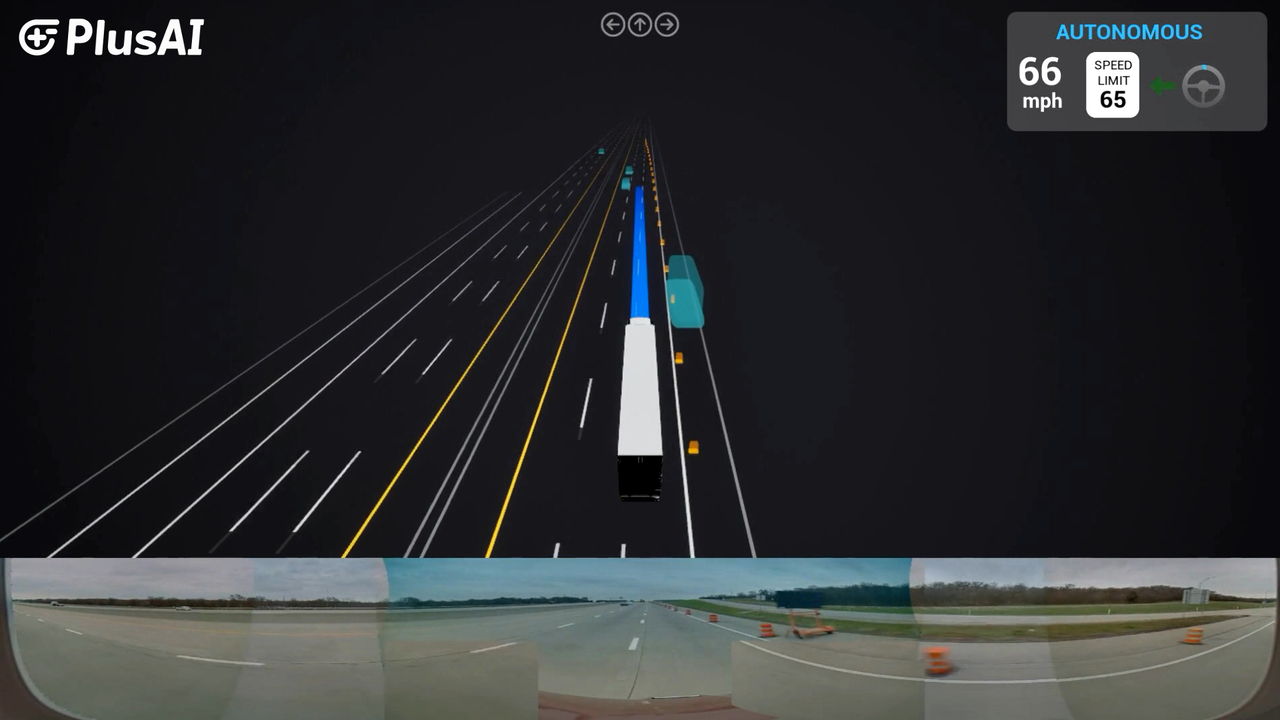
PlusAI recently launched SuperDrive 6.0, adding night driving and construction-zone handling to its autonomous trucking software — two capabilities the Santa Clara-based company says could finally unlock around-the-clock driverless freight operations.
The release is part of a broader push toward the company’s 2027 deadline for scalable, fully driverless commercial deployment using factory-built trucks. PlusAI has logged more than 7 million miles of real-world driving across the U.S., Europe and Asia to reach this point.
“SuperDrive 6.0 isn’t an incremental update; it’s a major advancement of what an autonomous ‘brain’ can do,” said David Liu, chief executive officer and co-founder of PlusAI. “By adding night driving and construction-zone handling, autonomous trucks with SuperDrive could achieve 24/7 commercial operations.”
Autonomous trucks running the new software are already hauling commercial loads in Texas. The construction-zone capability is live, with night driving slated to roll out in the coming weeks on customer routes. The operational math is straightforward: overnight 24/7 freight deliveries could potentially more than double truck utilization, according to the company.
At the technical core sits a new Transformer-based “Reflex” layer that achieves a twofold improvement in predicting trajectories of merging vehicles, pedestrians and lane-changing traffic. PlusAI also cut AI training time by a factor of 10 and slashed data-labeling costs by two-thirds through auto-labeling, imitation learning and reinforcement learning.
The company recently secured four International Organization for Standardization (ISO) certifications and is advancing toward a public listing through a business combination.
|
Factory floor, not code, now determines driverless truck timeline
|
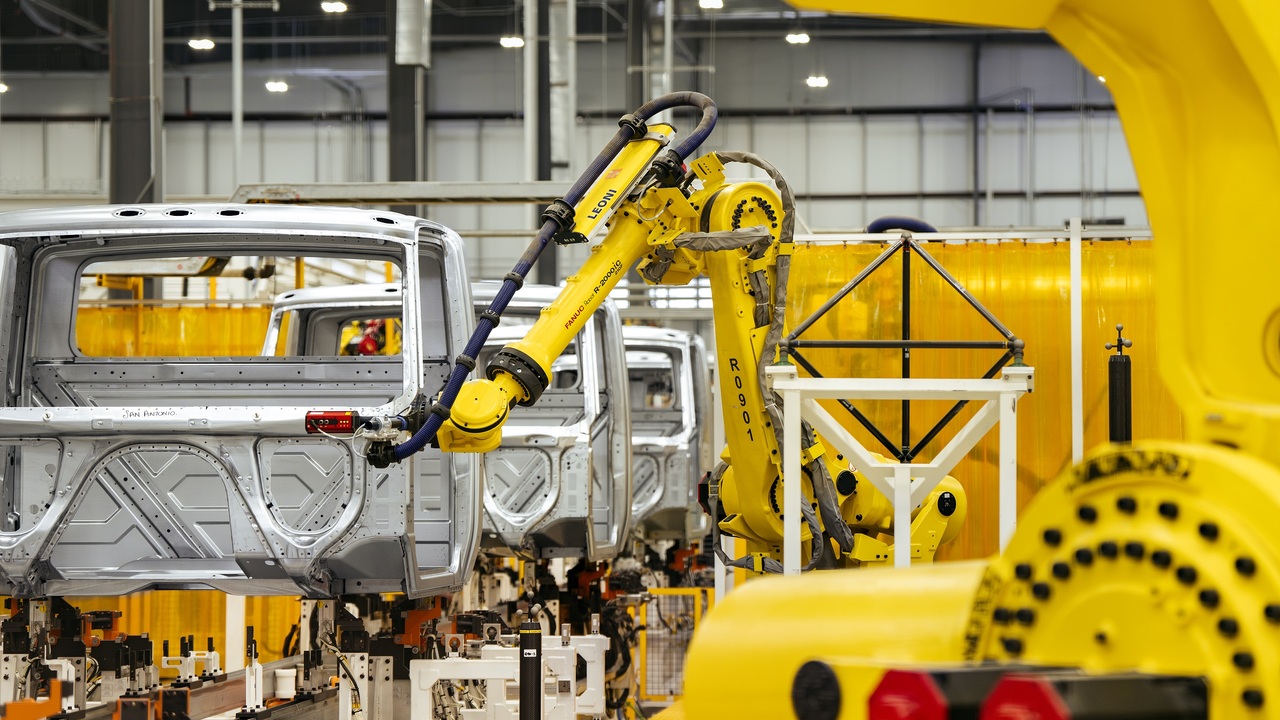
Level 4 automated driving systems for heavy-duty trucks have matured past pure development. The bottleneck now sits in manufacturing and scaling, according to new research from Telemetry.
“When you want to start to get to scale, you need a solution that is more scalable,” said Sam Abuelsamid, Telemetry’s vice president of market research. “When you’re building vehicles onesie-twosie, upfitting them, the build processes tend to be a little more artisanal. You can’t necessarily guarantee that every vehicle is going to be built exactly the same way — and that’s what you need, especially for a commercial vehicle.”
PlusAI pushed the retrofit model to its limits, outfitting a triple-digit fleet for customers including Amazon. David Liu, CEO and co-founder of PlusAI, acknowledged that retrofitting remains the fastest path to market for prototypes but cannot scale. “The quality of retrofitting is very, very hard to predict and hard to manage because every single truck is different,” Liu said.
Factory integration unlocks massive service networks. International alone has 951 dealerships that can provide maintenance — a critical advantage when fleets live and die by uptime on trucks running 100,000 miles annually.
For fleets, driver costs represent up to 40 percent of total operating expenses. Autonomous trucks can cut approximately $1 off the average $2.25 per-mile cost while running 24/7 instead of the 11-hour daily limit for human drivers. “Every single truck if you convert from a human-driven truck to an autonomous truck can provide the fleet up to four and a half times more profit,” Liu said.
PlusAI targets 2027 for removing safety drivers entirely.
Read the full article here.
|
Kodiak AI doubles driverless fleet, eyes long-haul launch by year-end
|
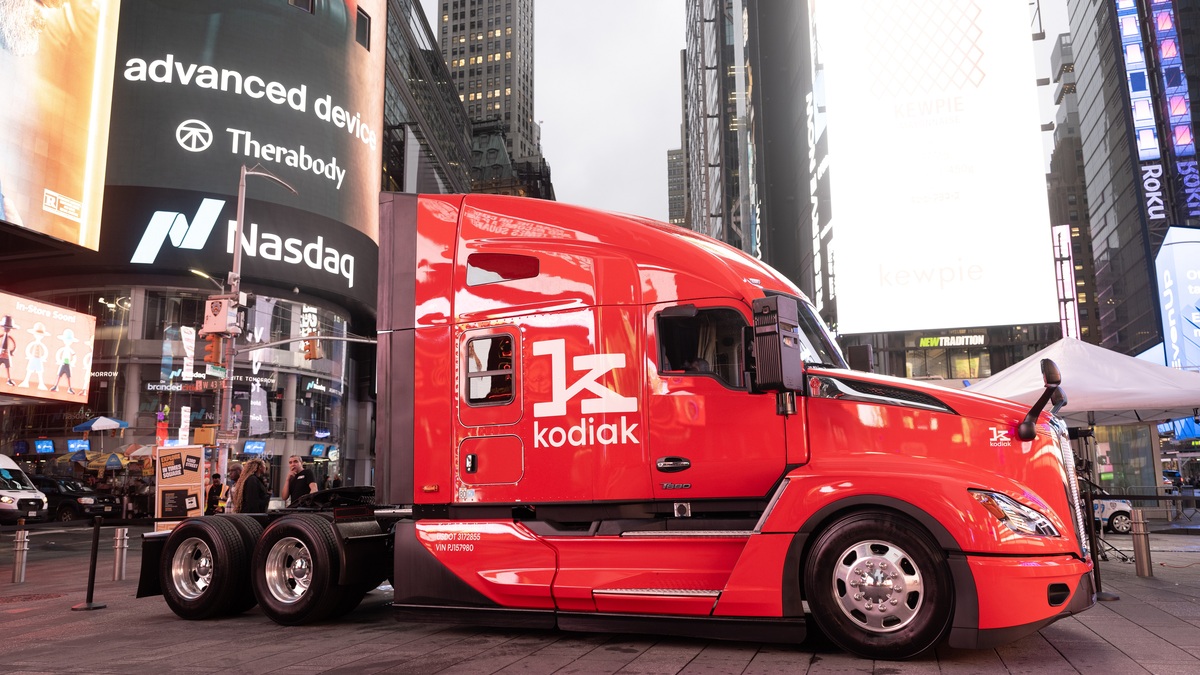
Kodiak AI Inc. closed 2025 with 20 fully driverless trucks in commercial operation — double its third-quarter count — cementing what the company calls the world’s largest deployment of customer-owned driverless trucks. The Mountain View, Calif.-based autonomous trucking firm reported fourth-quarter revenue of $1.1 million, a 37 percent jump from the prior quarter, while accumulating more than 10,700 cumulative hours of paid driverless operations.
“2025 was a transformational year for Kodiak as we executed on our operational milestones and technological roadmap,” said Don Burnette, founder and chief executive officer. “Our accomplishments were made possible by our unique physical AI, which we have commercialized safely and reliably while leveraging our manufacturing partners for scale.”
The company’s Kodiak Autonomy Readiness Measure hit 84 percent as of February 2026, tracking toward a long-haul driverless launch by the end of 2026. Kodiak also introduced triple-trailer towing capability — an industry first for autonomous tractors — and expanded routes between Dallas-Fort Worth and El Paso while launching a Fortune 500 private fleet pilot between Dallas and Houston.
Strategic partnerships advanced on multiple fronts: Atlas Energy Solutions now operates all 20 driverless trucks, Bosch signed on for next-generation redundant platform development, and Kodiak landed defense contracts with the U.S. Marine Corps.
“As we continue scaling truck deployments, driving cost efficiencies and reducing AV hardware costs, we are focused on achieving profitability and generating positive cash flow over time,” said Surajit Datta, chief financial officer. Kodiak ended the quarter with $120.7 million in cash and marketable securities after a $30 million debt refinancing.
|
|
|
NFI’s electric fleet hits 10 million miles, demonstrating zero-emission trucking scalability
|
NFI’s battery-electric drayage operation has surpassed 10 million zero-emission miles nationwide. It marks a significant milestone for one of the largest commercial deployments of Class 8 electric trucks in the country. The achievement comes through the Joint Electric Truck Scaling Initiative (JETSI), which has deployed 100 battery-electric trucks across Southern California to demonstrate that zero-emission freight can move beyond pilot programs.
A newly released “Day in the Life” video follows driver Bilal Abdul-Zahir through a typical shift hauling containers between the Ports of Los Angeles and Long Beach and distribution centers in the Inland Empire. His take on the trucks is less hype and more about practicality: “There’s a big difference when it comes to the performance. My favorite thing about driving electric trucks is that it’s smooth, it’s powerful, and at the end of the day, I don’t smell because of the exhaust.”
The Ontario, California, facility represents what NFI calls a fully integrated clean freight ecosystem—high-power charging, on-site solar and battery storage, and optimized dispatch strategies working together to keep trucks moving.
“NFI has been at the forefront of electrification from the very start. First with the Volvo LIGHTS project, and now we’ve scaled that experience through JETSI to one of the nation’s largest zero-emission fleets,” said Brian Webb, president of Port Services & Global at NFI.
NFI’s trucks are expected to offset 4,400 metric tons of greenhouse gas emissions annually. Beyond environmental impact, the operation leverages Green Lane access at the Port of Los Angeles and generates WAIRE points—tangible operational advantages that improve efficiency and compliance.
Watch the video here.
|
|
|
IN PARTNERSHIP WITH ACT EXPO
|
Connected vehicles, ADAS safety tech, autonomous advancements and software-defined vehicles drive innovation. Learn More.
|
|
|
Autonomous vehicle regulatory frameworks remain unsettled as legislation has outpaced standards for liability, operator competence and remote supervision. Many argue vehicle automation should be governed like aviation, with layered oversight. Offshore remote assistance, foreign supply chains and political risk also move faster than engineering roadmaps. (Bryan Reimer/Substack)
BYD’s new 1.5-megawatt Flash chargers deliver three times the speeds of Tesla’s V4 Superchargers. Paired with the second-generation Blade battery, vehicles can charge from 10% to 70% in five minutes. The company plans 20,000 stations by year-end, with expansion into Europe, Latin America and Asia-Pacific. (InsideEVs)
Tesla launched its first public Megacharger station in Ontario, Calif., delivering 750 kW charging for Semi customers. Located in the Inland Empire freight hub near Interstate 10 and Interstate 15, the site supports routes between the Ports of Los Angeles and Long Beach and inland distribution centers. (Clean Trucking)
Workhorse Group’s fleet of more than 1,100 electric trucks, buses and shuttles has surpassed 20 million miles, displacing 2.3 million gallons of fuel and preventing 45 million pounds of CO2 emissions. Ten of North America’s largest medium-duty fleets now deploy Workhorse vehicles. (Workhorse Group)
|
As always, thanks for watching and reading.
Thomas Wasson
twasson@firecrown.com
|
|
|
|