Greenlane raises the bar on commercial EV charging security
|
|
|
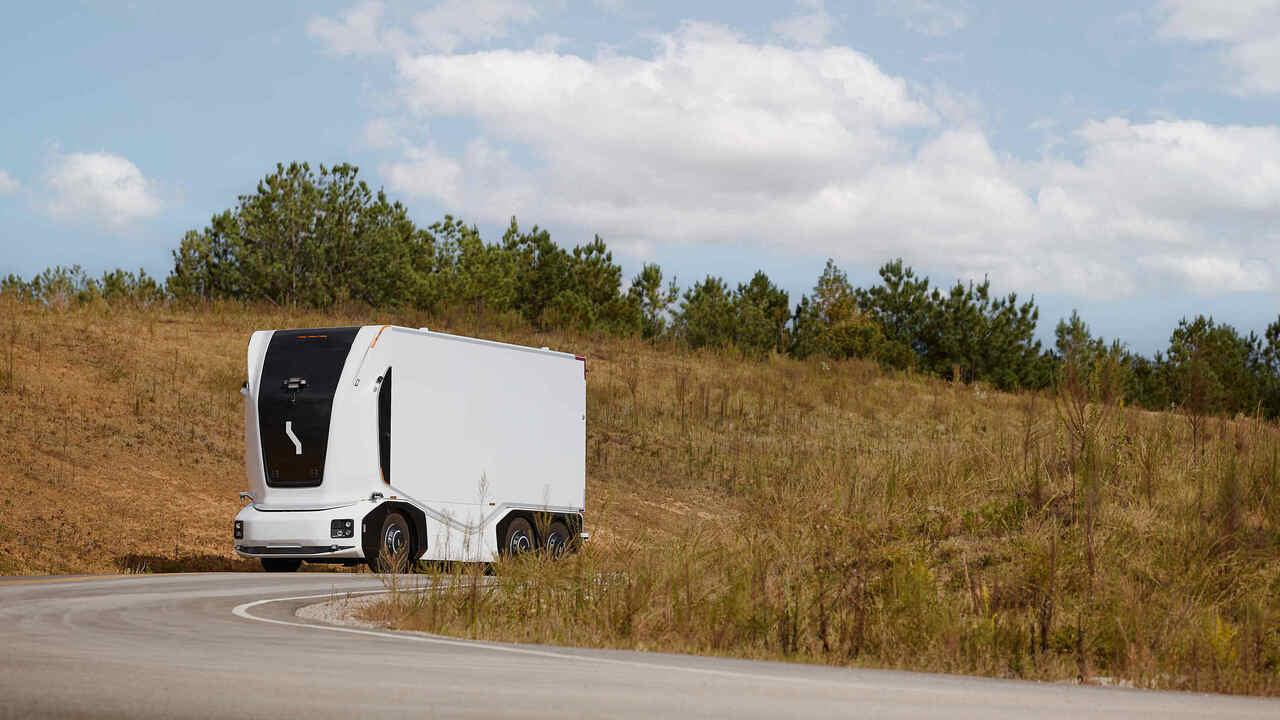
Einride Lands First Autonomous Freight Corridor Deal in Texas
|
Einride has signed a memorandum of understanding with SH 130 Concession Company to establish the 41-mile toll road connecting Austin and San Antonio as the preferred corridor for autonomous freight operations in Texas.
The Swedish technology company becomes the first autonomous truck operator to partner with SH 130 Concession Company on this initiative. The collaboration will create an infrastructure-ready testbed for Einride’s purpose-built, cab-less autonomous freight vehicles on segments 5 and 6 of the corridor, including integration with adjacent frontage roads to enable first- and last-mile connectivity.
“This partnership with SH 130 Concession Company marks an important step forward in proving the scalability and economic benefits of electric and autonomous freight,” said Roozbeh Charli, chief executive officer of Einride. “By establishing this testbed, Einride is further cementing Austin, Texas, as a hub for our American autonomous freight operations.”
SH 130 Concession Company manages the southern section of the toll road that serves as a reliable alternative to I-35, the main U.S. freight artery connecting Mexico to Canada.
“We’re actively working with freight customers, industry partners and TxDOT to implement new technology solutions,” said Ananth Prasad, CEO of SH 130 Concession Company.
The partnership extends beyond testing. Both companies plan to draft a blueprint for a next-generation rest stop designed for electric autonomous trucks, incorporating high-capacity EV charging and specialized docking requirements. They will also explore integrating Einride’s Saga AI optimization software with SH 130’s digital ecosystem.
Einride operates one of the world’s largest electric heavy-duty fleets with approximately $65 million in expected annual recurring revenue from signed contracts. The company anticipates completing its NYSE listing through a business combination with Legato Merger Corp. III in the first half of 2026.
|
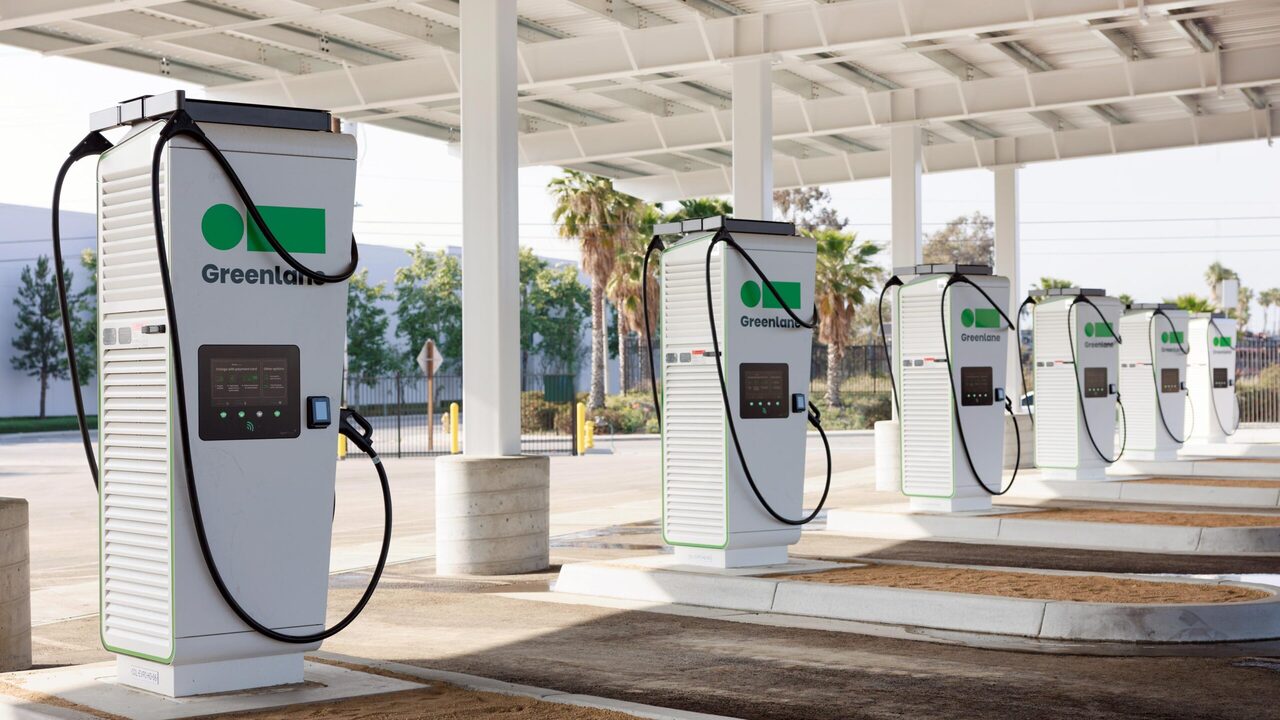
Greenlane Raises the Bar on Commercial EV Charging Security
|
Greenlane has completed its System and Organization Controls (SOC) 2 Type 2 examination, establishing what the company calls a new security benchmark for commercial electric vehicle charging infrastructure. The independent audit, conducted by Minneapolis-based Boulay PLLP, verified that Greenlane’s security controls operated effectively from Dec. 1, 2024, through Nov. 30, 2025 — a nearly yearlong evaluation period that goes well beyond point-in-time assessments.
The examination covered Greenlane’s entire fleet charging software-as-a-service platform, including the Greenlane Fleet Portal, Greenlane Driver App and Greenlane OnRamp APIs. The company’s Greenlane Edge subscription manages sensitive fleet data including charging history, billing information, vehicle telematics integrations and reservation activity for medium- and heavy-duty electric fleets.
“When fleet operators integrate with our platform, they’re trusting us with data that is central to how their business runs,” said Raj Jhaveri, Greenlane’s chief technology officer. “The SOC 2 Type 2 examination gave us the opportunity to validate every layer of our security architecture against an independent, rigorous standard.”
Greenlane’s security commitment extends beyond the digital realm. Physical sites feature gated access-controlled entrances, 24-hour security staffing, site-wide cameras and full-time hosts trained in first aid. Safety equipment sits at every charging lane.
“Commercial EV charging creates a complex data environment that demands rigorous security standards,” said CEO Patrick Macdonald-King. “We believe this level of rigor should be the norm in commercial EV charging, and we intend to lead by example.”
|
Toyota Joins Daimler and Volvo in Fuel Cell Joint Venture
|
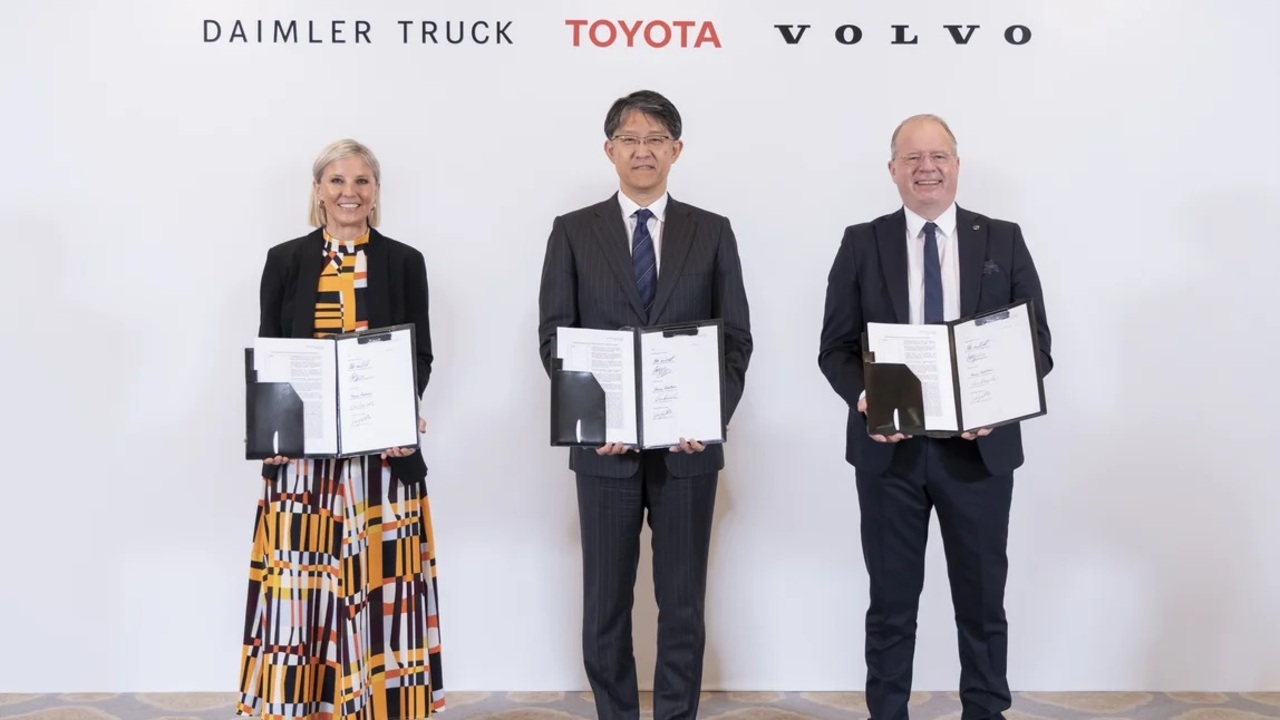
The world’s largest automaker is throwing its weight behind heavy-duty hydrogen. Daimler Truck AG, the Volvo Group and Toyota Motor Corp. signed a nonbinding memorandum of understanding on March 31 that would make Toyota an equal shareholder in cellcentric, the fuel cell joint venture Daimler and Volvo launched in 2021.
The deal combines Daimler and Volvo’s commercial vehicle expertise with Toyota’s three decades of fuel cell development. Together, the partners aim to position cellcentric as a global leader in fuel cell systems for heavy-duty on- and off-road transport, targeting the scale and investment efficiency needed to compete with traditional diesel powertrains.
“Joining forces with the world’s largest automotive manufacturer and fuel cell pioneer is a privilege for us — and a game changer in making hydrogen in transportation a reality,” said Andreas Gorbach, Daimler Truck board member responsible for truck technology.
Martin Lundstedt, president and CEO of the Volvo Group, said the collaboration “can accelerate and create critical mass for hydrogen applications.” Koji Sato, president and CEO of Toyota, added that combining strengths “can deliver one of the world-leading fuel cell systems for heavy commercial vehicles.”
Toyota will participate through a capital increase to reach equal ownership. The joint venture will remain independent, serving customers across trucking and stationary applications while the three parent companies compete in all other areas. The agreement remains nonbinding, pending board and regulatory approvals. Cellcentric currently employs more than 560 people and holds roughly 700 patents.
|
|
|
IN PARTNERSHIP WITH ACT EXPO
|
Connected vehicles, ADAS safety tech, autonomous advancements and software-defined vehicles drive innovation. Learn More.
|
|
|
When a grass fire shut down California’s I-280 last August, a Waymo robotaxi couldn’t follow CHP officers’ instructions to turn around. The company called 911, and an officer manually drove it to safety. TechCrunch identified at least six similar incidents where first responders took control of stalled robotaxis during emergencies. (TechCrunch)
Uber Technologies, Pony AI Inc. and Verne have partnered to deploy Europe’s first commercial robotaxi service in Zagreb, Croatia. Public-road validation is underway using Pony.ai’s Gen-7 autonomous driving system on the Arcfox Alpha T5. The companies plan to scale to thousands of vehicles across additional markets. (Uber)
Pacific Gas and Electric Company (PG&E) aims to electrify 3,800 vehicles by 2030 and nearly 10,000 by the 2040s. The industry sits in what John Stahlbusch, vice president of public and EV fleet charging at ABB E-mobility, calls the “messy middle.” The vehicles work. Infrastructure and grid capacity are still playing catch-up. (Clean Trucking)
BYD’s ‘God’s Eye’ autonomous system is under fire after drivers reported safety lapses like unintended acceleration and ‘ghost’ steering in the Yangwang U8. Standard on over 2.5 million vehicles, software glitches persist despite hardware scale. The issues coincide with a 36% sales plunge, prompting promised updates from the EV giant. (Automotive News Europe)
|
As always, thanks for watching and reading.
Thomas Wasson
twasson@firecrown.com
|
|
|
|