Welcome back, logistics legends. This week feels like a high-stakes game of Risk played on a spinning treadmill. We have tankers idling in the Middle East, Amazon playing Monopoly in the Pacific Northwest, and Google trying to out-muscle Nvidia in the AI arms race. It’s a lot to digest, but don’t worry…we’ve distilled the chaos into bite-sized brilliance so you can stay ahead of the curve. Grab a double espresso; things are moving fast.
Hormuz: The World’s Most Expensive Parking Lot
The Strait of Hormuz is currently sporting a ‘Closed’ sign as the US-Iran standoff reaches a fever pitch. With traffic at a near-complete halt, the global energy supply is essentially holding its breath. This isn’t just about rising fuel surcharges; it’s a systemic shock to global transit times. If you thought the Red Sea was a headache, Hormuz is a full-blown migraine. Shippers are scrambling for contingency routes that don’t exist, proving once again that geography is the one thing supply chain managers can’t optimize away.
Energy volatility is back. Review your fuel hedge positions and prepare for ripple effects across all transport modes.
Think AI is coming for your job? Think bigger. It’s coming for your entire organizational structure. The real threat isn’t a robot sitting in your chair; it’s death by a thousand pilots where companies automate bad processes instead of fixing them. AI will kill organizations that refuse to evolve their culture to match their tech. If you’re just layering LLMs over 1990s-era silos, you’re just making mistakes faster. The winners won’t be the ones with the most tools, but the ones with the cleanest data.
Stop chasing shiny objects. Focus on data hygiene and cross-functional integration before plugging in the algorithms.
Amazon just dropped a record-breaking bag of cash to snag Ashley Furniture’s logistics hub near Seattle. While everyone else is worried about high interest rates and right-sizing their footprint, Jeff’s crew is doubling down on the Pacific Northwest. By securing prime industrial real estate, Amazon is essentially building a moat around the last mile. This move signals that for the e-commerce giant, speed is a necessity. If you’re looking for warehouse space in Washington, prepare to pay the Amazon Tax.
Industrial real estate remains the ultimate leverage. If you can’t buy the hub, invest in tech to maximize existing square footage.
FedEx, UPS, and DHL are finally showing their cards on how they’ll handle tariff refunds, and it’s about as simple as a Rubik’s Cube in the dark. As trade wars simmer, the Big Three are detailing complex approaches to getting your money back from Uncle Sam. While it’s nice to see a path to recovery, the administrative burden is a reminder that tariffs are the gift that keeps on taking. Navigating these refund protocols requires a PhD in fine print and a lot of patience.
Don’t leave money on the table. Assign a dedicated compliance lead to audit your duty payments for bottom-line recovery.
Google just threw a massive haymaker at Nvidia by launching its latest training and inference TPUs. In the AI supremacy race, hardware is the new oil. By building custom silicon, Google is trying to decouple from the Nvidia supply chain bottleneck. For supply chain pros, this means the compute power needed for complex digital twins and global optimization might actually become affordable, and available. It’s a classic build vs. buy scenario played out on a multi-billion-dollar stage. Silicon is the new backbone of logistics strategy.
Diversification isn’t just for suppliers; it’s for your tech stack too. Monitor hardware wars to drive down processing costs.
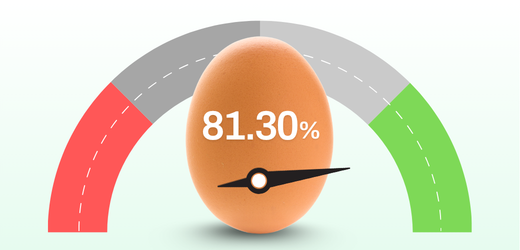
Kathy Liu is officially under the algorithm’s heat lamp, holding a firm score of 81.30%. This reflects a market that is remarkably resilient despite growing headwinds. With the Global Manufacturing PMI holding in expansion territory for eight straight months, clocking in at 51.3, the engine of global trade is still humming, even if the mechanics are getting sweatier.
Our algorithm spiked on Kathy’s latest warning: “Demand for traditional commodities is still relatively stable, but cost pressure is building across the board. With fuel surcharges rising and capacity tightening, shippers are having to plan earlier and manage costs much more carefully than before.”
The May report reveals a"Double-Whammy" Scramble:
The Air Squeeze:Middle East tensions are forcing longer flight paths, eating up fuel and "belly capacity."
The Southeast Asia Surge:Lanes out of Vietnam and Malaysia (PEN) are hitting "Backlog" status, requiring a 2-week head start just to get on the board.
We are officially in a "Seller’s Market" for space. If you aren’t booking 14 days out in Vietnam or Singapore, you’re up a creek (or an ocean) without a paddle. Follow Dimerco’s lead and pivot to "Sea-Air" or China-Europe Rail (16-24 day transit) to bypass the Hormuz headache.
.png?width=1196&upscale=true&name=Header-Image-SCR%20(1).png)