Autonomy, sensors, Teslas, and alternative energy gains take the stage
|
|
|
|
Autonomy takes center stage from long haul to yard hostlers
|
(Photo: Thomas Wasson/FreightWaves)
|
There were many booths, and as expected, the large Class 8 truck makers and their autonomous truck technology developers did not fail to deliver. I spoke with Waabi, Volvo Autonomous Solutions, Torc and Kodiak AI, but PlusAI, Aurora and others were on full display. There are two big themes I noticed based on my observations and conversations.
The first big theme is that while there is an AV battle for one virtual driver to rule market share, the device makers — from radar to cameras to lidar — are neck and neck. Original equipment manufacturers build the trucks, but the sensor array and software are the realm of the AV truck developers. It is no longer a software bottleneck. It is instead the problem of manufacturing and regulating them.
It will be worth watching as makers from MicroVision to Bosch, and even Aurora itself, work to partner with the hardware companies whose components their software will use. Right now, the hardware continues to get cheaper and more powerful, an underdiscussed reason the technology seems closer to deployment. Win a big deal, and it is a win for both the AV developer and the large companies that produce for them.
The second theme was how much commercialization took place compared with last year. There were some great panels, and everyone from yard hostlers to Class 8 tractors is making innovations. There are large multinational companies working on yard tractor automation in addition to companies turning to autonomy to handle the middle mile. MicroVision, which recently acquired assets from LiDAR maker Luminar Technologies, is notable. The company did an impressive turnaround by integrating the hardware and software in months.
There remains the question of when the OEMs will start producing in huge volumes. There are also questions about deployment. The Volvo expansion to Oklahoma City was significant, as it is — to my knowledge — the first example of a point-to-point customer trial without the need for a truck port or a local handoff.
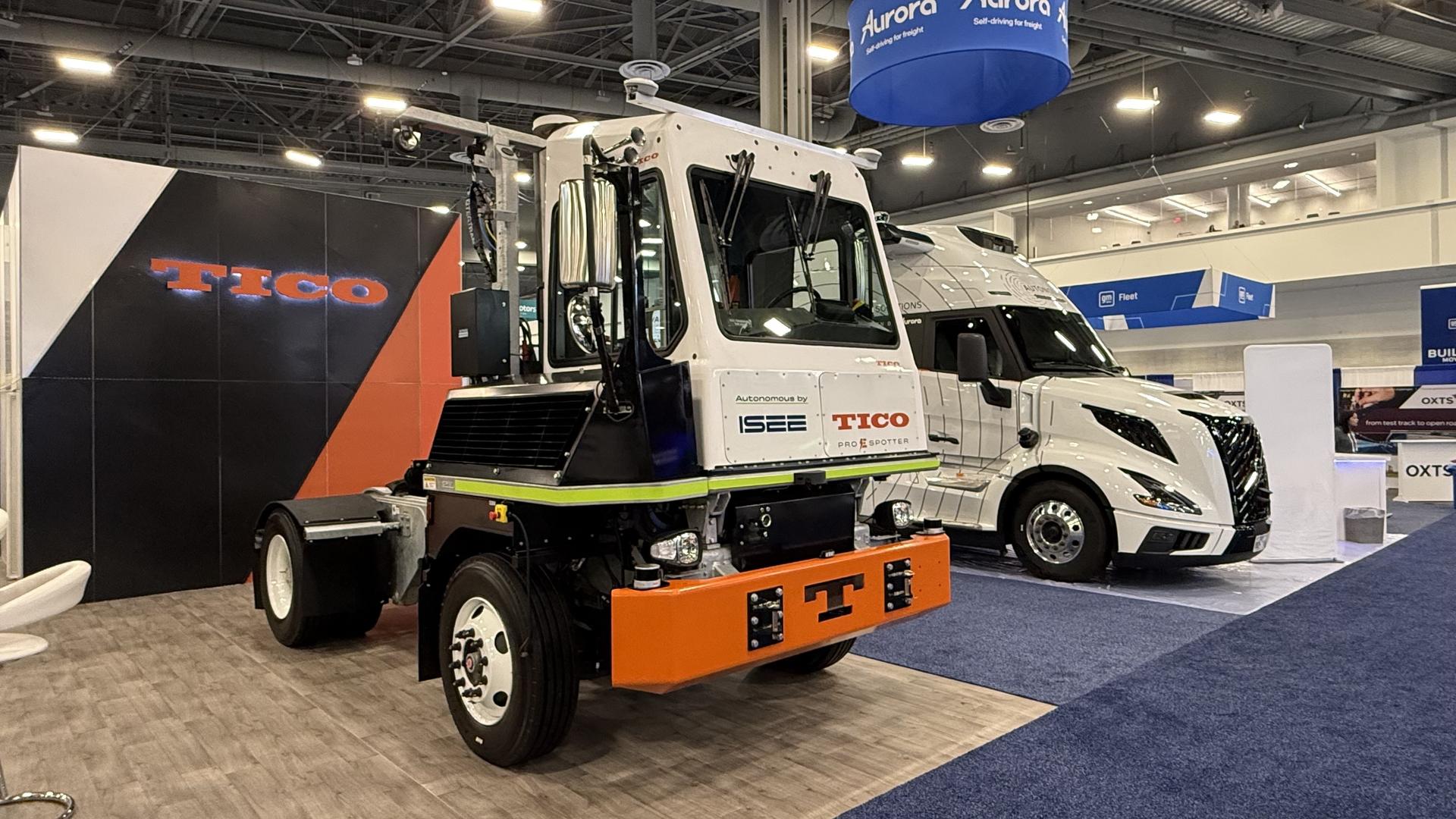
Finally, a fascinating conversation was with ISEE and its autonomous yard hostler. The company started around the 2017-2018 period and initially sought to do long-haul. It then pivoted to the yard, and it turns out there are many advantages. One: The yard is private property, so the rules of the public road are less of a burden. The second: The yard hostler can now attach airlines and back into a dock. Class 8 trucks do a great job going forward, but backing up remains a challenge.
Humans, for now, are needed to help guide the big rigs, but its smaller cousin, the yard hostler, is a few years ahead when it comes to the pesky problem of hooking and unhooking from a trailer.
|
Alternative powertrains get more limelight as battery-electric trucks recharge
|
(Photo: Thomas Wasson/FreightWaves)
|
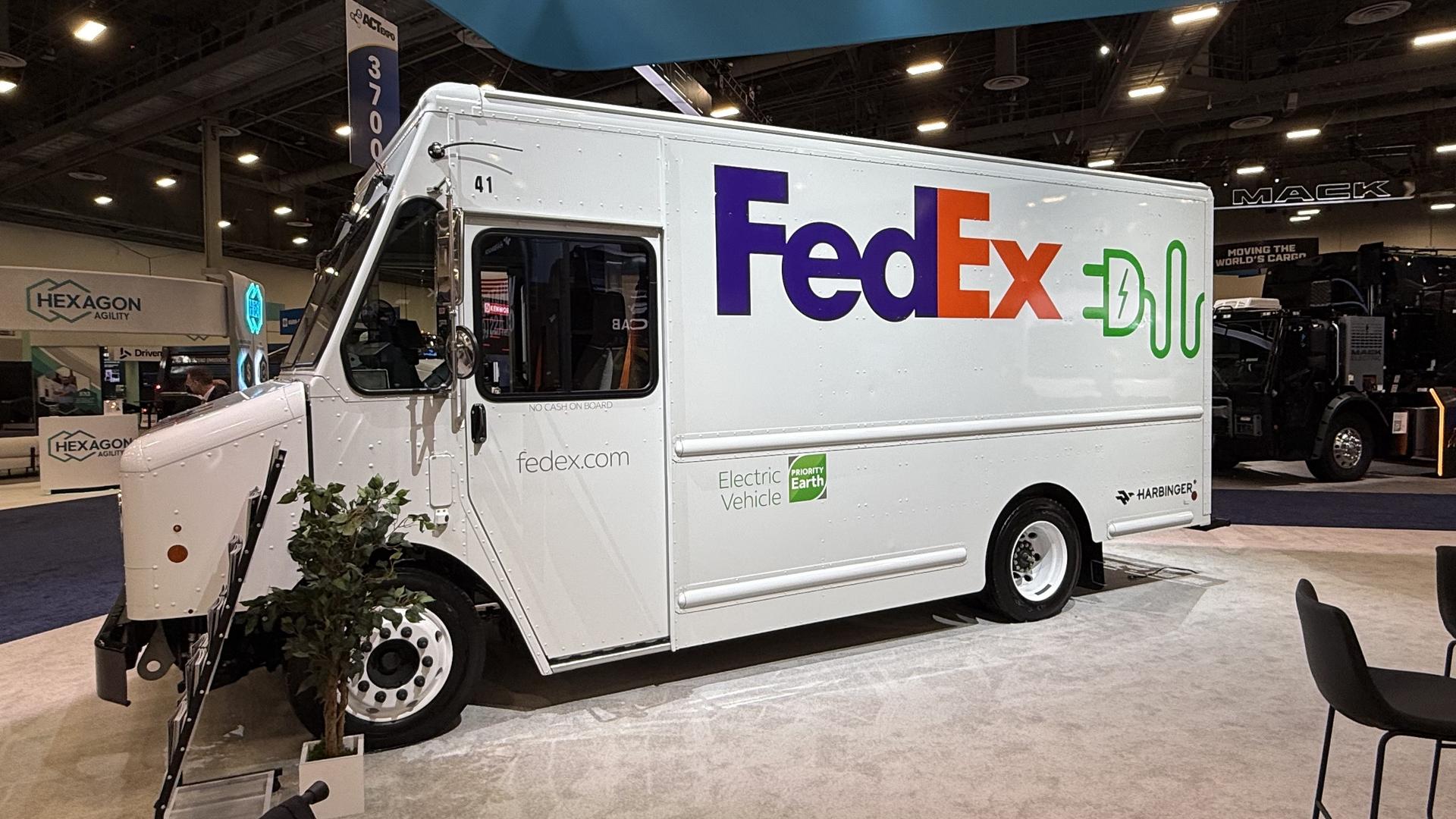
It would not be ACT Expo without alternative powertrains. I was fortunate enough to moderate a panel with Harbinger, the medium-duty electric vehicle maker that recently secured significant investment in a round co-led by FedEx and received an order from the shipping giant for dozens of its trucks.
Another Harbinger strength is that they make a great box truck chassis that happens to be electric. It has an impressive turning radius and features such as side cameras. This may not seem like much, but the box truck world is far behind in creature comforts, so drivers are turning out to be some of their most vocal fans.
I also talked with Westport Fuel Systems. They make the tanks for a compressed natural gas system that uses a delivery system in partnership with Cespira, which brings an HPDI fuel system. In layperson’s terms, they found a way to avoid needing a new cylinder head like the Cummins X15N natural gas engine. Instead, they mix some CNG with diesel and other components, inject it directly and it combusts. It is like getting a CNG truck with a diesel engine.
Charging infrastructure has expanded beyond California to Texas. More companies are working to integrate chargers. I saw everything from ChargePoint and Terawatt to ABB E-mobility. Charging infrastructure also is expanding, with a great conversation set for next week with Zeem Solutions. The work involving California grid operators continues, but as they say, “If you can make it there, you can make it anywhere.” Speaking of which, expect more chargers on the East Coast, with New York and New Jersey working on some incentives. More to come.
Regular powertrains also made their debut. I would be remiss if I did not mention Volvo and its new 13-liter engine. I had a great conversation with the Volvo Trucks engineers and will have a longer piece out next week. The big takeaway was that in addition to better fuel economy, the engine itself is much sturdier, and its aftertreatment will meet the new EPA NOx emissions requirements for 2027.
|
The Tesla Semi-shaped elephant in the room
|
(Photo: Thomas Wasson/FreightWaves)
|
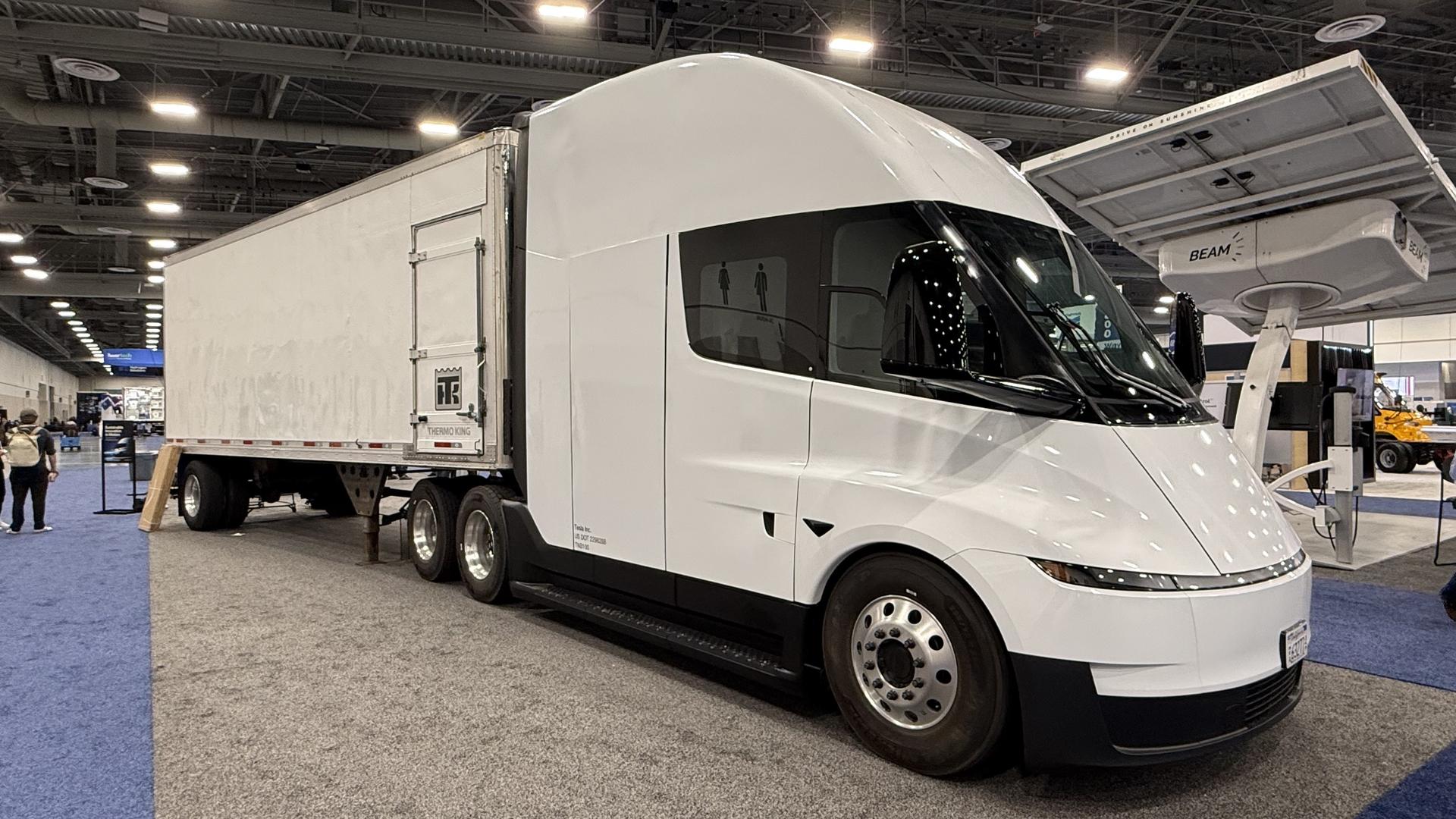
I saw Dan with Tesla talk about their progress. The big thing is their vertical integration. Some of their components — from motors and screens to other parts — are also used in other Tesla vehicles like their cars and Cybertrucks.
Lots of OEMs want to target specific areas. Tesla is less concerned; it will sell to anyone, per its presentation. I believe this is based on its similar direct-to-consumer model success with its cars. A theme is using things that work for selling cars and trying to do it with trucks.
With its Nevada factory ramping up, 2026 is all about proving it can make the units at scale and scale up production. It is not easy to make a factory line, but once the line is optimized, high volume happens fast. The large order of 370 trucks by WattEV will be a great test. There are other large orders being publicized.
Where these trucks will be found appears to be more at the local, drayage and regional-haul level. That is a huge market. Just because long-haul gets all the attention does not mean this will not be a threat to other electric trucks and OEMs. For those same OEMs, for now the electric Class 8 vocational market looks to be safe. The Tesla Semi may be the heaviest thing they produce until the Tesla Dump Truck, which I humorously predict arrives on Mars in 30 years.
From speaking with some Tesla engineers, they are a different breed with a different outlook. They remind me of early Apple vibes versus the corporate Microsoft vibes traditional OEMs give me. On the flip side, from my conversations with other engineers, that appears to be how engineers talk. The final, less likely thought is they were public relations-trained enough to smile and nod as I questioned them.
We will see if the Tesla hype translates into orders. California will be the big market, but if they can expand nationwide, that will be the bigger test. I did not have time to drive the Tesla Semi. After asking other members of the press, it turns out no one could. All you could do was ride in it with a Tesla driver. It is not to cast shade; I am told there is some kind of requirement where you would need to become like a Tesla employee for the time you drove it or something of that nature.
|
|
|
|
WattEV orders 370 Tesla Semis in record California EV deployment. Deliveries of the first 50 Semis will begin in 2026. Once complete by the end of 2027, the deployment will be the largest single electric truck deployment in California. More than 300 of these WattEV Semis will operate under a joint program with the Port of Oakland. (FreightWaves)
Aurora Innovation and McLane Company announced that they have moved from supervised pilot runs to fully driverless commercial hauls on Texas highways. The move follows a three-year pilot that logged over 280,000 autonomous miles and delivered 1,400 loads with 100 percent on-time performance. (FreightWaves)
Aurora and Volvo Autonomous Solutions (V.A.S.) announced earlier this week the launch of a new 200-mile autonomous route between Dallas and Oklahoma City. The expansion marks the first time V.A.S. is hauling freight directly to customer facilities in Oklahoma City. The route uses the Volvo VNL Autonomous integrated with the Aurora Driver. (FreightWaves)
Greenlane Infrastructure is entering the Texas market with new megawatt-charging sites planned in Dallas and Houston along the Interstate 45 corridor. The new Texas locations will feature six to eight pull-through lanes with tractor parking and charging. Electric trucking carrier Nevoya has also committed to multi-year operations on the Texas corridor. It is leveraging Greenlane’s expanding network. (FreightWaves)
Toyota Motor North America and Hyroad Energy are partnering to deploy 40 hydrogen fuel cell Class 8 trucks in Southern California. Hyroad will provide the trucks, maintenance, and software while Toyota supplies hydrogen via new Ontario infrastructure. (Clean Trucking)
Mack is launching its EPA27-compliant MP13 engine with up to 540 hp and 1,950 lb-ft torque, plus 3% better fuel economy and 20%+ stronger braking. Rolling out in August 2026 across Pioneer, Anthem, Granite and Keystone for MY2028, it completes the brand’s major powertrain overhaul featuring mDRIVE, ADAS and connectivity. (Trucknews)
Clean Energy Fuels has opened six new RNG stations now operational in New Jersey, California, Michigan, Oklahoma and Washington. The additions expand its North American network beyond 600 locations, placing price-stable, low-emission fuel on key freight corridors near distribution centers for heavy-duty fleets. (Clean Energy)
|
As always, thanks for watching and reading.
Thomas Wasson
twasson@firecrown.com
|
|
|
|
|