In this edition: World Refrigeration Day, The rising demand for cold chain in the Middle East and No
|
|
|
|
|
NEWSLETTER SPONSORED BY — EROAD
|
Your reefers are talking—are you listening? Cut precool waste, dispel compliance myths, and unlock savings with real data and insights from industry pros. Click here to learn more.
|
|
|
Hello Source and welcome to the coolest community in freight!
|
|
|
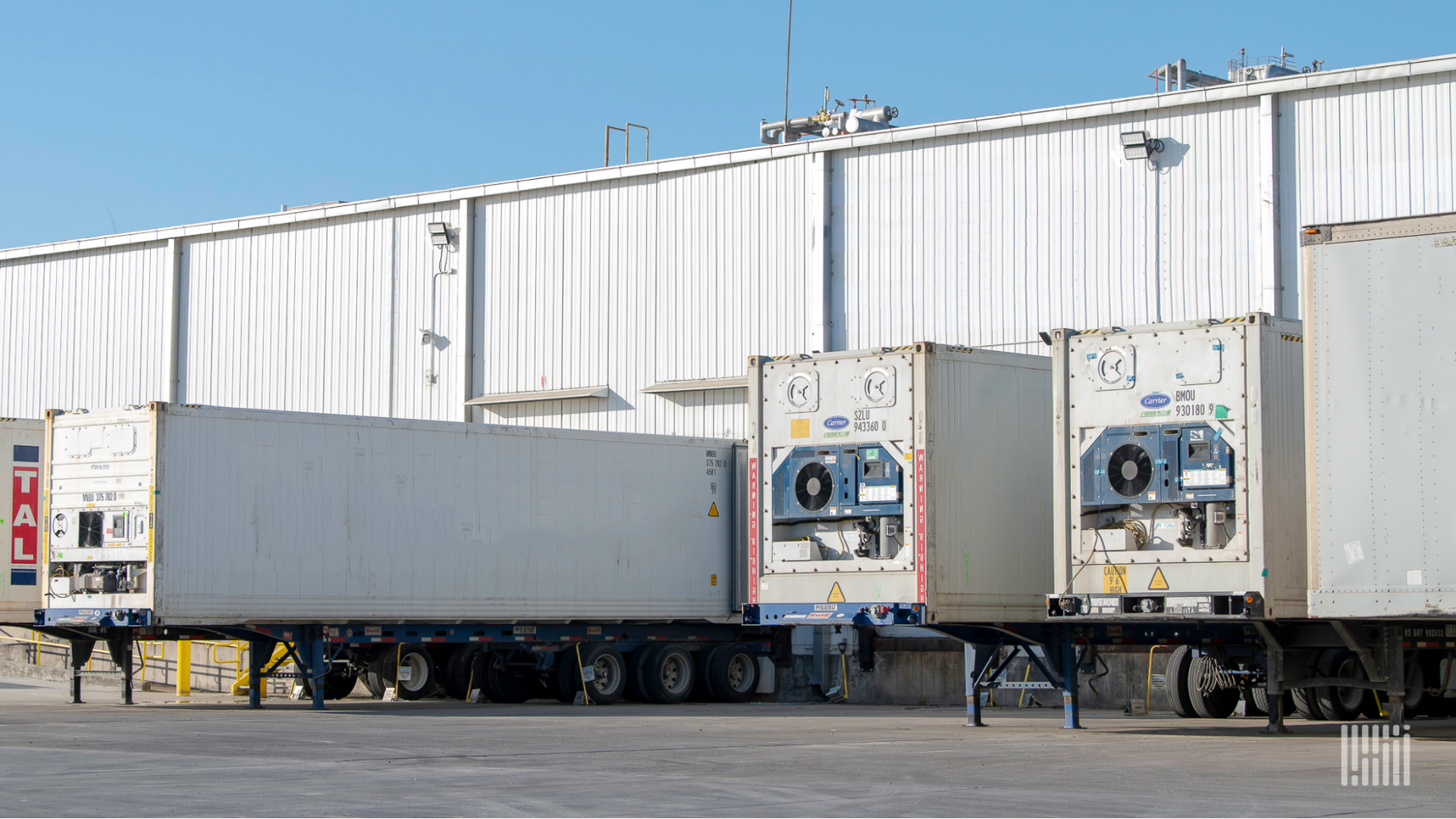
(Photo: Jim Allen/FreightWaves)
|
This past week, June 26 was World Refrigeration Day. It’s not a major holiday, but it is a great reason to bring awareness and continue the conversation around safe and sustainable temperature-controlled supply chains. This year’s theme, “Cool Skills,” shines a light on the broad array of competencies essential to modern cooling. From refrigeration system design and low‑carbon technology to data analytics and regulatory compliance.
President & CEO of The Global Cold Chain Alliance (GCCA), Sara Stickler, said in an American Journal of Transportation article, “Over the coming decades we can expect global food supply chain resilience to become increasingly dependent on temperature-controlled logistics, particularly as populations face disruptions as a result of geopolitical uncertainties, fast changing populations, and changing weather patterns. Skill areas such as data analysis, automation management, energy efficiency, and the development and operation of AI-driven systems will be increasingly important to the cold chain of the future.”
Various professional bodies and organizations are stepping up, such as the American Society of Heating, Refrigerating and Air‑Conditioning Engineers (ASHRAE), part of the global “Cool Skills” initiative, which advocates for education and certification programs covering refrigerant management, energy efficiency, and cutting‑edge building systems like low‑carbon heat pumps.
Through its partnership with the UN Environmental Programme’s OzonAction team, ASHRAE is offering free tools like sustainability checklists for plant managers and technicians, helping to benchmark plant performance and ensure regulatory alignment.
Although initiatives are often led by U.S. and European bodies, their impact is felt worldwide, aligning with GCCA programs like the Cold Chain Institute to upskill professionals across regions.
World Refrigeration Day 2025’s “Cool Skills” campaign signals a new era where skilled professionals are the linchpin of a clean, efficient, resilient cold chain, safeguarding food safety and enabling global trade.
|
|
|
(Photo: Jim Allen/FreightWaves)
|
BCC Research has recently released the “Cold Chain Regional Analysis Market: Middle East and North Africa(MENA)” market analysis. Based on their findings, the cold chain market is expected to reach $41.1 billion by the end of 2030 with a Compound annual growth rate of 8.8% for 2025-2030. The current base value of the MENA market is $24.9 billion as of 2024.
The report attributes this rapid expansion to a confluence of factors, including increased demand for perishable food and pharmaceutical products, government investments in food security and public health, and widespread adoption of cold chain technologies like IoT and AI across logistics networks.
BCC Research identifies five core drivers behind the market’s acceleration:
Rising Demand for Perishables: Urbanization, population growth, and rising disposable incomes are fueling demand for fresh fruits, vegetables, dairy, seafood, and temperature-sensitive pharmaceutical products.
E-Commerce and Online Grocery Growth: As consumers shift to online grocery shopping, the need for efficient last-mile cold chain logistics has increased across urban centers.
Stricter Food Safety and Pharma Regulations: Governments across MENA are enforcing tighter controls on food safety and pharmaceutical storage, encouraging the adoption of advanced cold chain solutions to maintain compliance.
Investment in Cold Storage and Smart Tech: Smart warehouses, real-time monitoring systems, and automation are being deployed to improve efficiency and reduce spoilage.
Strategic Location for Global Trade: With access to Europe, Asia, and Africa, the MENA region continues to serve as a crucial transit point for temperature-sensitive goods.
Cold storage continues to dominate the market, making up 56% of total cold chain activity in the region as of 2024. Meanwhile, blast freezing leads as the dominant technology segment, expected to remain the top choice through 2030 for its efficiency in preserving food and pharmaceuticals.
|
|
|
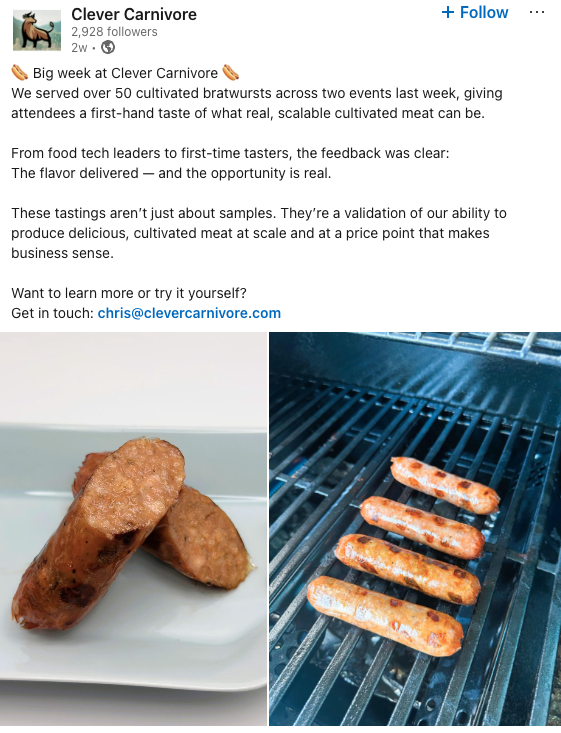
Chicago-based food-tech innovator Clever Carnivore is turning heads in the food supply chain. Their recent announcement of scalable, cost-competitive, and delicious cultivated pork marks a major milestone in alternative protein. Since its inception in 2021, Clever Carnivore has raised just about $9 million to date, a fraction of the typical funding in this space
Their in‑house media costs just $0.07 per liter—a fraction compared to industry-standard $1–$10/liter rates. They’ve submitted a comprehensive dossier to the FDA and are targeting a 2026 market debut.
Clever Carnivore has developed porcine cell lines that double in under 14 hours—a remarkable proliferation rate achieved without genetic modification
Clever Carnivore isn’t just focusing on science; they’re also creating consumer-ready products—including bratwursts, hot dogs, meatballs, and breakfast sausages—that taste and cook like conventional meat, according to chef-led taste panels. Their goal? Cost parity with conventional pork, supported by their low‑cost production model.
According to Grand View Research, “The global cultured meat market size was estimated at $246.9 million in 2022 and is projected to reach $6.9 billion by 2030, growing at a CAGR of 51.6% from 2023 to 2030. The growing technological advancements in the alternative proteins space are driving a shift toward sustainable food systems globally.”
|
|
|
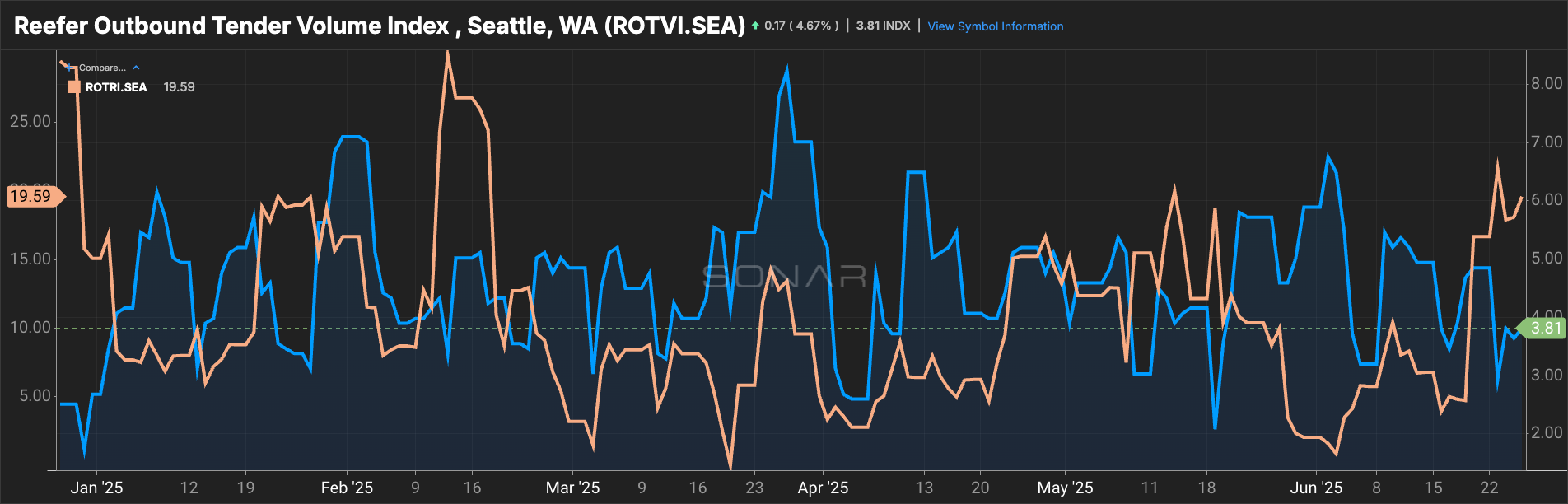
The Seattle reefer market is facing tight capacity as reefer rejection rates continue to climb. Reefer rejection rates rose 1,487 basis points week over week for an ROTRI of 19.59%. On the flip side, reefer outbound tender volumes dropped 18.59%. With rejections rising faster than volumes, the market has seen an increase in reefer spot rates and poor contract carrier compliance.
When rejection rates are hovering about 20% that signals an extremely inflated spot market. The sharp uptick has outpaced rejection rates since the middle of February, making it one of the tightest capacity crunches for the year.
Is SONAR for you? Check it out with a demo!
|
|
|
Catch up on Running on Ice on YouTube
|
|
|
Wanna chat in the cooler? Shoot me an email with comments, questions or story ideas at moconnell@freightwaves.com
See you on the internet,
Mary
If this newsletter was forwarded to you, you must be pretty chill. Join the coolest community in freight and subscribe for more at freightwaves.com/running-on-ice. You can also stay up to date with Running on Ice: The Show every Friday at 2 p.m. EST on freightwaves.com.
|
|
|
|