Kodiak AI reports 74% Q1 revenue growth, fleet reaches 28 driverless trucks
|
|
|
|
Autonomous truck gold rush or California dreaming?
|
(Photo: Thomas Wasson/FreightWaves)
|
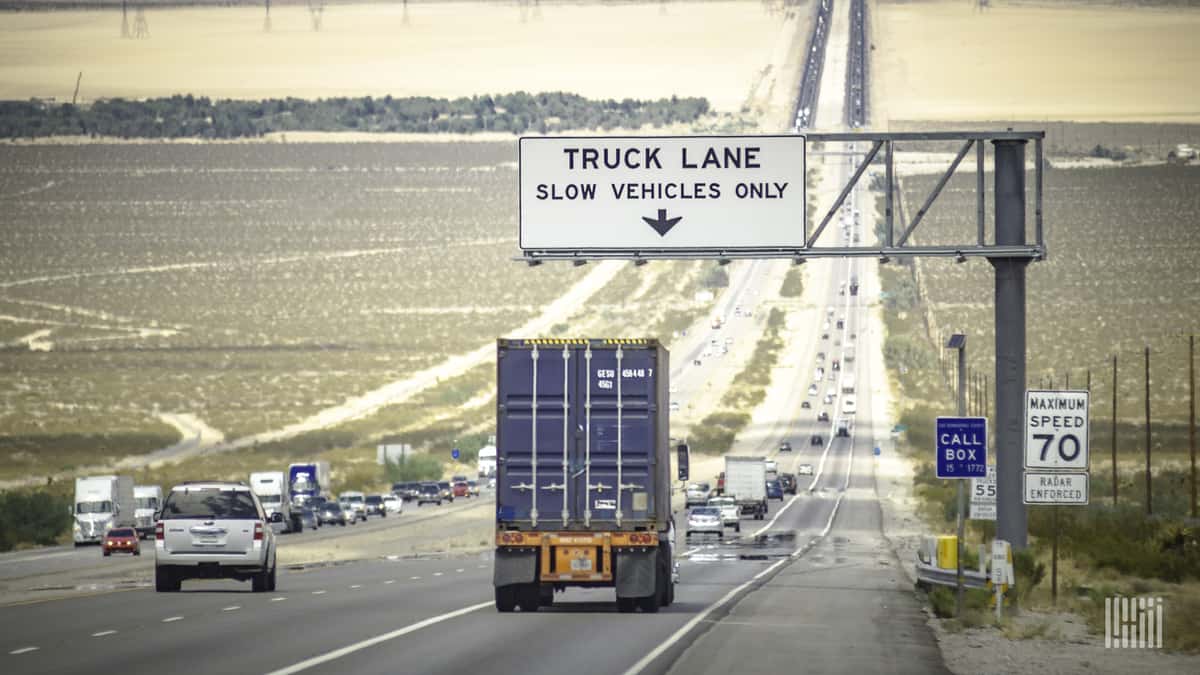
The Golden State finally has a roadmap for driverless big rigs. California’s Department of Motor Vehicles released regulations April 28 covering both light- and heavy-duty autonomous vehicles. It’s a significant shift for a state that has led in robotaxi development but lagged behind Texas and at least 26 other states in commercial truck testing.
The framework establishes a “crawl, walk, run” progression: testing with a safety driver, driverless testing and commercial deployment. Heavy-duty manufacturers face steeper requirements than light-duty counterparts, including 500,000 miles of testing before commercial deployment, with 100,000 of those miles required in California. Light-duty vehicles must complete just 50,000 miles per phase.
“The regs are done. They’re published. This is, depending on how you count it, somewhere between 13 years and eight years in the making,” Ariel Wolf, partner and chair of the Autonomous and Connected Mobility Practice Group at Venable LLP, told FreightWaves.
New enforcement tools include a “Notice of AV Noncompliance” for moving violations, with manufacturers required to notify the DMV within 72 hours or 24 hours for incidents involving danger. Local authorities can issue electronic “do not enter” directives requiring AVs to exit zones within two minutes.
The Teamsters slammed the decision as “reckless,” vowing legal and political challenges. Companies including PlusAI, Aurora Innovation and Bot Auto have welcomed the clarity.
Wolf cautioned against expecting a gold rush. “It takes a lot of upfront investment to go into a particular location or state,” he said. Texas remains the industry’s center of gravity for now.
Read more.
|
Kodiak AI reports 74% Q1 revenue growth, fleet reaches 28 driverless trucks
|
(Photo: Thomas Wasson/FreightWaves)
|
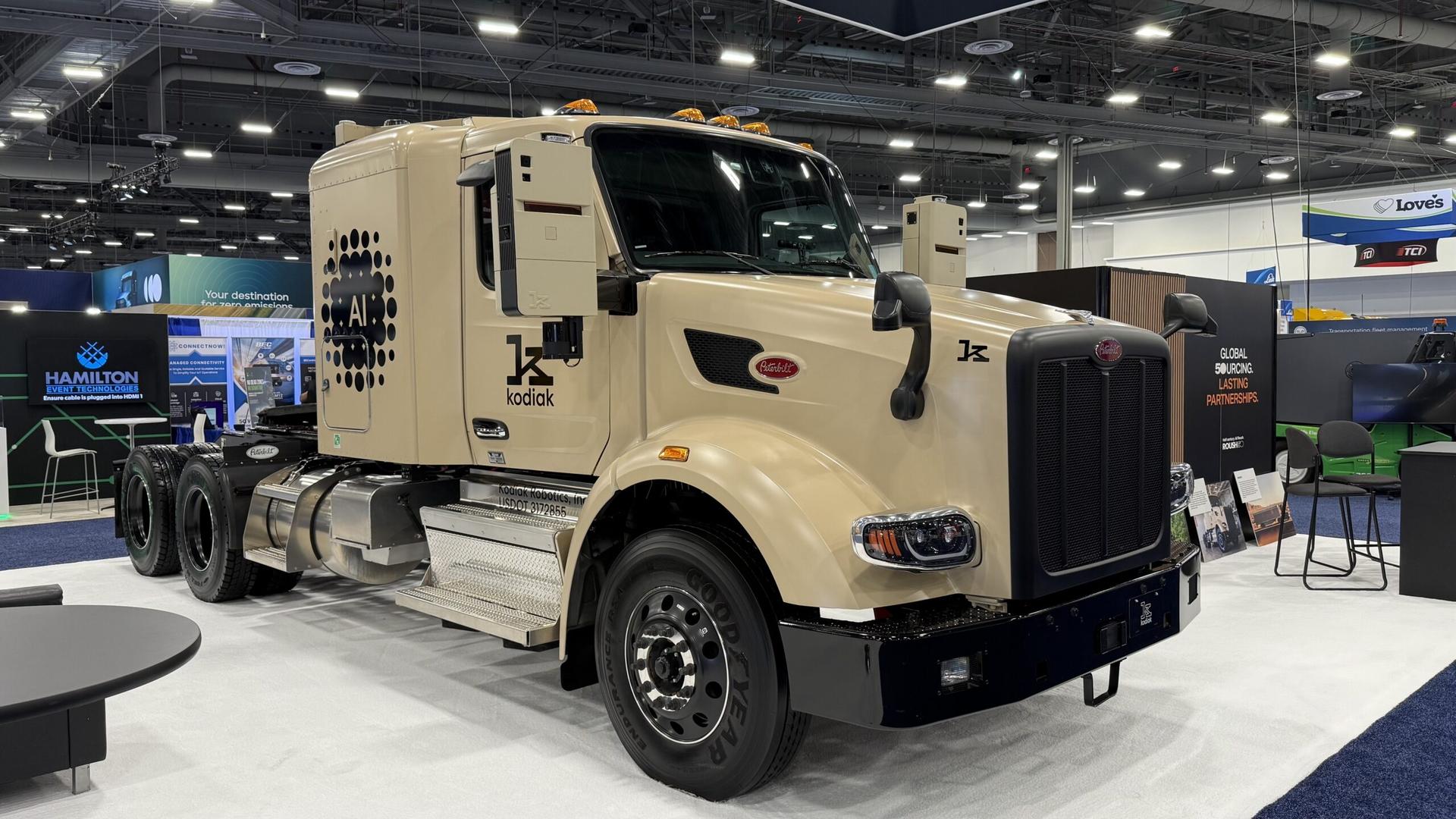
Kodiak AI delivered a breakout first quarter, posting 74 percent revenue growth quarter over quarter as it scaled its driverless truck fleet to 28 units and secured $100 million in fresh financing.
The company reported $1.8 million in first-quarter 2026 revenue, driven by expansion of its Driver-as-a-Service model after deploying eight additional fully driverless trucks during the quarter. Kodiak accumulated more than 23,500 cumulative hours of paid driverless operations, representing a 120 percent increase from the fourth quarter of 2025, and delivered more than 15,600 cumulative loads.
“We are executing on our strategy while maturing our Physical AI-powered technology and adopting additional AI tools to further increase the pace of development,” said Don Burnette, founder and chief executive officer of Kodiak.
The company remains pre-profit with a $37.9 million GAAP operating loss and $35 million free cash flow loss. However, the $100 million private placement from Ares Management affiliates and new institutional investors provides runway as Kodiak targets a late 2026 launch for long-haul highway driverless operations.
Kodiak also announced a partnership with Roehl Transport, hauling freight autonomously four round trips weekly on the Dallas-Houston lane. The collaboration was boosted by Kodiak’s VERA safety score of 98 out of 100, the highest recorded among more than 1,000 commercial fleets evaluated by Nauto.
“Kodiak’s safety-first approach was a key factor in our decision to partner with Kodiak,” said Rick Roehl, chief executive officer of Roehl Transport.
In another major move, Kodiak is piloting autonomous log hauling for West Fraser Timber in Alberta, Canada. The pilot marked the company’s first international operation and entry into the timber industry.
Read more.
|
State of Sustainable Fleets 2026: Fleets diversify amid policy shifts
|
(Photo: Thomas Wasson/FreightWaves)
|
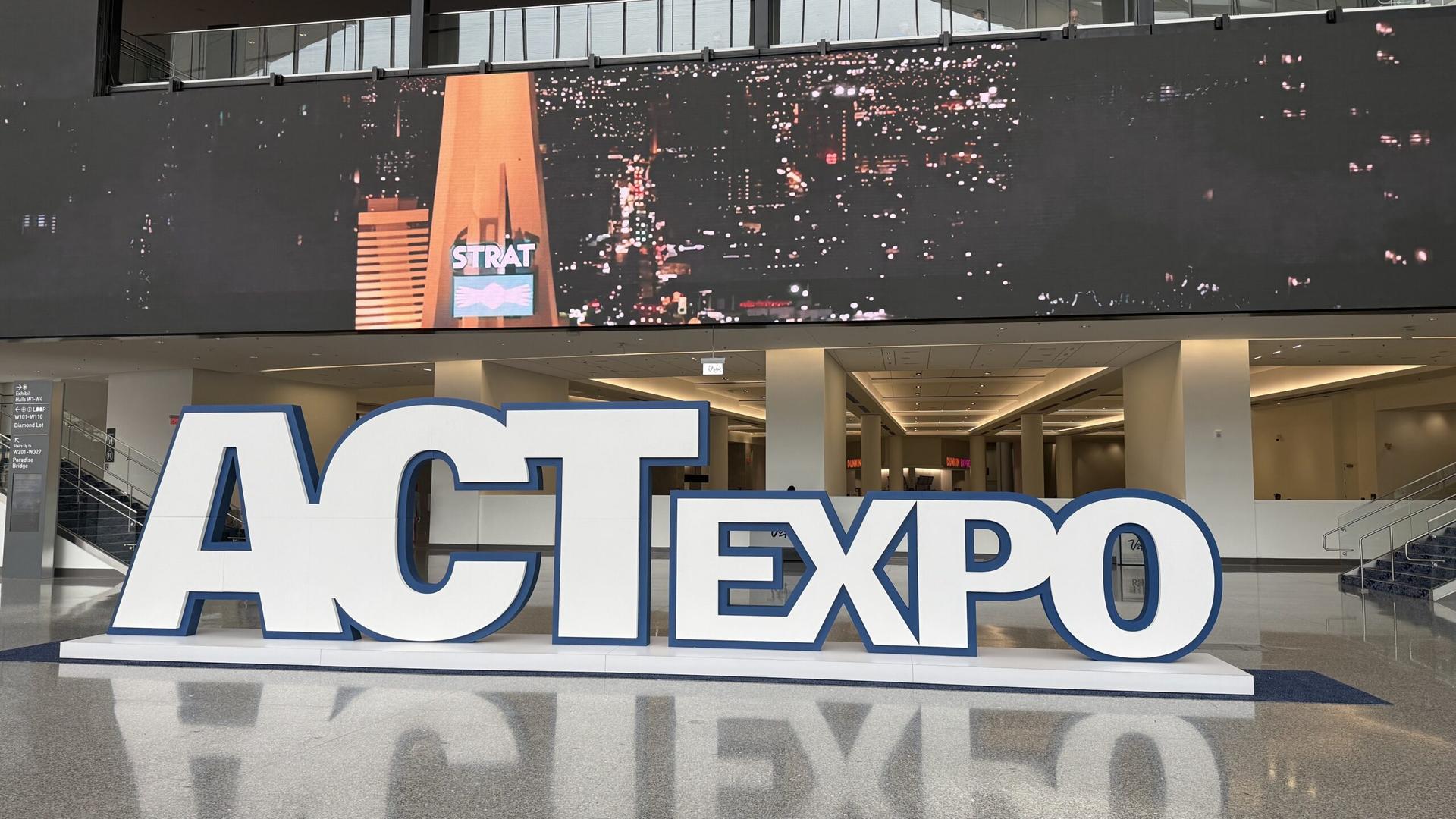
The seventh annual State of Sustainable Fleets report dropped this week into one of the most volatile environments fleet managers have navigated in decades. Federal policy reversals, tariff uncertainties and a stubborn freight recession have left operators scrambling to figure out what to order next.
There were many headwinds, including the rollback of greenhouse gas vehicle standards, expiration of zero-emission vehicle tax credits worth up to $40,000 per medium- and heavy-duty unit, and nullification of California’s clean truck regulations. Yet more than $5 billion in annual funding still flows through state, local and utility programs through 2028, far exceeding pre-Biden administration levels.
Natural gas emerged as a bright spot. The Cummins X15N 15-liter engine finished its first full commercial year with diesel-like performance, and 71 percent of fleets running it reported cost savings versus diesel. Walmart, Amazon, UPS, FedEx and Werner all placed X15N orders.
Battery-electric registrations climbed 21 percent in 2025. In California, renewable diesel displaced nearly three-quarters of conventional diesel. “Renewable diesel makes the single biggest carbon reduction of all alternative fuels in use, and at no additional cost over petroleum diesel,” said Richard Battersby, assistant director of Oakland Public Works.
Hydrogen remains stuck. Fleets paid $18.86 per kilogram after incentives — an 89 percent to 135 percent premium over diesel. Two Class 8 fuel-cell startups exited the market entirely.
Read more.
|
|
|
|
Aurora Innovation’s 85 cents per mile operating cost is drawing carrier interest, undercutting the typical $1 per mile for driver wages. The company now operates 30 driverless trucks across Southwest routes, with plans to deploy more than 200 by year-end and hit $80 million in 2026 revenue. (Trucking Dive)
Aeva delivered initial C-sample units of its Atlas 4D lidar sensors to Daimler Truck North America and Torc Robotics, advancing toward series production of SAE Level 4 autonomous Freightliner Cascadia trucks. The FMCW-powered sensors detect range and velocity simultaneously at distances up to 500 meters. (AEVA)
Pittsburgh-based Meter Feeder has partnered with Mapless AI to enable autonomous vehicles to automatically pay for municipal parking without human intervention. The system charges owners when AVs shift into park and stops when they drive away — eliminating circling behavior and securing city revenue. (Founder Brew)
Volvo Trucks North America previewed the VNL Electric at ACT Expo, targeting regional haul and drayage with proprietary e-axles and Proterra batteries. The OEM also launched 69.5 kW ePTO technology for vocational applications. More than 750 VNR Electric trucks have logged 30 million zero-emission miles despite market headwinds. (Fleet Owner)
|
As always, thanks for watching and reading.
Thomas Wasson
twasson@firecrown.com
|
|
|
|
|