|
View this email in your browser

THE DAILY
Wednesday, May 27, 2026
The five minutes that makes you the most informed person in freight today
|
|
Newsletter Brought to You By — Amazon Supply Chain Services
|
|
The Daily
House committee passes transportation bill with bathroom rights, parking grants, and lease reforms for trucking
The surface transportation bill touching every corner of trucking just cleared its first major hurdle.
The BUILD America 250 Act passed the House Transportation and Infrastructure Committee 62-2 on Friday, a near-unanimous vote that drew simultaneous praise from OOIDA and the American Trucking Associations, two organizations that rarely land on the same side of anything. The five-year authorization replaces existing surface transportation legislation that expires Sept. 30.
Two provisions captured the most immediate attention at the ground level. Section 5102 mandates that commercial motor vehicle operators must be granted access to restrooms at any covered establishment where they’re delivering goods or waiting for cargo to be loaded. The rule applies to shippers, receivers, manufacturers, warehouses, and distribution centers. Drayage gets its own line: terminal operators must provide sufficient restrooms in areas drayage drivers typically access. The ATA was direct: "Drivers servicing shippers and receivers should not be denied access to bathroom facilities, and this language makes sure they won’t be."
The parking section expands Jason’s Law, the federal funding framework named after Jason Rivenburg, who was murdered in 2009 while parked at an abandoned gas station. The bill gives the Department of Transportation authority to make grants for commercial vehicle parking to state and local governments, and to private entities partnering with the government. New parking can go on federal highways, inside freight facilities, or onto existing infrastructure like weigh stations.
The regulatory implications stretch well beyond those two provisions. The Secretary of Transportation must finalize broker and freight forwarder qualification rules within two years, a reform the Transportation Intermediaries Association has pushed for more than a decade. Lease agreements between carriers and independent owner-operators will require new disclosure forms covering weekly compensation, average mileage, driver schedules, deduction breakdowns, and data on how many drivers fulfill versus exit their leases. The bill specifically targets "predatory leases," a term the legislation applies broadly to situations where the carrier controls the driver’s work, compensation, and debts while the driver accrues no equity. Additional provisions commission a DOT study on cabotage violations, revisit ELD regulations, create a committee to review cargo theft, and extend the safe driver apprenticeship program. The Senate Environment and Public Works committee has not yet released its version of the bill; according to law firm Holland & Hart, that text is expected in the coming months.
So What? This bill touches nearly every segment of trucking operations. For shippers, DCs, and terminals: assess your facility’s restroom access for inbound drivers before this becomes law. The bathroom mandate applies whether you’re a manufacturer or a distribution center, and existing facilities don’t have to be modified — access just can’t be denied. The broker qualification mandate and lease disclosure requirements carry real financial implications for 3PLs and owner-operators. Get ahead of both before the rulemaking clock starts ticking.
Read the full story →
|
|
|
Top Stories
Walmart cuts supplier purchase orders from 42 to one with new LTL consolidation program
Walmart’s new prepaid LTL consolidation program lets vendors send a single purchase order and a single pallet to one automated consolidation point, which then distributes inventory across all 42 of the retailer’s regional distribution centers. Previously, a supplier might generate 42 separate POs, 42 pallets, and 42 separate trucks to replenish each DC individually. Walmart is using new automation technology to optimize inventory allocation across the network. Approved third-party logistics partners, including C.H. Robinson, Hub Group, and RJW Logistics, can manage the service for suppliers who prefer a third-party intermediary. "We’re focused on making our supply chain simpler, faster and more efficient for suppliers," said Mike Gray, senior vice president of supply chain at Walmart U.S. The program will expand in phases, with participation prioritized by volume alignment and capacity.
So What? Walmart’s consolidation move improves supplier in-stock rates and reduces inbound complexity — at the cost of access. The approved-3PL model creates a clear winner’s circle: C.H. Robinson, Hub Group, and RJW Logistics get the volume. Everyone else doesn’t. For LTL carriers, watch how multi-stop inbound volumes from Walmart’s supplier base shift as the program scales.
Read the full story →

Ontario audit finds CDL schools falsifying training records as provincial crackdown begins
Ontario’s auditor general found widespread failures in the province’s commercial truck driver training system, with some schools issuing CDL certificates after providing a fraction of the required training hours. Secret shoppers found two schools delivered only 59.5 and 81 hours of training against a 103.5-hour minimum. Fifty-four of 216 registered career colleges offering entry-level training had never been inspected. Six previously penalized and unregistered schools were still booking road tests as recently as June 2025. Commercial trucks account for 3% of vehicles on Ontario roads but are involved in 12% of fatal crashes. Mike Millian, president of the Private Motor Truck Council of Canada, said industry groups warned provincial officials as early as 2017. "For a period of six years, none of these recommendations were acted upon," he wrote. Ontario accepted all 13 audit recommendations and committed to inspecting every CDL school within six weeks.
So What? Ontario drivers with CDLs from non-compliant schools cross into the U.S. every day. Carriers managing cross-border fleets should expect heightened scrutiny at enforcement corridors as this story gains attention on both sides of the border. The U.S. DOT has shown increasing interest in CDL integrity, and Ontario’s crackdown may accelerate federal-level conversations about cross-border driver qualification verification.
Read the full story →
Supreme Court declines Florida suit targeting California, Washington over CDLs for undocumented drivers
The Supreme Court declined to hear Florida’s lawsuit targeting California and Washington over their practice of issuing commercial driver licenses to immigrants without legal authorization. The case grew from a fatal August 2025 crash on Florida’s Turnpike involving a driver who held a valid California CDL. Florida AG James Uthmeier argued the two states violated federal safety and immigration law; Justices Clarence Thomas and Samuel Alito dissented from the refusal. California and Washington CDL policies remain intact for now. The broader fight continues on multiple fronts: California faced roughly $40 million in withheld federal funds over English proficiency enforcement, and a federal appeals court recently blocked a Trump administration proposal to restrict CDLs based on immigration status.
So What? Florida’s lawsuit is over, but the underlying policy fight is not. The English proficiency battles, federal funding disputes, and the still-pending appeals-court ruling on administration CDL restrictions all remain live threads. Watch for whether the surface transportation bill now in committee addresses any of them explicitly.
Read the full story →
Sponsored By TrainsPro
Master Rail Operations With TrainsPro
With the STB expected to rule on the Union Pacific–Norfolk Southern merger this week, there has never been a better time to understand how your freight moves on rail. TrainsPro delivers specialized data and operational intelligence for rail shippers, intermodal professionals, and logistics teams working through a rapidly consolidating Class I railroad sector. Register for the next session to see what the platform can do for your operation.
Register now → |
Six state AGs urge STB to reject Union Pacific-Norfolk Southern merger application
Attorneys general from Montana, Florida, Iowa, Kansas, North Dakota, and South Dakota sent a letter to the Surface Transportation Board urging it to reject the revised UP-NS merger application, calling it incomplete. Montana AG Austin Knudsen cited "underdeveloped proposals" and noted the carriers filed seven subsequent amendments that have complicated the review. The officials said the application omits market share data, skips analysis of future industry consolidation, and provides no detail on plans for jointly owned assets including the Kansas City Terminal Railway, the Terminal Railroad Association of St. Louis, and the TTX railcar pool. "We cannot evaluate these proposed divestitures without key terms like the buyers, price, and closing conditions," the letter stated. The STB, which recently seated new member Richard Kloster, is expected to rule on the application this week.
So What? The STB ruling this week is the most consequential freight rail decision of 2026. A UP-NS merger creates the first transcontinental Class I in the modern era. The AGs’ objections won’t stop the process, but the conditions attached to any approval will determine whether competitive access protections for shippers survive. Watch the board’s decision closely — and then watch how your existing rail contracts are priced against it.
Read the full story →

Sponsored By Fastfrate Group
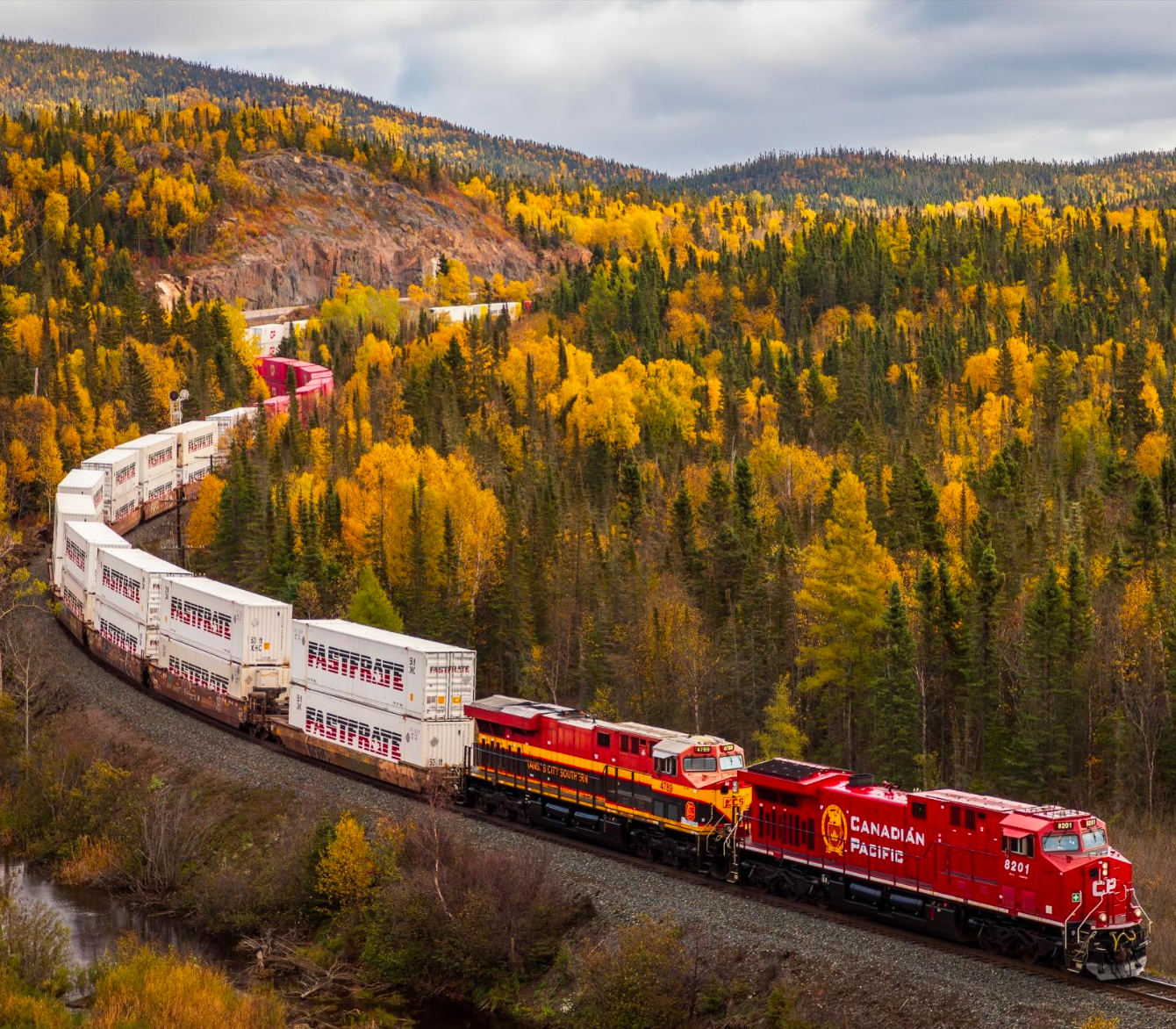
From Boxcars to a Billion-Dollar Network
Fastfrate started in 1966 filling empty CP Rail boxcars on eastbound returns. Sixty years later, it’s one of North America’s largest privately held supply chain companies — intermodal, truckload, drayage, warehousing, e-commerce fulfillment, final-mile, international forwarding, and customs brokerage across 46+ locations in Canada, the U.S., and Mexico. "We’re coming," executive chairman Ron Tepper told FreightWaves. "We’re going to continue growing in Mexico and the U.S. like we have in Canada."
Read the full story → |
|
Announcing the Driver App Shortage Hackathon

Driver App Shortage Hackathon — Register Now
We’re doing something we’ve never done before. FreightWaves is hosting DASH — the Driver App Shortage Hackathon. One week. Free SONAR API access. Open to anyone, anywhere. No entry fee. The premise is simple: most driver-facing tech isn’t actually built for drivers. It’s built for fleet managers, dispatchers, and brokers. The people behind the wheel are an afterthought. Register for the June 15 kickoff webinar now.
Register for the June 15 Webinar → |
|
|
|
Sponsored Insight
|
Presented by Amazon Supply Chain Services
Solutions That Save: How Amazon’s Supply Chain Services Give Back Time, Money, and Peace of Mind
Managing a supply chain shouldn’t mean choosing between cost, speed, and peace of mind — but for many businesses, it does. Amazon Supply Chain Services offers flexible, resilient logistics support that eliminates those tradeoffs, helping businesses of every size reduce complexity, cut costs, and reclaim time. With access to Amazon’s global infrastructure and no lock-in required, ASCS gives you the freedom to build the supply chain that works for your business.
Read more → |
|
FreightWaves Announcement
FreightWaves Today, launching June 1st.
The supply chain moves fast. Now your news does too. Craig Fuller and Julie Van De Kamp bring you a daily live show — real-time market analysis and interviews with the leading executives who are shaping freight and logistics. Live every weekday at noon ET on FreightWaves socials and tv.freightwaves.com/today.
Watch FreightWaves Today → |
|
 |
|
|
From the Research Desk
|
In partnership with Trimble
2026 Outlook: Spot Market Strategies for Shippers, Carriers, and Brokers
The spot market isn’t a last resort anymore — it’s a deliberate tool. FreightWaves and Trimble surveyed shippers, carriers, and brokers to map how they’re actually using spot freight in 2026, covering market resilience, the contract-versus-spot divide, and technology adoption in procurement. As regulatory changes and Walmart’s new inbound consolidation model reshape the freight book, understanding your spot exposure is foundational planning.
Download the full report → |
|
In partnership with Avalara
Supply Chain Strategies for an Uncertain Trade Environment
Tariffs, geopolitical tensions, and shifting regulations are forcing supply chain leaders to build adaptive strategies fast. FreightWaves partnered with Avalara to survey how supply chain professionals are navigating rapid trade-environment changes — and how the latest compliance and tax tools are helping where manual processes break down. Relevant today as broker qualification rulemaking and new lease disclosures add another compliance layer for logistics operators.
Download the full report → |
|
Courtesy of Werner
Werner Doubles Down on Mexico with Asset-Based Intermodal Expansion
Werner is scaling an asset-based intermodal service into Mexico, deploying Werner-owned containers across a network built on 27 years of cross-border operations. As nearshoring reshapes North American freight flows, SVP of Mexico Lance Dixon made the case directly: "Truckload capacity can be constrained already today. With border delays, that’s going to get worse." Read why cross-border intermodal isn’t experimental anymore — and why the timing is right for shippers to rethink how freight moves between the two countries.
Read more → |
|
|
|
Upcoming Event
Supply Chain AI Symposium
July 15, 2026 • The Old Post Office, Chicago, IL
Past the hype. The industry’s leaders are converging in Chicago for an intimate, high-stakes gathering built around one question: how do you actually deploy AI in supply chain? Operators, founders, and enterprise leaders — one room, no fluff. This is where the decisions get made.
Register Now → |
|
|
|
What We’re Watching
▸ The STB merger ruling. The board is expected to decide on the Union Pacific–Norfolk Southern application this week. The conditions attached to any approval will determine whether competitive access protections for shippers remain meaningful. Watch how rail contract pricing moves in the weeks that follow.
▸ BUILD America 250 in the Senate. The T&I-passed bill heads toward a House floor vote while the Senate Environment and Public Works committee works on its own version. The Senate’s treatment of broker qualification rules and the predatory leasing provisions will signal how much of this trucking reform survives to a conference agreement.
▸ Ontario CDL school inspections. The province committed to inspecting all 216 registered commercial driving schools within six weeks. Results will shape whether cross-border enforcement of driver qualification standards tightens. Track what FMCSA says about this development — the agency has been sharpening its focus on CDL integrity at U.S. borders.
|
|
|
That’s your Daily for today. See you tomorrow.
Have a tip? Reply to this email.
Subscribe to FreightWaves newsletters
FreightWaves | 405 Cherry St., Chattanooga TN 37402
Unsubscribe | Forward to a Friend
© 2026 FreightWaves, Inc. All rights reserved.
|
|