Welcome to this week’s Supply Chain Radar, where AI is rewriting FreightTech’s rulebook, tariff refunds are stuck in bureaucratic limbo, and geopolitical risk is creeping back into global lanes. 🤖⚖️🌍
FreightTech is entering the “vibe coding” era as AI lowers the barrier to building software and pushes startups to rethink entire logistics business models. Meanwhile, CBP is scrambling to process potential refunds on $166B in tariffs.
👉 Scroll on for AI-native logistics plays, tariff refund chaos, warehouse orchestration, parcel disruption, cross-border innovation, and the geopolitical risks rattling global freight.
FreightTech Enters the “Vibe Coding” Era 🤖🚛
AI tools are lowering the barrier to building great software, meaning code alone is no longer a competitive moat. According to Floating Point’s John Loser, the winners in FreightTech will be companies that redesign entire business models around AI, not just add software to legacy operations. Think EV-native fleets, AI underwriting and data infrastructure layers for trucking.
U.S. Customs and Border Protection says it can’t yet comply with a court order to refund tariffs imposed under the Trump administration’s use of IEEPA. With roughly 53 million entries and $166B in deposits involved, the agency estimates refunds would require over 4 million labor hours to process. CBP is now aiming to build a streamlined refund system within 45 days.
Warehouse rents keep climbing, hitting $9.78 per square foot in 2025, pushing operators to squeeze more value from existing space. The answer: supply chain orchestration. By connecting WMS, ERP and TMS systems and layering in AI-driven forecasting, companies can reduce safety stock, speed fulfillment and optimize labor. The result is a warehouse that runs as a performance engine—not just storage.
More than half of distributors are planning a demand-planning overhaul in 2026. A new report finds 54% intend to adopt new forecasting approaches, while many are boosting automation and segmentation tools to improve inventory accuracy. At the same time, 63% say they lose sales due to stockouts, prompting companies to hold more inventory despite higher carrying costs.
Supply chain companies don’t win markets by accident. Strategic marketing is becoming a competitive edge as logistics, freight tech and services firms invest in data-driven campaigns, thought leadership and targeted digital programs to reach buyers navigating complex B2B sales cycles. From SEO and content to paid media and social authority, the goal is simple: turn visibility into pipeline.
FedEx and UPS are facing sharper competition as alternative carriers level up their offerings in 2026. Companies like Veho, UniUni, Better Trucks are expanding coverage, launching AI-powered delivery features and investing heavily in service reliability. With some networks targeting coverage of more than 80% of the U.S. population, shippers are increasingly exploring options beyond the traditional parcel giants.
Straightship and Dragonfly have teamed up to streamline U.S.–to–Canada e-commerce with a turnkey delivery solution. The partnership combines Straightship’s cross-border logistics expertise with Dragonfly’s last-mile network, reaching 96% of Canadian residential addresses. With one integration, a single tracking number and pre-cleared customs manifests, retailers can avoid the fragmented carrier handoffs that often slow cross-border shipments.
Container shipping markets are bracing for fresh disruption as the Iran conflict threatens one of global trade’s most critical chokepoints. With around 750 vessels affected near the Strait of Hormuz and insurers pulling war-risk coverage, carriers are already suspending Middle East bookings and rerouting cargo. The ripple effects could tighten global capacity, push up fuel and freight rates, and trigger equipment imbalances across major trade lanes.
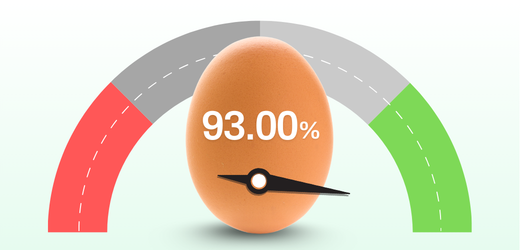
Here’s the scoop on the SCR Egg-O-Meter: It’s a brand-new rating tool that checks out what the media said about business and supply chain execs in the past 30 days and scores them based on the tonality of mentions from a natural language processing algorithm.
The “Egg-o-Meter” is like a quirky kitchen gadget for measuring how well a supply chain leader can cook up success. It cracks open key traits—like adaptability, collaboration, and innovation—and scrambles them into a perfect leadership recipe. The goal? To avoid being a hard-boiled traditionalist or a runny risk-taker. It’s all about being the ideal sunny-side-up mix to lead teams through the ever-changing heat of the supply chain kitchen! 🍳📦
As Executive Vice President of Supply Chain at Walmart, Rob Montgomery oversees one of the most complex logistics networks in the world. An industrial engineer who has spent more than two decades with the retailer, Montgomery has helped reshape how goods move from suppliers to shelves by focusing on “inventory flow” and the integration of advanced automation across Walmart’s supply chain.
Under his leadership, Walmart is rapidly modernizing its network with automated distribution centers, AI-driven inventory tools and ambient IoT sensors designed to track up to 90 million pallets in real time. The company expects automation to service roughly 65% of its stores by fiscal year 2026, enabling faster replenishment and fewer out-of-stocks. Montgomery has also spearheaded new high-tech grocery andperishable distribution facilities,including a 725,000-square-foot automated center in South Carolina that processes fresh food for hundreds of stores.
With Walmart generating roughly $675 billion in annual revenue, Montgomery’s focus on automation, data visibility and operational precision is helping the retailermaintain agilityand scale across a global retail network.
Check out this video here:https://youtu.be/Pw3xweHqreU?si=XdbvlnkrXk_WFJBe
.png?width=1196&upscale=true&name=Header-Image-SCR%20(1).png)