Einride Brings Autonomous Trucks to Ohio, Pushing Beyond Sun Belt Testing Grounds
|
|
|
|
Congress Hands AV Trucking Its Long-Awaited Federal Lane
|
The autonomous trucking industry got what it has chased for years: a congressional blueprint for national regulation.
House Transportation and Infrastructure Committee Chairman Sam Graves, R-Mo., and ranking member Rick Larsen, D-Wash., released the BUILD America 250 Act on May 17, a bipartisan five-year surface transportation reauthorization. Buried inside its more than 1,000 pages is Subtitle E, "Safe Integration of Autonomous Commercial Motor Vehicles," the first time Congress has attempted to create a national rulebook for driverless trucks.
This is scaffolding, not a finished building. The bill gives the Department of Transportation a two-year homework assignment to write performance-based safety standards for automated driving systems in interstate commerce. Until that rule is finalized, nothing changes on the road.
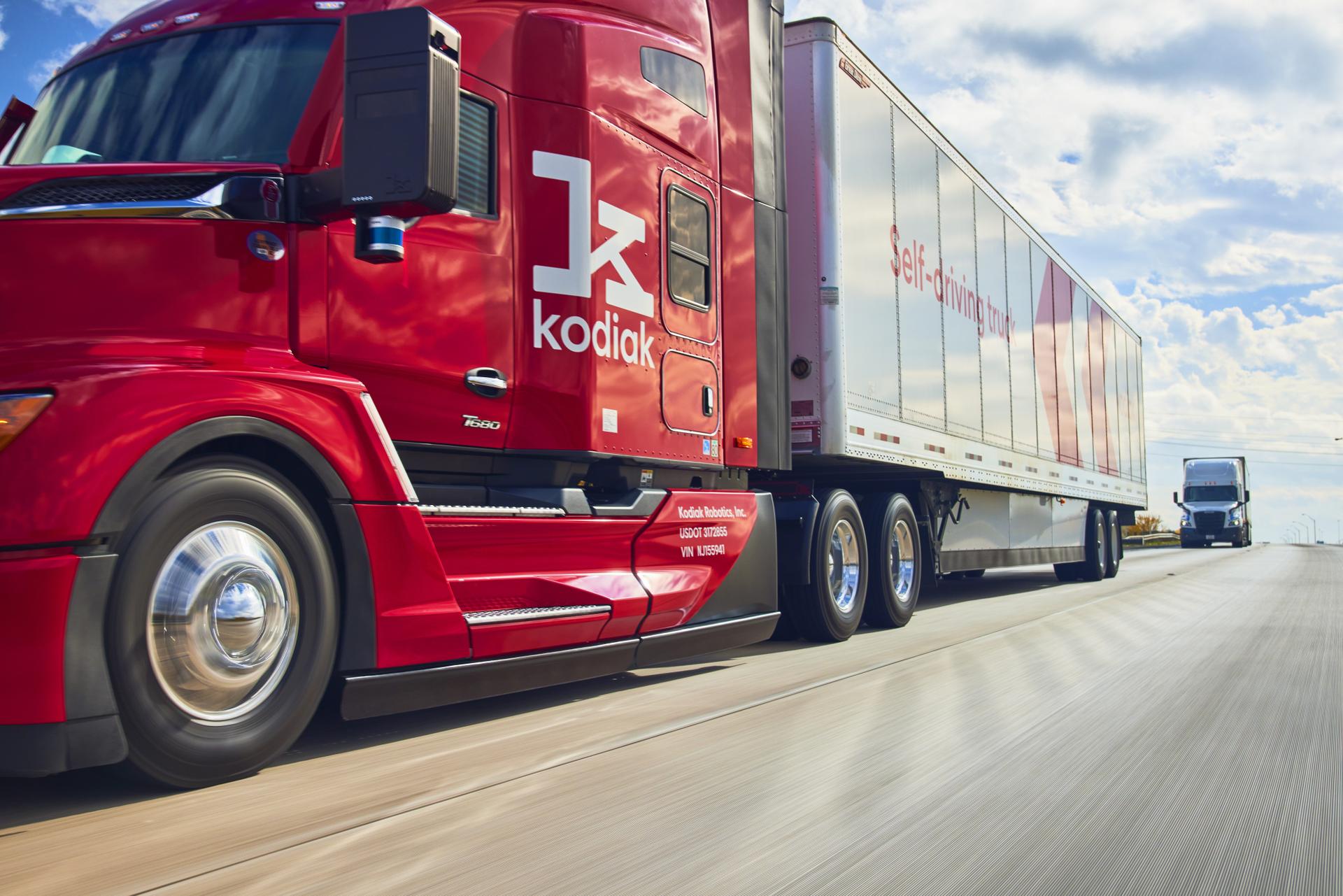
The industry welcomed the measure anyway. Kodiak AI founder and CEO Don Burnette called the bill "historic," saying it would replace today’s patchwork of state rules with a single federal standard.
Manufacturers must submit a "safety case" proving their systems match or exceed human-driver safety. The filing must cover hardware, software, operational design domain, cybersecurity and hazard analysis. Remote operators must hold valid commercial driver’s licenses, work from U.S. soil and log monitoring time under hours-of-service rules. Vehicles carrying hazardous materials or minors still require a human on board.
The DOT must stand up an 18-member rulemaking committee within 90 days, then survive the comment period that shapes any rule this size. For fleets and shippers, the playbook stays the same: Watch the rulemaking and do not confuse the text of a bill with a settled answer.
Read More.
|
Einride Brings Autonomous Trucks to Ohio, Pushing Beyond Sun Belt Testing Grounds
|
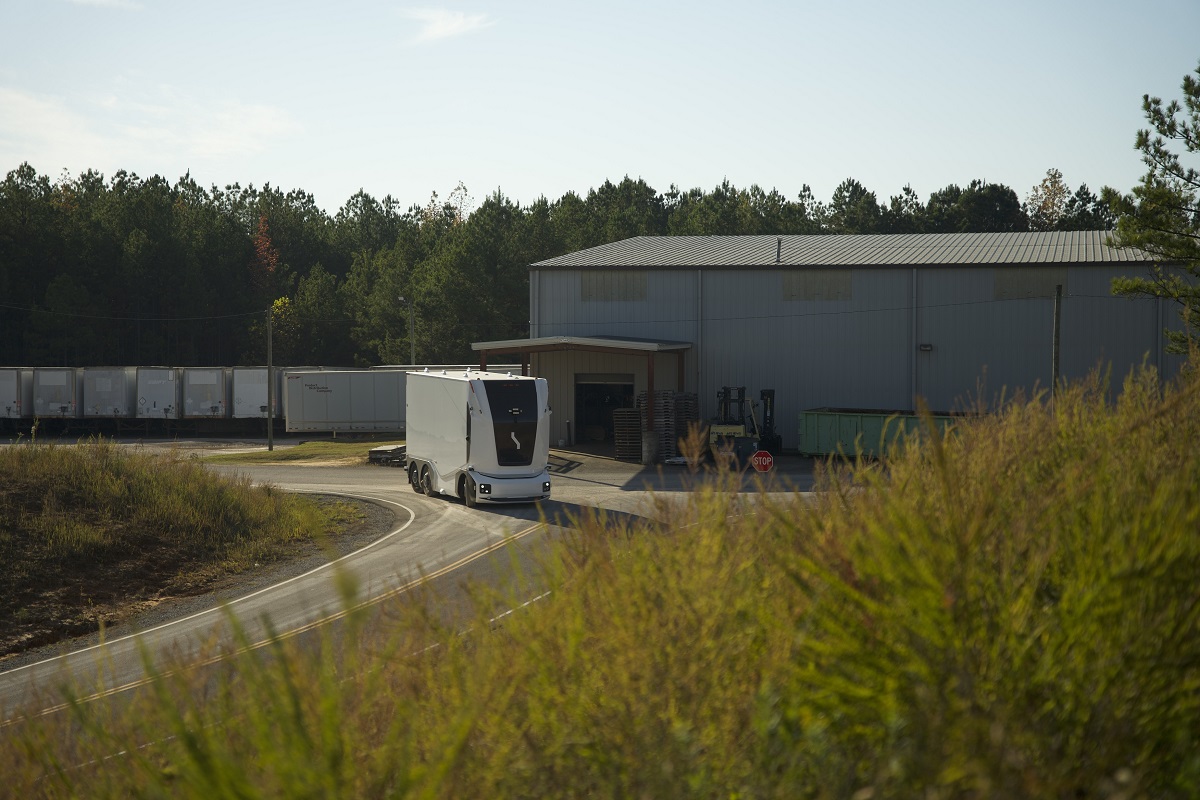
Autonomous trucking is heading to the heartland. Swedish freight technology company Einride and Columbus-based EASE Logistics announced the deployment of Society of Automotive Engineers Level 4 autonomous electric trucks in Marysville, Ohio, a strategic move that pushes driverless freight testing beyond traditional Sun Belt corridors.
The deployment extends the Ohio Department of Transportation and DriveOhio’s Truck Automation Corridor Project, developed in partnership with the Indiana Department of Transportation. Two of Einride’s cabless electric trucks will transport goods between EASE warehouses using both private property and local public roads starting this summer. Remote operators will monitor operations off site, with the ability to intervene when necessary.
This marks EASE Logistics’ third autonomous trucking project with DriveOhio, making it one of the few logistics providers actively testing multiple autonomous freight platforms in live environments.
"Deployments like this help move autonomous trucking from controlled pilots into daily freight operations, where safety, reliability and efficiency can be evaluated at scale," said Peter Coratola Jr., president and CEO of EASE Logistics.
Einride CEO Roozbeh Charli emphasized the company’s safety-first approach: "Safety is not a feature we add to our technology; it is the foundation on which everything is built." He called the partnership "proof that autonomous electric freight is not a future ambition. It is a safe, working reality today."
The data generated will help carriers and shippers evaluate autonomous technology investments. Einride recently announced a collaboration with Amazon for electric trucks and filed a registration statement on Form F-4 with the U.S. Securities and Exchange Commission.
Read More.
|
MicroVision Snags Luminar Assets for $33M, Bets Big on Trucking LiDAR
|
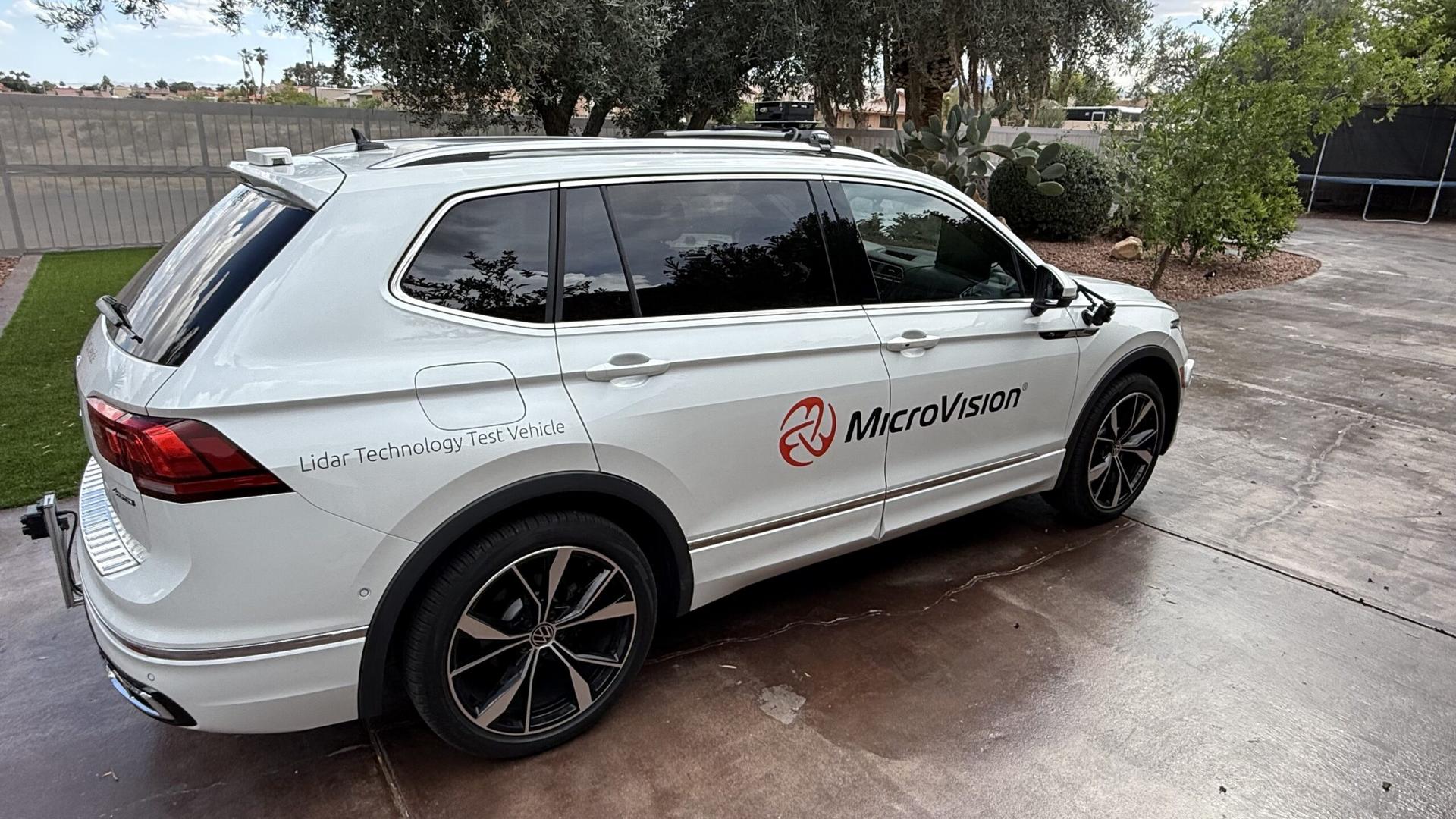
(Photo: Thomas Wasson/FreightWaves)
|
The autonomous driving gold rush left behind a graveyard of companies chasing self-driving dreams with unsustainable economics. MicroVision is now picking through the wreckage and building what it calls LiDAR 2.0.
The company acquired Luminar’s assets for $33 million after the once $10 billion company filed for bankruptcy. The deal gives MicroVision production programs with Volvo, an ASIC design team in Colorado Springs and validation facilities in Orlando worth hundreds of millions in prior investment. Combined with its Scantinel acquisition, which adds frequency-modulated continuous-wave technology capable of detecting objects at one kilometer, MicroVision has assembled a modular sensor portfolio spanning short-range parking applications to ultra-long-range highway systems.
"The mindset of Silicon Valley was to focus on performance: deliver the highest performance system and solution that you can give. And then over time, volumes will come and prices go down," said Greg Scharenbroch, vice president of global engineering at MicroVision. "But that’s not really what happened."
For fleet operators, the pitch is straightforward cost-per-mile math. Bosch data shows automated braking and lane-keeping systems deliver approximately 4 cents per mile in accident cost avoidance, or $4,000 for every 100,000 miles driven. Bendix reports 6 to 8 cents per mile in efficiency gains from smoother speed profiles. Insurance data backs the case: Fleets using advanced driver assistance systems see 15 percent lower average accident costs and premium reductions up to 20 percent.
The safety gap is stark. Cameras see only as far as headlamps at night, about 200 feet. Class 8 trucks need more than 500 feet to stop.
"We’re automotive folks. Our legacy is automotive," Scharenbroch said. "We have to diversify our portfolio."
Read More.
|
|
|
|
Volvo Autonomous Solutions and DSV have launched autonomous freight operations on the Dallas-Houston corridor using VAS’s Autona/freight platform. The depot-to-depot setup integrates directly into DSV’s logistics flows with safety drivers on board during this initial phase. Both companies are targeting expansion to additional lanes. (FreightWaves)
California is launching the California Clean Fuel Rewards program, offering point-of-sale rebates for medium- and heavy-duty zero-emission vehicles. Funded through the Low Carbon Fuel Standard, the initiative provides $250 million this year with $1 billion expected through 2030. Rebates range from $7,500 to $120,000 based on vehicle weight. (FreightWaves)
Torc Robotics appointed Tobias Wessels as chief financial officer, tapping the Alphabet X and Helm.ai veteran to scale Level 4 autonomous trucking operations. Wessels replaces Richard Kannan, who died in December, and will focus on building financial infrastructure to match Torc’s commercial ambitions with Daimler Truck backing. (Trucking Dive)
The Supreme Court’s unanimous May 14 ruling in Montgomery v. Caribe Transport II, LLC exposes brokers to state-law negligent hiring claims. Samsara sees this as a tailwind, with its telematics and AI dashcams driving crash rates down nearly 70 percent over 30 months for full adopters. (FreightWaves)
Canada is allowing 49,000 Chinese-made EVs annually at a 6.1 percent tariff, far below the 100 percent rate on other Chinese vehicles. Dealers are rushing to represent brands like BYD and Chery. President Donald Trump called the move "a disaster," but analysts say the quota represents just 3 to 5 percent of the market. (CNBC)
|
As always, thanks for watching and reading.
Thomas Wasson
twasson@firecrown.com
|
|
|
|
|