Torc Robotics Joins Mila to Advance Physical AI for Autonomous Trucks
|
|
|
|
The new economics of heavy-duty EV infrastructure
|
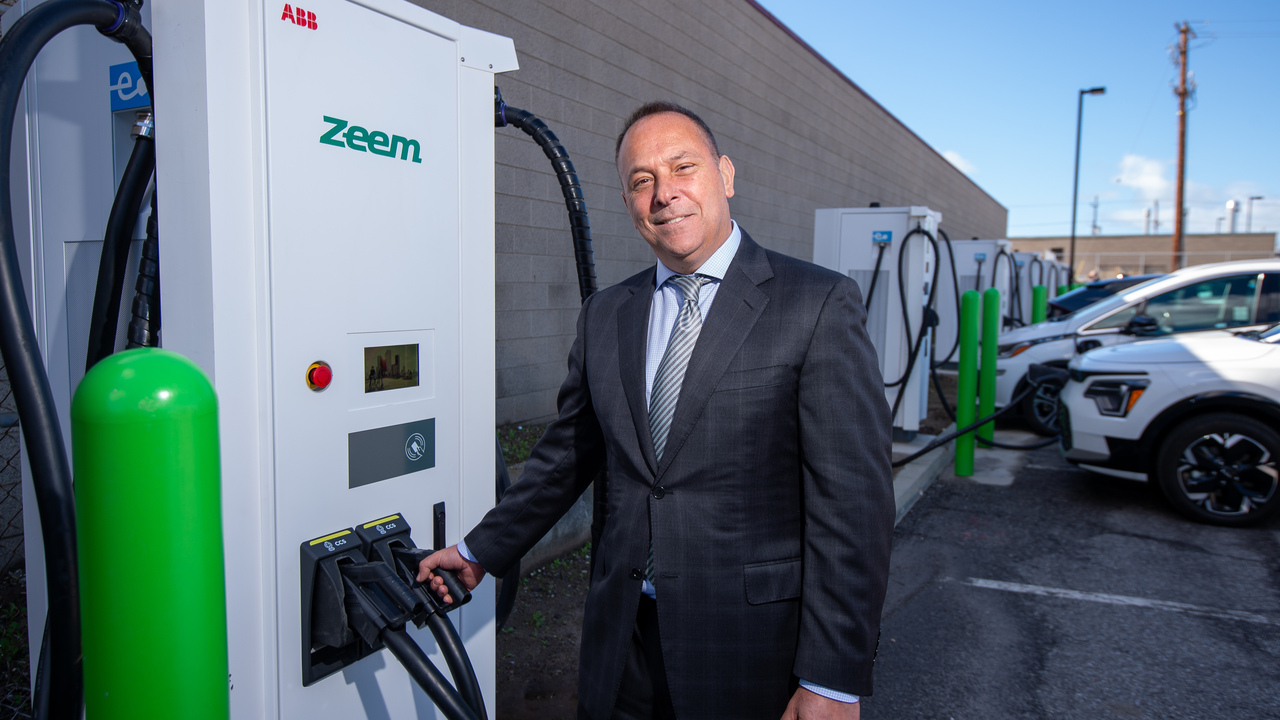
The presidential election and subsequent federal regulatory rollbacks cooled enthusiasm for heavy-duty electrification across much of the country. In California, however, operators are re-engaging. Persistent CARB oversight under the Advanced Clean Fleets framework is driving renewed commitment, and Zeem Solutions is capitalizing with accelerated activity centered on second-generation Tesla Semis and streamlined charging infrastructure.
“Obviously the presidential election sent the entire industry sideways for a bit. After, let’s say, a quarter or two of settling, Zeem started picking up the pace again and came back with a nice little roar,” said Paul Gioupis, CEO of Zeem Solutions. “Many California fleets have realized they’re not out of the woods and they still need to think about decarbonization.”
Zeem has operated second-generation Tesla Semis since December. “It’s consistently getting well over 400 miles on a full charge,” Gioupis noted. The company’s skid-based charging systems, built in 2.5-megawatt blocks, install in parking lots rather than structures to avoid building code expenses.
At its LAX shared depot, the site draws at least one megawatt constantly and peaks at four to five megawatts during charging. These advances in infrastructure and vehicle performance are enabling new approaches. “This bundle—give me a truck or an OEM contract, wrap that up into a ten-year bow—that’s going to be the way forward, in my opinion, and that’s going to change the way logistics is done forever.”
|
Torc Robotics Joins Mila to Advance Physical AI for Autonomous Trucks
|
Torc Robotics announced Tuesday a partnership with Mila — the Quebec Artificial Intelligence Institute — becoming the only autonomous trucking company to join the institute. As a subsidiary of Daimler Truck AG, Torc gains dedicated research space at Mila’s Montreal facility and direct access to leading academic talent, including students, researchers and faculty.
The collaboration builds on Torc’s affiliation with Mila since 2020 and targets advances in physical AI to support safe, scalable autonomous trucks.
Research will focus on generative world models, multi-agent behavior modeling, reinforcement learning and foundation models for physical AI systems.
“We are excited to welcome Torc as an industry partner, as it becomes an even stronger component of Mila’s ecosystem,” said Christopher Pal, core academic member at Mila, scientific co-director of IVADO and professor at Polytechnique Montréal. “This partnership brings together academic excellence and real-world deployment, creating opportunities for our students and researchers to work on impactful challenges in physical AI while advancing the state of the art in autonomous systems.”
“Torc is focused on building safe, scalable autonomous trucks, and advancing the next generation of physical AI is central to that mission,” said Felix Heide, head of artificial intelligence at Torc. “As a long-time Mila collaborator, I can definitively say that partnering enables deeper collaboration at the intersection of research and real-world deployment, collaboration that supports continued progress toward commercializing autonomous trucking at scale.”
|
Motive Unveils Integrated AI Stack at Vision 26 to Fix Fleet Fragmentation
|
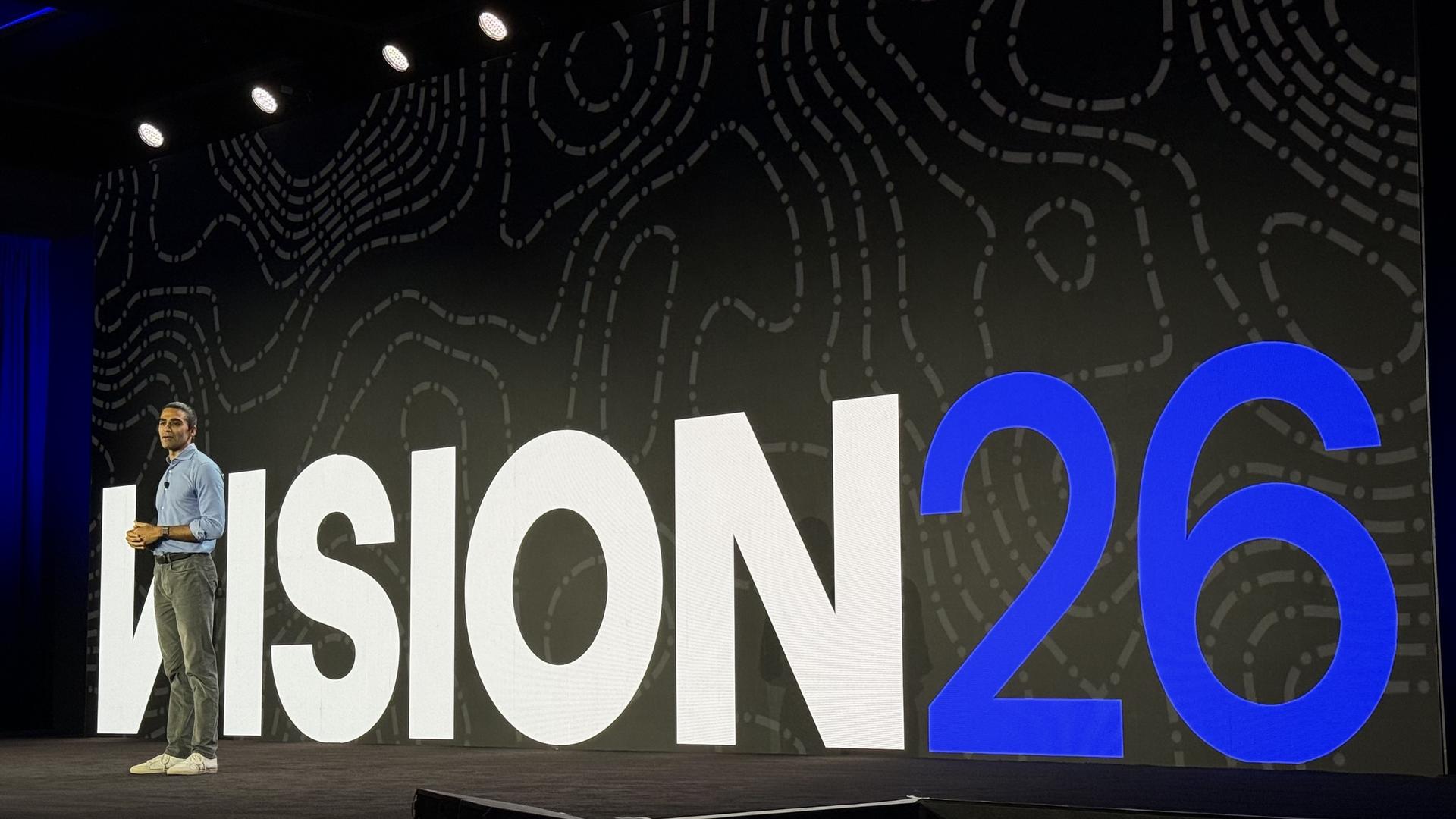
(Photo: Thomas Wasson/FreightWaves)
|
NASHVILLE, Tenn. — Motive unveiled an integrated AI stack at its Vision 26 conference designed to address the fragmented systems and manual workflows that drain fleet productivity. The centerpiece is AI Dashcam Plus, which combines telematics and cameras into a single horizontal-profile unit powered by a Qualcomm AI processor with three times the processing power of prior generations. The device runs more than 30 AI models simultaneously and introduces stereo-vision collision avoidance that models depth and tracks trajectories of vehicles, pedestrians, cyclists and animals in real time.
“ We combined telematics and cameras into one device. That means faster install, one point of failure instead of two. And a horizontal profile that looks great in your vehicles and doesn’t obstruct your driver’s view,” said Shoaib Makani, co-founder and CEO of Motive.
Atlas, an AI assistant embedded across the platform, generates morning briefings, drafts personalized driver messages and resolves compliance issues through conversational prompts. A new Model Context Protocol connects Motive data to third-party tools such as ChatGPT and Claude. Automations trigger immediate actions on real-time signals, including automatic plain-language alerts to drivers on critical fault codes.
“Across the U.S. economy, 860 million hours were spent last year on tasks that Motive can now automate. We estimated $46 billion are lost annually due to three preventable problems,” said Sean Santschi, director of product management at Motive.
Drivers who actively review AI coaching sessions see an eight times greater safety score improvement and a 50% drop in total events. For a 1,000-vehicle fleet, the platform is projected to deliver $3.4 million in annual savings through reduced accidents, insurance costs and fuel spend. Customers save an average of 20 hours per week on reporting and administrative tasks.
|
|
|
|
SparkCharge is scaling its mobile, off-grid EV charging network to all 50 states through a Charging-as-a-Service model. Units deploy in days rather than the five-to-eight years required for traditional grid-tied hubs, helping fleets bypass infrastructure delays. The hardware-agnostic systems support small operators to large logistics fleets with flexible, rapid electrification (Clean Trucking).
Voltera and Revel have agreed to combine, forming a scaled fast-charging platform for electric fleets and autonomous mobility in dense urban markets. Operating as Voltera under incoming CEO Frank Reig, the merged company will offer more than 1,000 stalls across 11 major U.S. metros, backed by EQT as majority owner. (Voltera)
American Rheinmetall and Harbinger have partnered to develop robotic and uncrewed ground vehicles for U.S. Department of War priorities. The collaboration pairs Rheinmetall’s mission systems and vehicle integration expertise with Harbinger’s autonomy-ready hybrid platforms for combat logistics, resupply, and manned-unmanned teaming, with demonstrations set for this summer. (Harbinger)
Horizon Motor debuted a production-ready Class 8 EV truck at ACT Expo 2026 targeting the Tesla Semi. The conventional two-seat cab model delivers a 350-mile loaded range and under-one-hour CCS1 charging with dual plugs. Already operating with a California fleet customer, it plans future solid-state battery integration to reduce weight or extend range. (Clean Trucking)
|
As always, thanks for watching and reading.
Thomas Wasson
twasson@firecrown.com
|
|
|
|
|